

























































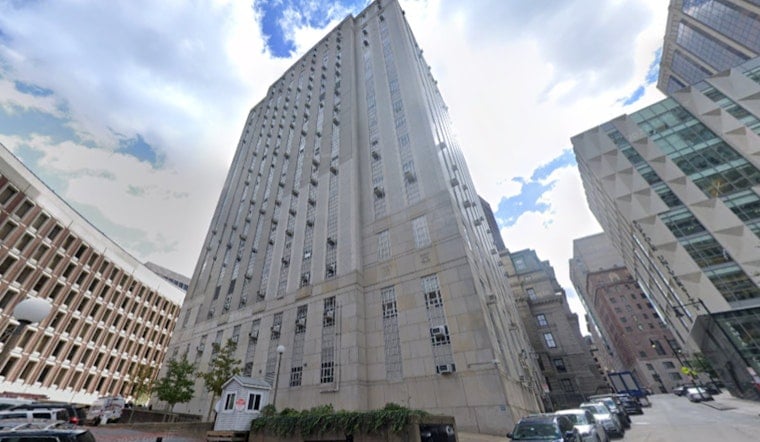
A Massachusetts Superior Court judge has blocked Markley Group from installing four additional diesel generators at its Lowell data center, ruling that the company's efforts to engage with the surrounding neighborhood fell short. Judge C. William Barrett's order pauses part of a permit that would let the company expand backup power at its 352,000-square-foot facility, while allowing four generators already installed to keep running as the underlying lawsuit moves forward.
According to MassLive, Barrett found that Markley Group's consideration for surrounding neighborhoods was lacking and that its attempts to engage with the community appeared insufficient. The ruling arrived after ten Lowell residents, represented by attorneys from Yale Law School's Environmental Justice Law and Advocacy Clinic, the Conservation Law Foundation, and Fitch Law Partners, argued in Middlesex County Superior Court on July 29 that state regulators improperly approved the expansion without required public hearings or a review of the pollution already burdening the area, according to the Conservation Law Foundation. The lawsuit, filed in April against Markley Group and the Massachusetts Department of Environmental Protection, remains active.
A Pasta Factory Turned Data Hub in a Residential Neighborhood
Markley Group bought the 14-acre former Prince Macaroni manufacturing plant in June 2015, converting it into a 50-megawatt data center with disaster recovery capabilities for the Greater Boston area, per historical filings compiled by Baxtel. The site sits in Lowell's Sacred Heart neighborhood, where the state has designated both Sacred Heart and neighboring Back Central as Environmental Justice populations. Residential homes border the facility's fence line, a public park and baseball field sit next door, and a public special-needs preschool is located just one block away, according to Yale Law School's clinic.
Markley has already installed four backup generators and is seeking to add eight more, along with 16 cooling towers, bringing the facility's total generator count to 27. Under the challenged July 2025 MassDEP air permit, that full buildout would authorize up to 3,276 tons of annual greenhouse gas pollution — roughly equivalent to the energy emissions of 749 U.S. homes, the Conservation Law Foundation reported. The fight over generators followed an earlier flashpoint: in September 2025, Markley petitioned the Lowell City Council to more than double its on-site diesel fuel storage, from 71,100 gallons to 167,800 gallons, a request that drew intense pushback at public hearings, according to InsideLowell.
Lowell's Moratorium Couldn't Stop a Deal Already in Motion
Lowell residents have not been fighting this quietly. On March 10, the City Council voted 10-0 to adopt a 360-day moratorium on new data center construction and expansion, making Lowell the first municipality in Massachusetts to enact such a ban, according to Yale Law School. The grassroots group Honest Future for Lowell had championed the measure.
But the moratorium didn't fully shield the neighborhood. In July, Markley reached an agreement with the city allowing expansion plans that predated the March freeze to proceed anyway, according to GBH News, prompting residents to argue the moratorium failed to protect the fenceline community from the company's ongoing growth. City councilors reportedly said they lacked legal recourse to halt plans already in motion — a conflict that pushed residents toward the courtroom fight now playing out before Judge Barrett.
State Incentives Collide With Environmental Justice Rules
The case reflects a broader tension in Massachusetts policy. In 2024, Governor Maura Healey signed legislation creating a sales and use tax exemption for data centers to spur tech investment, though state environmental officials later delayed finalizing related rules amid concerns over rising energy and water demand, per CommonWealth Beacon reporting cited by Yale's clinic. Meanwhile, research from the University of Southern California's Marshall School of Business found that a data center's workforce drops by an average of 78% once construction wraps up, an the finding local trade unions in Lowell have pointed to when questioning long-term job promises tied to the expansion, as Working Mass reported.
Lowell's moratorium has already rippled outward. Following the city's decision, Mansfield capped new hubs at 2 MW in May, adopting a zoning cap that bars new data centers requiring more than 2 megawatts of electrical demand. For now, the four generators already humming outside the Sacred Heart neighborhood can keep running while the lawsuit against Markley Group and MassDEP works its way through the courts, with the question of whether state regulators unlawfully bypassed mandatory public hearings and cumulative pollution assessments still unresolved.



