

























































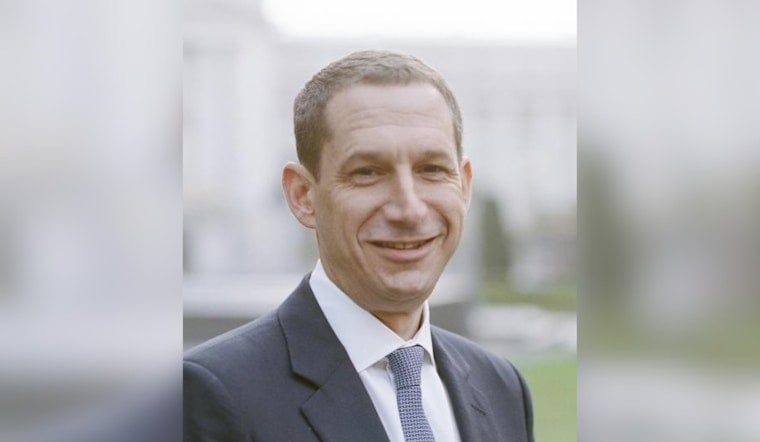
Three state bills sponsored by San Francisco Mayor Daniel Lurie advanced to the California Senate floor for a vote, targeting illegal sideshows, domestic violence protective order violations, and the cost of building housing for teachers, nurses, and firefighters. Lurie framed the trio as evidence of momentum on his two biggest priorities heading into the second half of his term: public safety and housing.
Lurie announced the development in a post on X, writing that the bills would help the city keep building on progress in both areas. According to Daniel Lurie, crime in San Francisco is at record lows, police ranks are growing, and the city is cutting red tape to build homes more quickly — though he added that more work remains to be done. Lurie took office in January 2025 as the city's 46th mayor after defeating incumbent London Breed in the 14th round of ranked-choice voting, running on a platform built around public safety, homelessness, and bureaucratic reform, as Hoodline reported at the time.
Today, three state bills that we sponsored advanced to the Senate floor for a vote—supporting two of our biggest priorities: public safety and building housing. We are making progress on both, and these bills will help us keep the momentum going.
— Daniel Lurie 丹尼爾·羅偉 (@DanielLurie) August 14, 2026
- Alongside @Stefani4CA, we are…
Cracking Down on Sideshows
The first measure, Assembly Bill 1588, known as the Sideshow Accountability and Community Safety Act, was authored by Assemblymember Catherine Stefani and co-sponsored by Lurie. The bill expands California's legal definition of sideshows to include motorbikes, dirt bikes, and off-highway vehicles, while increasing vehicle impoundments and making sideshow stunt driving that causes serious bodily injury a felony, according to SF.gov.
The push for tougher penalties followed a string of high-profile sideshow disruptions in the city. As reported by CBS News, spectators set fire to a rented U-Haul truck during a December 27, 2025 sideshow in the Sunset District, and police seized an illegal assault rifle and ammunition at a January sideshow in the Richmond District. Those incidents underscored why city leaders sought statewide legislative tools rather than relying solely on local ordinances.
Closing Loopholes for Domestic Violence Offenders
The second bill, AB 1877, was authored by Stefani and sponsored by Lurie. It would allow prosecutors to charge willful violations of domestic violence criminal protective orders as alternate felonies, or wobblers, when the offender was charged with or convicted of a felony for the underlying conduct, and it mandates felony charges for repeat violations.
During legislative hearings on the bill, lawmakers noted that over half of domestic violence restraining orders in California are violated, according to testimony recorded by Digital Democracy. Lawmakers emphasized that repeated violations serve as critical warning signs of escalating physical harm or lethal risk, which advocates say makes closing the loophole a matter of survivor safety.
A Tax Break Aimed at Workforce Housing
The third bill, AB 1294, was authored by Assemblymember Matt Haney and co-sponsored by Lurie. It would amend California property tax law to create a 15-year partial welfare exemption for rental housing serving low- and moderate-income households starting in 2027, per PolicyEngage. The exemption is designed to lower operating costs enough to make workforce housing financially viable for teachers, nurses, and firefighters.
The bill complements Lurie's local permitting overhaul. In February 2025, the mayor issued an executive directive creating PermitSF, a city permitting overhaul establishing a centralized online portal to cut red tape for residential and small business permits, per Hoodline.
Crime Trends Provide the Backdrop
The sideshow and domestic violence bills arrive against a backdrop of falling crime citywide. San Francisco recorded a 25% to 30% drop in overall crime in 2025, logging 28 homicides — the city's lowest annual total since 1954 — alongside a 27% decline in property crime and a 44% drop in robberies, per CBS News. During the first six months of 2026, overall reported crime fell another 22% year-over-year, with car break-ins down 42% and motor vehicle thefts down 26%, according to OpGov.News.
That progress hasn't been uniform. A spring spike in homicides in 2026 prompted city leaders to host a 24-hour ceasefire event in April, a sign that localized surges in gun violence remain an ongoing tension even as broader crime statistics trend downward. It's part of the reasoning city leaders have offered for pushing state-level tools like AB 1588 rather than waiting for local numbers alone to keep improving.
Lurie has also invested locally in public safety infrastructure. In August 2025, he signed legislation accepting a $9.4 million grant from Ripple to fund a new SFPD investigation center, expanding the department's deployment of license plate readers, drones, and crime-tracking software. With all three bills now headed to a Senate floor vote, Lurie's office says the administration intends to keep building on both fronts as the measures move through Sacramento.





