

























































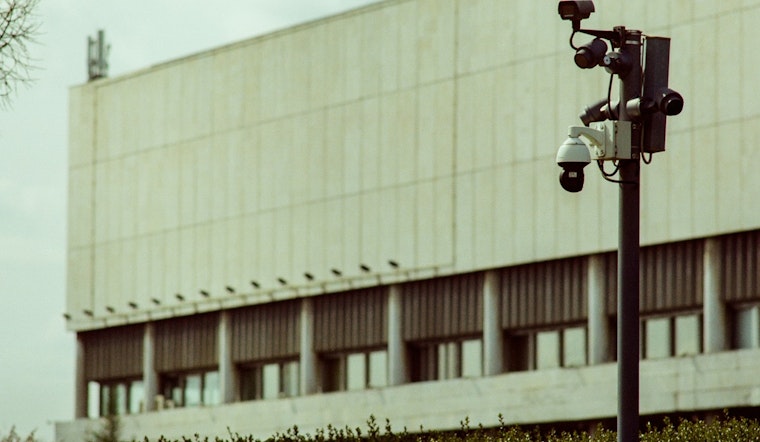
Manatee County commissioners voted unanimously Wednesday to keep Flock license plate reading cameras off county parks, facilities and buildings, a preemptive move that lands even though the sheriff's office currently has none installed at those sites. The 5-0 vote came after residents raised concerns about continuous surveillance and followed a string of officer misuse scandals that have rattled public trust in the technology across Florida.
The Manatee County Sheriff's Office already operates 79 Flock cameras on public roads, along with 134 license plate readers from other manufacturers, according to FOX 13 Tampa Bay. County park video surveillance is owned and operated by Manatee County government, not the sheriff's office, and the agency says it has no plans to install Flock cameras at parks or county buildings. Sheriff Rick Wells's office says it audits its camera system every two weeks and deletes collected data after 30 days.
Commissioners Split on the Tradeoffs
During debate ahead of the vote, commissioners aired sharply different views on where the balance between public safety and privacy should sit. Commissioner Mike Rahn stressed the technology's usefulness in recovering abducted children, while Commissioner Jason Bearden pressed the question of when government surveillance of residents crosses a line, according to Florida Politics. The sheriff's office maintains that license plate reader technology has helped deputies and investigators identify suspects, recover stolen vehicles, and locate missing or endangered people, pointing to 37 homicide suspects identified and 23 missing or endangered people located using the readers over the past five years, per FOX 13 Tampa Bay's report. The sheriff's office says it will continue using available tools and resources to investigate crime, respond to calls for service, and keep the community safe, even with the new restriction on county property.
Stuart Kaplan, a former FBI special agent and practicing attorney, said commissioners made the right move to address potential abuse of video surveillance, the station reported. Constantly running surveillance technology creates opportunities for abuse by people with access or for unauthorized purposes, a concern that has moved from theoretical to documented in neighboring counties this month.
Officer Misuse Cases Loom Large
Police officers in Haines City and Sarasota were arrested after using Flock cameras to track people outside official cases, a pattern cited directly in the privacy debates surrounding Manatee's vote. Former Sarasota Police Officer Cory Waiters was fired and arrested on August 19 after an internal audit found he ran 358 unauthorized searches on a single license plate using Flock Safety and state driver databases between May and October 2025, Hoodline previously reported. He faces felony charges of official misconduct and computer offenses.
In Polk County, Haines City Police Officer Christopher Goodson was arrested August 11 after court records showed he accessed the Flock camera database 717 times between September 2024 and June 2026 to track his estranged wife's vehicle without any law enforcement purpose, according to court records cited by FOX 13 Tampa Bay. Goodson allegedly entered false case descriptions into the software to avoid detection. Those two cases have become touchstones in Florida's broader reckoning with how easily automated surveillance tools can be turned toward personal ends.
A Statewide Pattern Takes Shape
Manatee's ban arrives alongside statewide scrutiny of the technology. At least 100 law enforcement agencies across Florida operate nearly 7,500 Flock cameras as of this month, one of the highest concentrations of automated plate readers in the country, Florida Politics reported. Florida Governor Ron DeSantis called for an overhaul of Flock license plate readers during a news conference in Miami Wednesday, warning state lawmakers that the rapidly expanding camera network risks turning Florida into a surveillance state, as Hoodline reported.
Under Florida Statute § 316.0777, personal identifying information and images collected by automated license plate recognition systems are confidential and exempt from public records disclosure, while § 316.0778 directs state guidelines for data retention that local departments typically cap between 30 and 90 days for unflagged scans. State law also allows police departments to share ALPR scan data across jurisdictional borders despite those public-records exemptions, a dynamic Hoodline detailed in its coverage of Hollywood police sharing data with 360 agencies.
Flock Safety CEO Garrett Langley announced platform-wide security updates on August 13 that shorten default data retention from 30 days to seven days and require case-number logging and automated misuse audit tools for all police customers, the company said. Flock operates more than 120,000 cameras across 5,000 communities in 49 states. A national report released the same day by the American Civil Liberties Union found that less than 1% of license plate scans captured across that nationwide network match active criminal investigations or law enforcement warrants, fueling privacy advocates' argument that unregulated reader networks amount to continuous warrantless tracking.
Part of a Broader Municipal Pushback
Manatee County is not alone in reasserting local control over the cameras. Palm Bay officials ordered all municipal Flock cameras physically hooded and taken offline this month pending an audit into whether the devices were properly permitted along public roadways, a move Hoodline covered in Palm Bay's camera-hooding order. Backlash has also expanded across the Tampa Bay region, becoming a central issue in the St. Petersburg mayoral race, where former Governor Charlie Crist has proposed a camera moratorium while grassroots “DeFlock” groups organize resident opposition, according to Axios. Incumbent St. Petersburg Mayor Ken Welch has instead supported retaining the cameras with added privacy safeguards.
For now, Manatee County's decision keeps Flock cameras out of parks and county buildings while leaving the sheriff's existing road network of readers untouched. The vote reflects a tension playing out in county chambers across Florida: elected officials weighing law enforcement's case for automated surveillance against a mounting record of misuse that has turned a crime-fighting tool into a political liability.





