

























































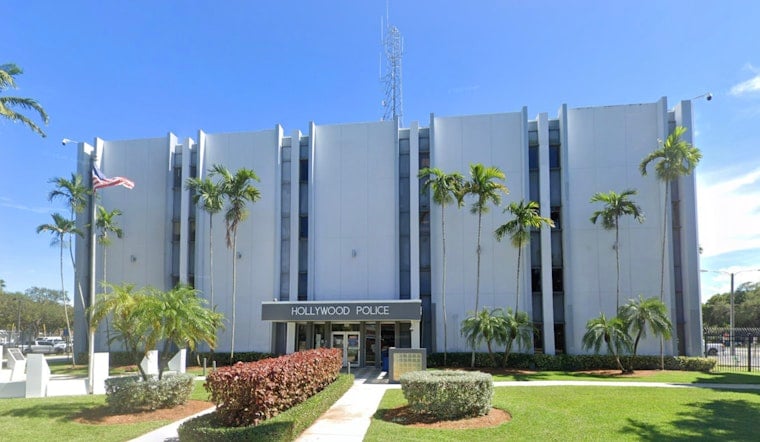
Every time a car passes one of Hollywood's more than 100 automated license plate reader cameras, that scan can end up in the hands of more than 360 law enforcement agencies spread across dozens of states. The Hollywood Police Department confirmed the scope of its data-sharing network after providing a full list of partner agencies, and the reach extends far beyond South Florida, touching everything from the Broward County Sheriff's Office to law enforcement outfits in Nebraska.
According to Miami New Times, the department shares access with agencies including the Alachua County Sheriff's Office, the Miami Police Department, the Florida Department of Law Enforcement, the CSX Police Department, the U.S. Postal Inspection Service, and the U.S. General Services Administration Office of Inspector General. Staff writer Alex DeLuca reported that Hollywood, a city of roughly 143,000 residents, uses Flock and Motorola Solutions cameras that store plate numbers, times, dates, and locations in searchable databases. The department told the outlet it grants access for investigative purposes.
Hollywood has been buying automated license plate reader cameras since at least 2014, and the financial commitment has only grown. Public records compiled by DeFlock Broward show the city has put more than $5.5 million into the program over 11 years, including about $460,000 spent in July 2024 alone on dozens of Flock cameras, per the same account. DeFlock.org shows more than 100 of the readers now positioned across Hollywood, part of a stated goal of covering the city's entire perimeter.
How Far the Data Travels
The scale of Hollywood's network is not unusual for South Florida. As Hoodline previously reported, Fort Lauderdale has spent over $5.1 million on ALPR infrastructure since fiscal year 2011, Pembroke Pines has spent $1.3 million, and Davie has spent more than $695,000 — much of it approved through consent agendas without standalone public debate. Flock Safety's cameras, which the company says scan billions of license plates each month, now operate in communities across nearly every state, feeding a nationwide network that connects local departments to each other in ways most residents never see.
That interconnection is central to the privacy debate. Florida Statute § 316.0777 makes images and personal identifying data captured by ALPR systems confidential and exempt from public records requests, according to the Florida Senate, but the exemption does not restrict police agencies from sharing that data with one another. A separate statute, § 316.0778, directs the state to set maximum retention periods for the records, and Florida departments typically cap unflagged scan data at 90 days unless it is tied to an active investigation.
Oversight Gaps and Officer Misuse
Hollywood updated its Standard Operating Procedure 228.1 governing ALPR use in May 2025, but the revision omitted specific dissemination logs, audit procedures, or chief executive approval requirements for sharing data out of state, according to records reviewed by DeFlock Broward. The group's research indicates that Real Time Intelligence Center operators at the department serve as both system users and internal system administrators, a structure that leaves fewer built-in checks on who accesses the network and why.
Those gaps matter because misuse cases have already surfaced elsewhere in Florida. A Sarasota Police officer was fired this month after running 358 unauthorized searches on a single license plate, and a Haines City officer was arrested for running over 700 Flock searches on his estranged wife's car, as Hoodline has reported. Deanna Bettineschi, cited in the New Times report, said residents concerned about specific uses of their data should contact the agencies directly.
Industry and Public Response
The scrutiny has reached Flock Safety itself. The company announced nationwide policy changes on August 13 that cut default data retention from 30 days down to seven and now require officers to enter case codes before running searches, according to WTSP. Nationally, the ACLU documented in an October 2025 report that interconnected ALPR networks allow thousands of out-of-state agencies to search vehicle location data without a warrant or reasonable suspicion.
Public-interest researchers have responded by building lookup tools such as Have I Been Flocked?, which lets residents search compiled police audit logs covering more than 242 million searches to see whether their own vehicle has been queried, as FOX 5 Atlanta reported. Frustration has also turned physical: Hoodline has documented grassroots protests in Davie and St. Petersburg, along with felony criminal mischief investigations into Flock cameras that were slashed and melted in Fort Lauderdale, where damage under Florida Statute § 806.13 can qualify as a third-degree felony.
For Hollywood residents, the takeaway is that a scan captured on a local street corner may not stay local for long. With the city's camera network still expanding and state law shielding the raw data from public view while permitting broad police-to-police sharing, the question of who ultimately sees where a car has been remains, for now, largely up to the agencies themselves.





