

























































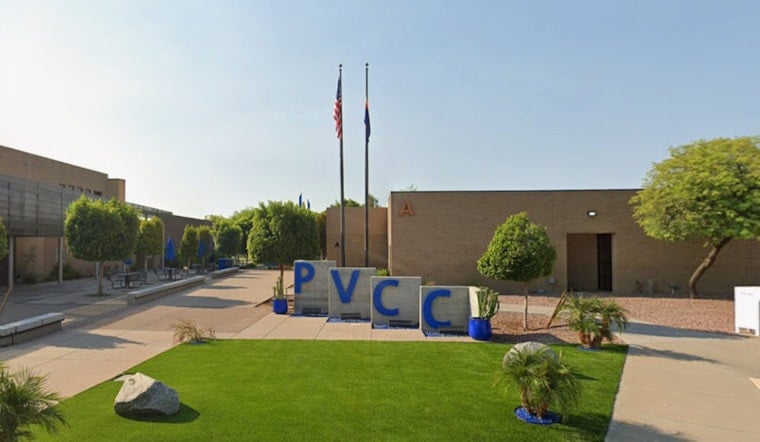
Arizona has a shortage of radiologic professionals and training programs, and Maricopa Community Colleges is moving to fix its own piece of that problem by expanding its radiologic technology training beyond a single campus in central Phoenix. Estrella Mountain Community College in the West Valley and Paradise Valley Community College in the Northeast Valley will each welcome their first radiologic technology cohorts in Fall 2027, giving students in those regions a training option that previously existed only at GateWay Community College.
The Higher Learning Commission approved institutional accreditation for the new programs at both campuses in August 2026, clearing the way for their inaugural student launches next fall, according to Maricopa Community Colleges. The expansion, as reported by the Phoenix Business Journal, aims to increase capacity, reduce student wait times, and meet Arizona health care employers’ workforce demands. Maricopa Community Colleges is expanding its radiologic technology program to bring training closer to local students rather than funneling every applicant through one Phoenix facility.
Why GateWay Alone Couldn't Keep Up
GateWay Community College has hosted Maricopa’s radiologic technology program since 1972, and it currently operates with a maximum capacity of 122 seats — the largest in Arizona — according to the Radiology Technology Education Guide. That program partners with major regional health systems including Mayo Clinic, Phoenix Children's Hospital, and Banner Health for student clinical rotations. Even at that scale, demand has outpaced available seats for years, and GateWay's facility will now receive upgrades to its existing radiologic technology setup even as the two new campuses come online.
The stakes behind the expansion are steep. The American Society of Radiologic Technologists reported that the imaging workforce vacancy rate in the Mountain region stood at 21.6 percent, per the Phoenix Business Journal's reporting on the program. Arizona is experiencing higher demand for imaging because of population growth and aging demographics, a trend that national researchers have also flagged: the U.S. Bureau of Labor Statistics projects employment for radiologic and MRI technologists to grow 5 percent nationwide from 2024 to 2034, driven largely by an aging population that needs diagnostic imaging for conditions like heart disease and cancer, according to Mayo Clinic College of Medicine and Science.
What Students Will Find at the New Campuses
All three colleges will have modern rad tech laboratories built to industry standards, expanding simulation-based learning and specialized imaging training that includes MRI, CT, mammography, and interventional radiology. The labs provide equipment comparable to what students will encounter on the job. Radiologic technicians perform medical imaging exams including MRIs, CT scans, and X-rays, and their work includes talking patients through procedures, easing anxiety, and positioning them correctly for imaging.
Rey Rivera said EMCC's new radiological technology program will help keep the growing West Valley healthy, per the Phoenix Business Journal's account of the announcement. Jana Schwartz said expanding radiologic technology to PVCC increases access to career pathways and medical imaging training. Amy Diaz said the expansion to sister colleges supports scaling radiologic technology offerings for the Valley's growing workforce, while Steven Bloomberg said Maricopa's expansion helps address Arizona's need for highly skilled imaging professionals.
The Credentialing Path After Graduation
Maricopa's radiologic technology curriculum holds programmatic accreditation from the Joint Review Committee on Education in Radiologic Technology, which is the only agency recognized by the U.S. Department of Education for accrediting radiography degree programs, enabling graduates to sit for the American Registry of Radiologic Technologists national board examination, according to GateWay Community College. Passing that exam is only part of the process, though. To legally practice medical imaging in Arizona, graduates must also obtain a Certified Radiologic Technologist license from the Arizona Department of Health Services Bureau of Special Licensing, which assumed regulatory oversight from the state's former Medical Radiologic Technology Board of Examiners in August 2018.
Once licensed, technologists aren't done with paperwork. Arizona law requires Certified Radiologic Technologists to complete 24 continuing education credits every two years to maintain their state licenses, with additional specialized requirements for advanced modalities like mammography and computed tomography.
An Affordable Degree With a High Ceiling
The financial case for the expansion is straightforward. Maricopa County residents pay an in-state tuition rate of $97 per credit hour for lower-division courses across all 10 district colleges, keeping the overall cost of an associate degree in radiologic technology under $6,000 before fees. That's a modest price tag for a credential that leads to strong pay: radiologic technologists and technicians earned a national median annual wage of $80,110, or $38.52 per hour, according to Bureau of Labor Statistics May 2025 estimates, and specialized imaging modalities like CT and MRI can push annual compensation above $100,000.
Nearly 90 percent of Maricopa Community Colleges students reside in Maricopa County, and district-wide enrollment grew 4 percent year-over-year in Spring 2026 — part of a broader national pattern in which community college technical certificates and health science associate degrees have outpaced enrollment growth at public four-year universities. The Maricopa County Community College District serves approximately 140,000 students across 10 individually accredited colleges and skill centers, offering more than 70 health care programs alongside bachelor's degrees, two-year degrees, certificates, and university transfer programs. District officials describe the system as Arizona's most extensive integrated health care education system, providing affordable and accessible learning environments for students across the Valley.
A Budget Fight Simmers in the Background
The expansion is unfolding without direct state operating aid. During an April 2026 legislative advocacy event at the State Capitol, Maricopa Community Colleges leaders pressed state lawmakers to restore operating aid, which the state legislature has withheld from the community college system for over a decade despite rapid regional economic growth, according to the Daily Independent. That leaves the district relying primarily on local property taxes and student tuition to fund projects like the new rad tech labs at Estrella Mountain and Paradise Valley.
Maricopa's push mirrors moves elsewhere in the country to widen allied health training pipelines. CUNY Hostos expanded a Bronx health hub to grow its own radiologic technology training space, while a Houston health system separately invested in allied health education to build a local clinical pipeline. For now, the open question in the Valley is how quickly clinical placement slots at area hospital networks can scale up to accommodate the larger student cohorts once EMCC and PVCC welcome their first classes in Fall 2027.



