

























































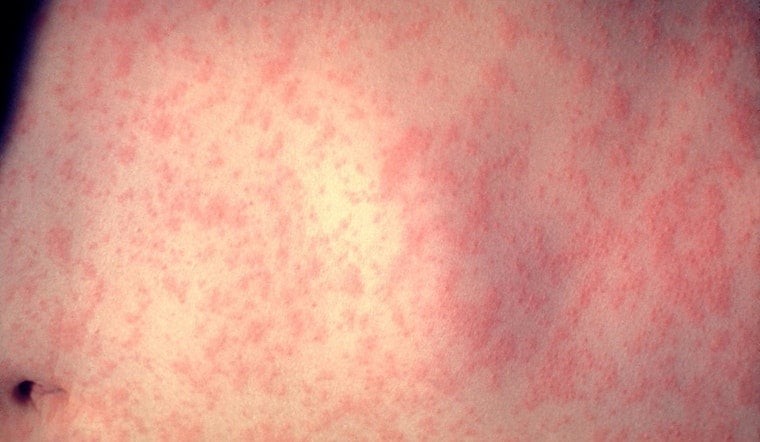
A metro Atlanta resident has tested positive for measles, Georgia health officials confirmed Tuesday, marking the sixth case reported statewide this year and the second cluster to surface in the metro area alone. The patient was not vaccinated and has no known travel history, which means investigators are now working to determine exactly how the person was exposed.
The Georgia Department of Public Health said it plans to identify everyone who may have come into contact with the patient while they were infectious, according to Atlanta News First. Measles symptoms typically appear seven to 14 days after exposure, so contact tracers have a narrow window to reach anyone who was in the same spaces as the patient before health officials even learned of the case.
This is Georgia's sixth confirmed measles case of 2026, following a January case in the Coastal Health District — which covers Chatham, Effingham, Glynn and several other counties — a February case in Bryan County, and three additional cases reported in metro Atlanta in May. Last year, Georgia recorded 10 measles cases total, its highest annual count in recent memory, per the same outlet's reporting.
Why Contact Tracing Moves So Fast
Measles is airborne and can linger in the air or on indoor surfaces for up to two hours after an infected person leaves a room, and roughly 90% of non-immune people exposed to it will contract the disease, according to the Georgia Department of Public Health. That extreme contagiousness is why health officials move quickly once a case is confirmed, tracking down anyone who shared a room, a waiting area, or public transit with the patient. The agency also notes that a single dose of the MMR vaccine is more than 95% effective at preventing measles, while a second dose pushes protection up to 98%.
The metro Atlanta case lands amid a nationwide surge that has already made 2026 the worst year for measles in the United States in more than three decades. The CDC had recorded 2,566 confirmed cases across 47 jurisdictions as of August 13, surpassing all of 2025's 2,289 cases, with 94% of this year's infections tied to organized outbreaks, according to the CDC. The scale of that spread is serious enough that a CDC advisory committee is reviewing 2026 outbreak data ahead of a November decision by the Pan American Health Organization on whether the U.S. keeps the measles elimination status it has held since 2000, as reported by CIDRAP.
Georgia's Vaccination Gap
Georgia's own numbers help explain why local health officials are on edge. The state's kindergarten MMR vaccination rate sits at 89%, well below the 95% threshold considered necessary for herd immunity, per WABE. Roughly 5.1% of Georgia kindergarteners claimed a vaccine exemption for the 2025–2026 school year, up from 4.8% the year before, placing Georgia among 24 states exceeding a 5% exemption rate. Medical exemptions account for only 0.1% of that figure, meaning nonmedical opt-outs are driving nearly all of the increase, the station reports.
Nationally, CDC surveillance data for 2026 shows that 93% of infected people were unvaccinated or had unknown vaccination status, with children under 19 making up 67% of cases and 7% requiring hospitalization, according to the American Academy of Pediatrics. Those figures echo what happened in Georgia last September, when a Fulton County case prompted health officials to monitor hundreds of potential contacts across multiple metro Atlanta public locations, as previously reported by CBS News Atlanta.
What Georgia Law Requires
Georgia law makes school-entry immunizations mandatory under Official Code of Georgia Annotated § 20-2-771, and a parent who intentionally skips the requirement or a school official who knowingly lets an unvaccinated student attend without valid documentation can face misdemeanor charges carrying fines up to $100 or up to 12 months in jail, per Justia Law. State health department guidelines also require that during an active outbreak at a school or childcare facility, students holding religious or medical exemptions be excluded from attendance unless they get vaccinated, according to 13WMAZ.
Hoodline reported in April on measles turning up in Atlanta's wastewater alongside the state's first travel-related infant case of the year, and an earlier cluster surfaced in metro Atlanta back in February 2025. Health officials have not said whether this week's case is connected to any of Georgia's earlier 2026 clusters, and the source of the patient's exposure remains unknown as the investigation continues.





