

























































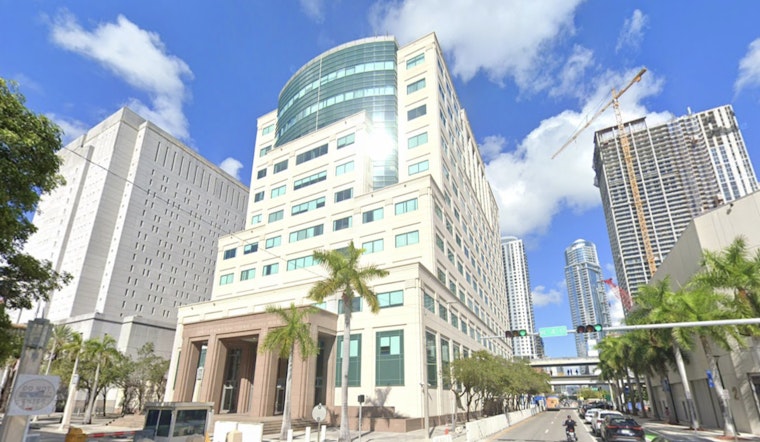
A Mexican cartel representative sent to Miami to protect the organization's drug profits was sentenced to five years in federal prison this week, one of ten defendants a federal judge sent away in a South Florida cocaine trafficking case that ran from September 2024 through September 2025. The longest sentence, 15 years and 8 months, went to 63-year-old Reinaldo Fernandez, identified as the organization's leader.
Cartel Sent Its Own Man to Watch the Money
U.S. District Judge Darrin P. Gayles handed down the sentences in Miami federal court, capping a case the U.S. Department of Justice says involved an organization that moved cocaine and hundreds of thousands of dollars in cash across the country. According to the U.S. Department of Justice, 40-year-old Javier Garcia-Mora, a Mexican national who was in the United States illegally, was dispatched to Miami by cartel members specifically to oversee the cartel's interests in South Florida while the ring pulled in cocaine from Mexico and other suppliers.
Garcia-Mora pleaded guilty to conspiring to distribute and possess with intent to distribute five kilograms or more of cocaine, and Gayles sentenced him to 60 months in prison, per the same account. Notably, as first reported by the Miami Herald, prosecutors did not identify which Mexican cartel supplied the organization or employed Garcia-Mora, leaving that detail unresolved in the official record. Federal agents seized more than $450,000 in drug proceeds tied to the operation.
Sentences Ranged From 21 Months to Nearly 16 Years
Fernandez, who prosecutors say obtained cocaine from the cartel and other sources and received the longest sentence in the case at 188 months, pleaded guilty to conspiracy to distribute and possess with intent to distribute five kilograms or more of cocaine. Eight of the ten defendants pleaded guilty to that same five-kilogram conspiracy charge, while Alberto Gonzalez pleaded guilty to a lesser charge involving 500 grams or more of cocaine and received 60 months.
The remaining sentences varied widely based on each defendant's role. Jorge Victor Herrero Gamez, who bought and sold cocaine to and from Fernandez and others, was sentenced to 82 months. Yaniel Cardenal Frias got 75 months, Alfredo Miranda received 70 months, and Michel Garcia and Renier Mendez — both described as drivers who transported cocaine and bulk currency around the country — each got 57 months. Elvis Alfonso, also a driver, received 64 months, and Daniel Gerardo Torres, who bought and sold cocaine involving Fernandez and other organization members, received the shortest term at 21 months. Overall, the ten defendants received sentences ranging from 21 months to more than 15 years, according to the Department of Justice.
Under federal drug conspiracy law, agreeing to distribute five kilograms or more of cocaine carries the same statutory exposure as actually completing the distribution — a mandatory minimum of 10 years up to life in prison, per the Department of Justice. That framework holds co-conspirators responsible for the full scope of drugs involved in an agreement even if they never personally touched the narcotics, which helps explain why some defendants who received sentences under that 10-year floor likely relied on cooperation or plea agreements to reduce their exposure. Because federal parole was abolished under the Sentencing Reform Act of 1984, these defendants will serve at least 85% of their sentences with no state-style early release.
Three Alleged Members Still on the Run
Not everyone charged in the case has been caught. Ricardo Oramas Valdes, Juan Miguel Torna Rojas, and William Padron Perez all remain fugitives, according to the Department of Justice, leaving open questions about how much of the distribution network is still operating outside law enforcement's reach.
U.S. Attorney Jason Reding Quiñones, who announced the sentences, framed the case as part of a broader campaign against cartel expansion in the region. “Mexican drug cartels do not get to establish a foothold in South Florida,” Reding Quiñones said, adding that the organization brought cartel-supplied cocaine into communities, moved drugs and bulk cash across the country, and sent a cartel representative to Miami to protect those interests. Reding Quiñones, who took office in mid-2025, has said his office ranked first nationally in Homeland Security Task Force-related caseloads during his first year leading the Southern District of Florida.
Part of a Broader Federal Crackdown
The prosecution ran through the Homeland Security Task Force, an interagency initiative that brings together Homeland Security Investigations, the DEA, the FBI, and local police departments to target transnational criminal networks from international suppliers down to street-level distributors. The DEA's National Drug Threat Assessment has found that Mexican cartels — primarily the Sinaloa Cartel and Jalisco New Generation Cartel — maintain dominant control over wholesale cocaine supply chains in the U.S. and routinely place embedded representatives in key transit cities like Miami to prevent local distribution rings from skimming profits.
This case follows a string of major task force actions in South Florida. In May, the same task force executed Operation Mousetrap, charging five defendants tied to a 540-kilogram cocaine seizure linked to supply routes running from Colombia through the Dominican Republic. Judge Gayles, who was appointed to the federal bench by President Obama in 2014 and confirmed 98-0 by the Senate as the first openly gay Black male federal judge in U.S. history, has now overseen sentencing in one of several large-scale cocaine conspiracies working through Miami's federal courts.
Hoodline previously covered a 24-defendant indictment in a separate South Florida cocaine conspiracy that involved murder-for-hire plots and illegal firearms. The volume of cocaine flowing toward South Florida has also shown up offshore: the Coast Guard brought ashore a 4,000-pound haul valued at $28.7 million at Station Miami Beach in April under Operation Pacific Viper, underscoring how much bulk product federal agents are intercepting before it ever reaches distribution networks like the one Fernandez and Garcia-Mora ran.





