

























































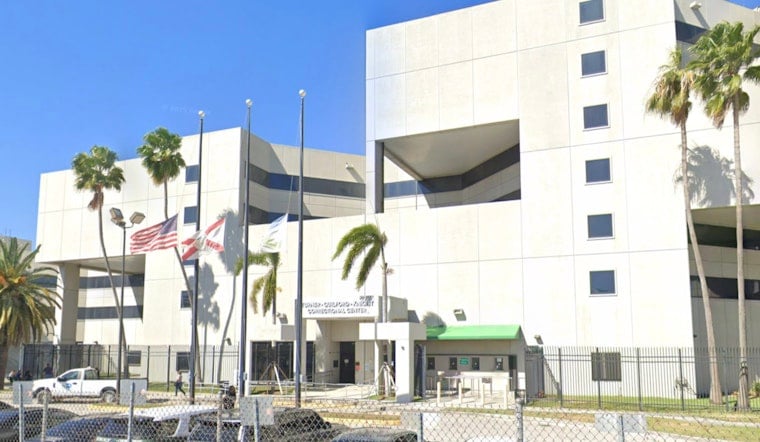
An 18-month-old boy in Miami-Dade County died after accidentally ingesting a small amount of fentanyl and cocaine, and his 29-year-old mother now faces one count of aggravated manslaughter of a child, according to the Florida Department of Law Enforcement. Pearlanderia Elzashania Boujolly will be taken to the Turner Guilford Knight Detention Center following her arrest, FDLE said.
Miami Police and Fire Rescue responded around 3:50 a.m. to a call about an unresponsive male infant, according to authorities cited by NBC 6 South Florida. The boy was transported to Jackson Memorial Hospital, where he later died. An autopsy conducted by the Miami-Dade County Medical Examiner's Department revealed fentanyl in his blood, along with a trace amount of cocaine, per the FDLE statement.
Officials said the narcotics that killed the toddler were left in an unlocked room inside the residence where the child was found. Notably, the claim that Boujolly was inside the residence when her son consumed the drugs has been disputed — some reporting indicates she was not present in the home at the time, a detail highlighted in coverage from NBC 6 South Florida.
A Multi-Agency Task Force Behind the Arrest
The arrest was made by Miami Police and South Florida branch agents of the State Assistance for Fentanyl Eradication program, known as S.A.F.E. In a statement released Thursday, Miami Special Agent in Charge Michael Stein and Miami Police Chief Edwin Lopez confirmed the arrest stemmed from a joint investigation between the FDLE S.A.F.E. Task Force and City of Miami Police detectives, underscoring the collaborative law enforcement effort behind the case.
The S.A.F.E. program was established by the Florida Legislature in 2023 as a $20 million state grant initiative designed to reimburse local law enforcement agencies for overtime, investigative equipment, and joint operations targeting illicit synthetic drugs, according to the FDLE Planning and Budgeting Bureau. Florida Governor Ron DeSantis highlighted the program's continued state backing during a September 2025 press conference, emphasizing its role in mobilizing multi-agency task forces to investigate high-risk fentanyl distribution and fatal exposure cases, as documented by The Florida Channel.
Why Boujolly Faces Charges Despite Not Being in the Room
Miami-Dade State Attorney Katherine Fernandez Rundle said in the FDLE release that her office maintains a long-standing prosecutorial focus on drug-induced homicides to deter parents from leaving deadly illicit substances open and accessible to children in residential settings. Under Florida jurisprudence, prosecutors can charge a caregiver with aggravated manslaughter through culpable negligence even if that caregiver was not physically present in the residence when the child ingested the drugs, provided gross carelessness directly contributed to the fatal exposure, according to Richard Hornsby Law.
Under Florida Statute § 782.07(3), aggravated manslaughter of a child is classified as a first-degree felony punishable by up to 30 years or life in prison, carrying a default minimum sentence of 13 years under state sentencing guidelines absent a downward departure. Open questions remain about whether additional individuals present at the residence will face charges, and the exact timeline of events inside the home before the 3:50 a.m. 911 call has not been publicly detailed.
A Pattern Seen Statewide and Nationally
The case adds to a string of similar tragedies playing out around the country this year, including a case Hoodline covered where an Oakland boy, 5, collapsed after ingesting fentanyl and cocaine, resulting in charges against his mother. Broader data suggests the danger is not isolated. A study published in JAMA Pediatrics found that pediatric fentanyl deaths in the United States surged more than 30-fold between 2013 and 2021, with nearly half of all fatal pediatric overdoses occurring inside residential homes due to unsecured drugs, according to the National Library of Medicine.
Miami-Dade has grappled with fentanyl contamination in its local drug supply for over a decade. A historical study by the Miami-Dade Medical Examiner Department documented a steep increase in local synthetic opioid deaths starting in 2014, driven largely by illicit fentanyl and its analogs being laced into local cocaine and heroin supplies across the county, according to research published on PubMed. In October 2017, the Miami-Dade Medical Examiner Department confirmed that 10-year-old Alton Banks died from accidental fentanyl exposure in Miami's Overtown neighborhood, one of the county's earliest high-profile pediatric fentanyl overdose fatalities, as reported by CBS Miami at the time.
Statewide, overall opioid-related deaths in Florida declined by 26% in 2024 compared to the previous year, though synthetic opioids remain a dominant contributor to accidental drug fatalities, according to the Florida Department of Health's Medical Examiners Commission Annual Report. Even as the broader trend shows signs of improvement, cases like the death of Boujolly's 18-month-old son illustrate how a small, unsecured amount of drugs in a home can still prove fatal to a child.



