

























































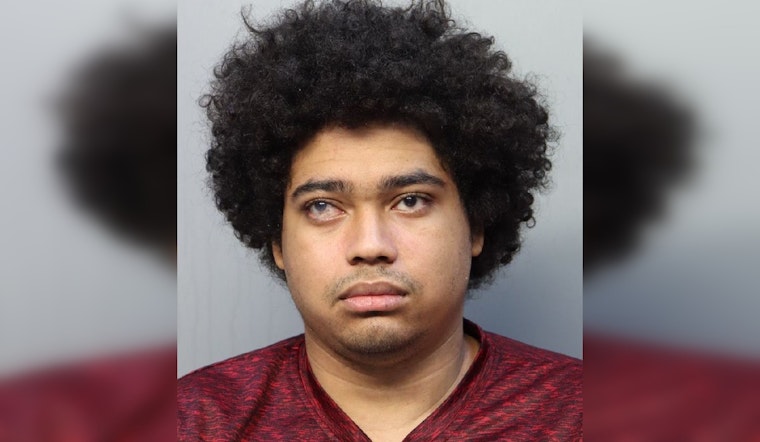
A Miami man is facing 15 felony counts of possessing child sexual abuse material after detectives traced illicit files to a Google account registered in his name, then searched his home this week and seized multiple electronic devices. Eric Cuevas Cordero was arrested Thursday, according to the Miami Police Department, following a monthslong investigation that began in February.
The case started when detectives received an online complaint about five images and videos considered child sexual abuse material, all uploaded to a Google account registered to Cordero, as reported by WPLG Local 10. Investigators with the Internet Crimes Against Children Task Force executed a search warrant at Cordero's home on August 26 and seized multiple electronic devices for forensic review. That examination reportedly turned up numerous additional images and videos of child sexual abuse material, with victims ranging from infants to children as old as 12 years old.
Per the arrest report, Cordero made an admission to detectives during questioning, though the report's account of exactly what he said was redacted. As of Friday, Cordero remained held at the Turner Guilford Knight Correctional Center, with online jail records listing his bond as still to be set.
How a Single Online Report Can Trigger a Felony Case
The case traces back to a legal mechanism built into how major tech platforms operate. Under federal law and the REPORT Act, electronic service providers such as Google are required to report suspected child sexual abuse material found on their systems directly to the National Center for Missing & Exploited Children's CyberTipline, according to MissingKids.org. NCMEC then forwards verified reports to the appropriate local law enforcement jurisdiction, which is how the initial complaint against Cordero's account reached Miami investigators.
Florida law treats these cases with escalating severity tied directly to the volume of material found. Under Florida Statute 827.071, possession of child sexual abuse material is a third-degree felony punishable by up to five years in prison per count, but that jumps to a second-degree felony carrying up to 15 years per count once a defendant is found with 10 or more illicit images or videos, per the Online Sunshine statutory text. A conviction under Florida's child exploitation statutes also carries lifetime sex offender registration.
Part of a Broader Local and National Enforcement Push
Cordero's arrest lands just over a month after the Miami City Commission formally commended the Miami Police Department's own Internet Crimes Against Children unit, which operates within the department's Special Investigations Division, for a separate operation that resulted in 30 arrests, as detailed in prior Hoodline reporting. The Miami case also mirrors an arrest reported by Hoodline in April, in which a Google/Gmail CyberTip led detectives to a different Miami man facing 15 counts of the same charge, and a February case in which an Aventura man was charged with three counts after third-party electronics technicians discovered illicit files on his devices.
Digital evidence gathered during ICAC search warrants in Miami-Dade County is processed in coordination with the Miami-Dade State Attorney's Office Cyber Crimes Unit, which specializes in obtaining digital search warrants and electronic subpoenas and supports municipal police departments across the county, according to the Office of Miami-Dade State Attorney Katherine Fernandez Rundle. The South Florida Internet Crimes Against Children Task Force, which assisted in executing the warrant at Cordero's home, operates as a multi-agency, federally funded coalition coordinating investigations across the region.
The scale of these caseloads has grown sharply on a national level. Federal data from the U.S. Department of Justice Office of Juvenile Justice and Delinquency Prevention shows that in 2025, regional ICAC task forces nationwide conducted nearly 347,000 investigations, leading to more than 17,000 arrests, with federal funding for the program reaching $33.9 million that fiscal year. Separately, NCMEC data published in May 2025 found that CyberTipline reports involving generative AI technology increased by 1,325% in 2024, underscoring how quickly the technical landscape facing digital forensic investigators is shifting.
In Florida, lawmakers have moved to keep pace with that caseload growth. The Florida Senate evaluated the Florida Internet Crimes Against Children Task Force Funding Program Act in January, which would establish dedicated state grant funding for local law enforcement affiliates to cover overtime pay, digital forensics training, hardware, and investigative software. No further court dates for Cordero had been listed as of Friday, and it remains unclear what his redacted admission to detectives specifically contained.





