

























































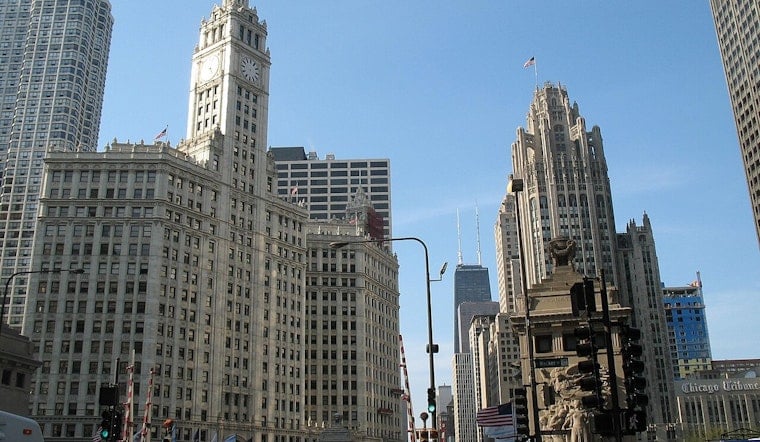
Mickey Mouse and Minnie Mouse will once again lead the way down North Michigan Avenue when the Wintrust Magnificent Mile Lights Festival returns to Chicago on Saturday, November 21, 2026, marking the event's 35th year. The parade and fireworks show runs from 5:30 p.m. to 7:30 p.m. along the Chicago River, capping off a full day of festivities on what organizers bill as the largest evening parade in the United States.
According to ABC7 Chicago, the parade starts at Oak Street on Michigan Avenue and travels south to the Chicago River before turning east onto Wacker Drive and ending at Columbus Drive. ABC7 Chicago will stream the event 24/7 and air a special hosted by Cheryl Burton and Ryan Chiaverini, with coverage of the parade itself airing the next day at 6 p.m. The station's report also notes the event ranks as the third-largest parade in the country overall.
Before the marchers arrive, families can head to Lights Festival Lane at 401 N. Michigan Ave., running from 11 a.m. to 4 p.m. on parade day, per the same outlet's account. The daytime activities set the stage for the evening procession, when Mickey and Minnie illuminate the corridor block by block.
A Tradition Rooted in the 1940s
The festival's roots stretch back to 1949, when the Greater North Michigan Avenue Association put up a 50-foot Christmas tree strung with 1,500 lights in Water Tower Park, according to Wikipedia. A decade later, in 1959, Saks Fifth Avenue began decorating trees along Michigan Avenue with Italian white lights, expanding the tradition into a broader corridor-wide display.
The event took on national scale in 1992, when The Walt Disney Company officially joined as a partner, installing Mickey Mouse and Minnie Mouse as permanent grand marshals and turning a local tree-lighting ceremony into a major tourist draw, Wikipedia notes. That partnership continues today, with the parade route now spanning 1.2 miles along North Michigan Avenue as grand marshals help illuminate more than one million lights strung across over 200 trees, according to Marching.com.
An Economic Engine for Downtown Chicago
The Lights Festival is more than a photo opportunity for holiday shoppers — it is a significant driver of the local economy. The 2023 edition generated over $18.8 million in direct attendee spending, supported 17,294 jobs across the district, and brought 22,196 overnight visitors to area hotels, according to economic data from The Magnificent Mile Association. Total business sales tied to that year's festival exceeded $31.7 million, producing more than $1.5 million in Chicago municipal tax revenue and $1.6 million in Illinois state tax revenue.
The Magnificent Mile corridor itself contains over 3.1 million square feet of retail space and accounts for 67% of all downtown Chicago hotel room capacity, per the association's data, underscoring why the festival's single-day foot traffic surge matters so much to area businesses. Location analytics from Placer.ai found that the festival creates a massive spike in foot traffic along North Michigan Avenue, effectively serving as the retail catalyst that kicks off Chicago's holiday shopping season.
Broadcast Reach and Behind-the-Scenes Effort
Beyond the local ABC7 Chicago broadcast and streaming on Disney+, the parade special has in recent years been syndicated to more than 200 broadcast markets across the United States and Canada through the end of December, according to a release carried by GlobeNewswire. That national footprint depends on a large local effort behind the scenes: the production typically relies on 600 to 800 volunteers who manage float pacing, sponsor activations, visitor guidance, and the giant helium balloons along the route, per the Magnificent Mile Association.
Security has also become a defining feature of recent festivals. For the 2025 event, Chicago police assigned 1,000 additional officers to secure the parade route following two downtown shootings the night before, allowing the festival to proceed safely for an estimated one million attendees, as reported by CBS Chicago. Hoodline reported on the added police presence at that time as well, reflecting how the city balances celebration with public safety planning on one of downtown's busiest nights of the year.





