

























































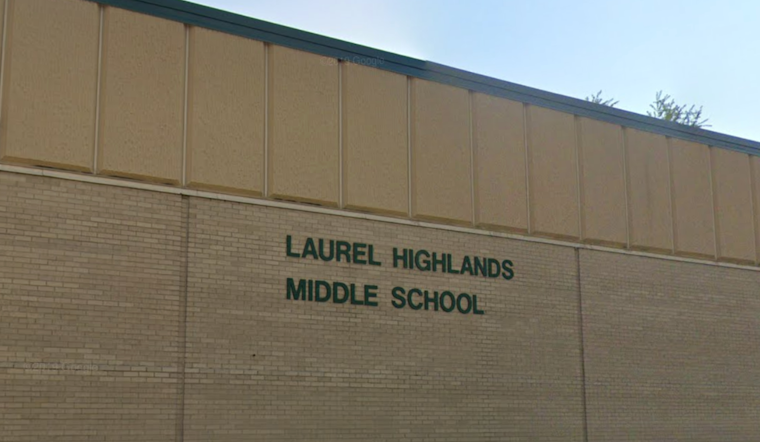
Mold and moisture problems discovered inside Laurel Highlands Middle School have pushed the building's roughly 1,000 sixth- through eighth-graders into remote instruction, with administrators saying in-person classes won't resume before September 7. The rest of the Laurel Highlands School District, including its elementary and high school buildings, returned to in-person classes on Tuesday, leaving the middle school as the district's lone holdout.
KDKA reporter Shelley Bortz first detailed the remote learning plan for the school, located in the Uniontown area of Pennsylvania, according to CBS News Pittsburgh. District officials have since laid out how the contamination took hold: Superintendent Jesse Wallace told the Herald-Standard that pipe insulation not rated for cold-water lines created condensation that leaked through ceiling tiles, while some classroom HVAC ventilators had mistakenly been connected to that same cold-weather piping.
How the Discovery Unfolded
The trouble surfaced quietly in mid-August. A middle school teacher emailed administrators on August 12 with photos of suspected mold on ceiling tiles, according to a timeline the district posted on the Laurel Highlands Middle School Info Facebook page. An initial air quality test came back within normal ranges, but follow-up visual inspections turned up fungal growth on soft furniture and pipe insulation, and administrators and school board members conducted a physical walk-through the next day, per the same account.
The district hired restoration firm Firewater Response to strip out the faulty insulation and damaged ceiling tiles, work now underway across 24 affected areas of the building, the Herald-Standard reports. Administrators have scheduled a September 2 evaluation to determine whether additional remote days will be necessary beyond the current window.
Parents Ask Why It Wasn't Caught Sooner
Some families are questioning whether the building's air quality problems predate this month's discovery. CBS News reported that a Laurel Highlands seventh-grader's sister experienced persistent fevers and respiratory issues throughout the previous school year that cleared up over summer break, fueling parent concerns about transparency and prompting questions about why remediation didn't happen earlier in the summer.
The mold outbreak also lands amid unrelated tension over district leadership. On August 5, the Laurel Highlands School Board voted 6-3 to rescind a three-year contract extension previously granted to Wallace, shortening his tenure to end in 2027 rather than 2030, following public criticism over how the administration handled employee misconduct allegations, according to the Observer-Reporter. Board members Joe D'Andrea, Tom Landman, and Ken Meadows voted against shortening the contract, the newspaper noted.
Part of a Wider Regional Pattern
Laurel Highlands is not alone. Southwestern Pennsylvania school districts have faced a wave of mold-driven start delays this August, including Monessen City School District, which pushed its opening to September 8 while spending $1 million on remediation, and Homer-Center School District, which delayed to September 1, per TribLIVE. Prolonged summer heatwaves combined with high humidity and dormant HVAC systems have created moisture problems in school buildings across Westmoreland, Indiana, Allegheny, and Fayette counties.
Not every district has responded the same way. Hoodline reported that Carlynton School District in Allegheny County sealed off four affected classrooms at Crafton Elementary for cleanup while keeping the rest of the building open, a narrower approach than Laurel Highlands' decision to shift its entire middle school to remote instruction until restoration is complete.
The U.S. Environmental Protection Agency advises school building managers to maintain indoor relative humidity between 30% and 60% to prevent mold growth, warning that improper HVAC installation or unconditioned summer downtime creates ideal moisture conditions for fungal spores. The agency's guidance notes there are currently no numeric health thresholds for airborne mold spores, leaving districts like Laurel Highlands to make their own calls on when a building is safe to reopen.
State money exists to help, though it hasn't fully closed the gap. The Pennsylvania Department of Education distributed $7.9 million in 2024 through its Public School Environmental Repairs Grant Program to address lead, asbestos, and mold hazards, while Governor Josh Shapiro proposed $125 million for school facility improvements for the 2025-2026 budget cycle. Pennsylvania officials have acknowledged that no standardized statewide building quality assessment currently exists, leaving districts largely on their own to detect problems like the one now closing off Laurel Highlands Middle School's classrooms.
The middle school building dates to 1968, when it opened as South Laurel Junior High School, and was expanded in 1984 following the closure of North Laurel Junior High, according to background compiled on Wikipedia. It underwent a major overhaul in August 2003 before reopening as a dedicated middle school serving sixth through eighth grade.



