

























































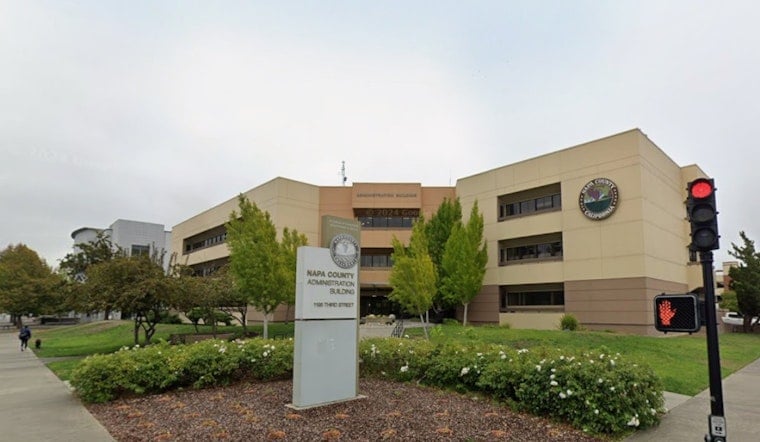
Napa County is moving to explore a temporary moratorium that would block new or expanded immigration detention and correctional facilities from being sited in the county's unincorporated area. The Napa County Board of Supervisors referred the issue to county staff after a request from the county's ad hoc inclusion committee, which includes Supervisors Joelle Gallagher and Belia Ramos.
A Regional Playbook Takes Shape in Napa
Gallagher made the referral on behalf of the inclusion committee, asking staff to draft an ordinance establishing a temporary moratorium on the siting, construction, conversion or operation of new or expanded detention or correctional facilities, according to The Press Democrat. She said policy implications should be weighed when evaluating any detention center proposal, and stressed that the county needs to move quickly to get an ordinance in place. The approach mirrors a framework proposed by Bay Area and congressional leaders led by Rep. Sam Liccardo, San Jose's former mayor, whose policy toolkit gives local governments model land-use ordinances for restricting federal detention facility construction, as reported by San José Spotlight.
Under the proposal, a temporary pause would allow local governments to modify zoning and other laws governing detention facilities while a more comprehensive approach to land-use and community impacts is developed. The moratorium would apply specifically to new or expanded detention or correctional facilities within Napa County's unincorporated area, per the Press Democrat's reporting. Napa isn't working from scratch: a draft ordinance out of San Mateo County could serve as a starting point for Napa's own version.
San Mateo County Set the Template
San Mateo County's Board of Supervisors unanimously adopted an interim urgency ordinance on Tuesday under California Government Code Section 65858, creating a temporary moratorium on the siting, construction, conversion or operation of new or expanded detention facilities in its unincorporated area, according to the County of San Mateo. That move bought San Mateo staff time to draft permanent land-use regulations, and it's the exact mechanism Napa officials are now studying.
The legal theory behind this wave of local action rests on municipalities' 10th Amendment police powers, rooted in the 1926 U.S. Supreme Court decision in *Village of Euclid v. Ambler Realty Co.*, which affirms local authority over health, safety and zoning regulations, as CBS News explains. Local governments can impose general health, safety, environmental and zoning restrictions on categories of buildings that could include detention centers, even though they cannot ban federal activity outright. That distinction matters because a full statewide ban on private, for-profit detention contracts, California's AB 32, was struck down as unconstitutional in September 2022, when the full U.S. Ninth Circuit Court of Appeals ruled in *GEO Group v. Newsom* that the law improperly interfered with federal immigration operations under the Supremacy Clause.
Gilroy Lawsuit and Regional Pressure
The regional urgency traces in part to a 25-acre agricultural site near Gilroy in Santa Clara County, where the federal government has sought to build an ICE facility designed to hold and process up to 150 detainees. California Attorney General Rob Bonta and Santa Clara County filed a federal lawsuit in June 2026 seeking to permanently block the project, alleging violations of federal environmental laws and agricultural zoning protections under the state's Williamson Act, according to the California Department of Justice. Federal attorneys agreed the following month to a voluntary pause on construction, demolition and development at the site while the lawsuit proceeds, the Los Angeles Times reported.
Alameda County has staked out similar ground. Its Board of Supervisors unanimously passed a resolution in April opposing any effort to repurpose the shuttered federal women's prison, FCI Dublin, into an ICE detention center — a facility the Federal Bureau of Prisons closed in 2024 following widespread staff misconduct and unsafe conditions, according to the Davis Vanguard.
Local Trust Issues and an Immigrant-Reliant Workforce
The moratorium discussion arrives weeks after the Napa County Board of Supervisors approved updates to county corrections policies on August 11, following a 2025-26 Civil Grand Jury report titled Fear of ICE in the Valley?. That report found local police comply with state sanctuary laws but identified persistent community trust issues around jail transfers, and directed officials to narrow when the county responds to ICE detainers and to create a public reporting dashboard, per Napa County government records.
Immigration enforcement carries particular economic weight in Napa, where a May 2026 study titled Immigrants in Napa County's Communities and Economy found that immigrants make up 21 percent of the county's overall population and 29 percent of its workforce, according to Napa Valley Patch. The same study found 92 percent of immigrant residents have lived in the United States for a decade or longer, underscoring how deeply rooted the workforce is in the county's agriculture and wine industries.
The push for local moratoria also comes amid a documented national surge in immigration enforcement. ICE made 50,000 arrests nationwide in July 2026, the highest monthly total of the president's second term, per the Press Democrat's report on the county referral. Separate tracking by the Transactional Records Access Clearinghouse showed ICE held 65,765 individuals in civil immigration detention nationwide as of July 2026, with 70.6 percent having no criminal convictions, according to Hoodline's earlier coverage.
For now, Napa County's moratorium remains at the referral stage, with staff directed to draft the ordinance rather than a final policy in hand. Whether the approach can withstand a federal legal challenge, or simply delays where the government ultimately sites a facility, remains an open question as county staff begin the drafting process.





