

























































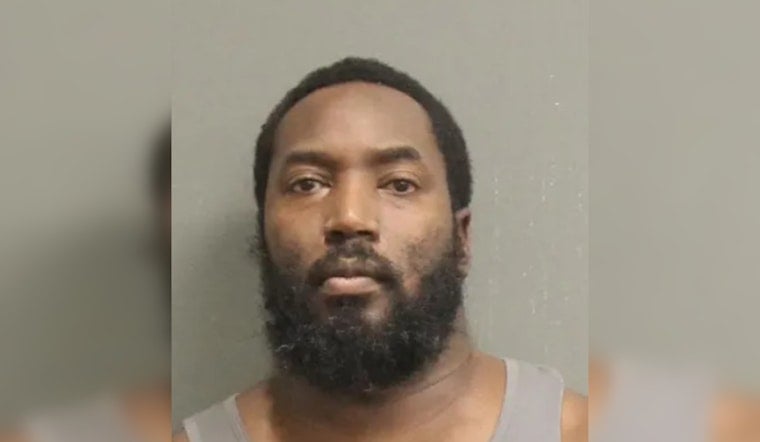
A 39-year-old Nashville man is being held on $100,000 bond after Metro Nashville Police say they found child sexual exploitation material linked to two Google accounts and one x.ai account bearing his name. Clarence D. Smith Jr. was arrested at his home on Rogers Avenue and charged with three counts of sexual exploitation of a minor, according to police.
The arrest, first reported by WSMV, stemmed from CyberTips that Google and x.ai — the company behind the Grok chatbot — sent to investigators after automated systems flagged suspected material on Smith's accounts. Detectives with the Metropolitan Nashville Police Department's Special Victims Division executed a search warrant at the Rogers Avenue residence on the morning of Thursday, following CyberTips routed through the National Center for Missing & Exploited Children, according to the Metropolitan Nashville Police Department. Investigators say they also found non-sexual photos of Smith on the same accounts, helping tie the material to him.
A Pattern of AI-Linked Tips Hitting Nashville
Smith's case is not an isolated one for the department. Just a day before his arrest, Metro Nashville Police charged a convicted sex offender on parole after digital forensics revealed he had uploaded AI-generated child sexual abuse imagery, per the department's own announcement. And in April, MNPD detectives arrested another Nashville resident after a CyberTip alleged he used Grok to generate similar images, the department reported at the time.
The frequency of these cases in Nashville mirrors a broader surge nationwide. In 2025, eight major technology platforms, including x.ai LLC, submitted more than 17 million CyberTipline reports of suspected online child exploitation to NCMEC, according to the U.S. Senate Committee on the Judiciary. Of those, more than 400,000 involved a generative AI nexus, and more than 182,000 involved offenders possessing, generating, or attempting to generate AI-created child sexual abuse material, according to NCMEC data cited by police.
How Fast the AI Tip Numbers Have Grown
The scale of that shift is stark. NCMEC CyberTipline reports involving generative artificial intelligence and child sexual exploitation rose from 6,835 reports in the first half of 2024 to 440,419 reports in the first half of 2025, according to MissingKids.org. Of the more than 400,000 generative AI-related reports NCMEC received in 2025, over 30,000 involved users attempting to generate child sexual abuse material through text prompts or uploaded files, while over 7,000 involved users generating or possessing AI-made material, the organization reports.
Nashville is not the only city where Grok has surfaced in these investigations. In June, authorities in Bucks County, Pennsylvania charged a man after x.ai submitted seven automated CyberTips to NCMEC flagging 37 computer-generated child sexual abuse files created through the chatbot, according to the Bucks County District Attorney's Office. xAI itself is also facing mounting civil litigation, including an amended federal class-action lawsuit alleging Grok lacked adequate safeguards to prevent users from generating deepfake child sexual abuse material, according to the law firm Lieff Cabraser.
What Tennessee Law Says About AI-Generated Material
Tennessee law does not distinguish between traditional and computer-generated abuse imagery when it comes to prosecution. Tennessee Code § 39-17-1002 explicitly defines child sexual abuse material to include computer-generated depictions as well as content created, adapted, or modified by generative artificial intelligence, according to WomensLaw.org.
Under Tennessee Code § 39-17-1003, knowingly possessing material depicting a minor engaged in sexual activity is a Class D felony punishable by 2 to 12 years in prison, escalating to a Class C felony carrying 3 to 15 years for possessing more than 50 images, and a Class B felony carrying 8 to 30 years for possessing more than 100 images, according to the Law Offices of Joshua T. Crain. Each image or digital file can be charged as a distinct count under state law, the firm notes.
Smith's arrest adds to a string of recent Nashville-area cases involving tech-platform tips, including a cloud-service cybertip case and a separate arrest tied to a Snapchat report forwarded through NCMEC. He remains jailed on $100,000 bond as the investigation continues.





