

























































Charles Bratcher's daughter, a junior at Glencliff High School, used to catch her school bus right outside the family's home on Dover Road. This year, Metro Nashville Public Schools moved that stop to Drummond, a road Bratcher describes as dangerous, where he says vehicles travel 70 to 80 miles per hour. He is one of several Hermitage-area parents now pushing back against a wave of bus stop relocations they say traded student safety for scheduling efficiency.
The changes stem from a district-wide shift in school start times that took effect this year, according to WSMV. Metro Nashville Public Schools moved some bus stops from neighborhood side streets to busier connecting roads as part of that overhaul, and the district says the average distance between a child's home and their assigned stop grew from about one city block to two. Metro Nashville spokesperson Sean Braisted told the station the route changes were made for routine efficiency reasons tied to the shift in start times, not a change to the district's maximum stop distance policy.
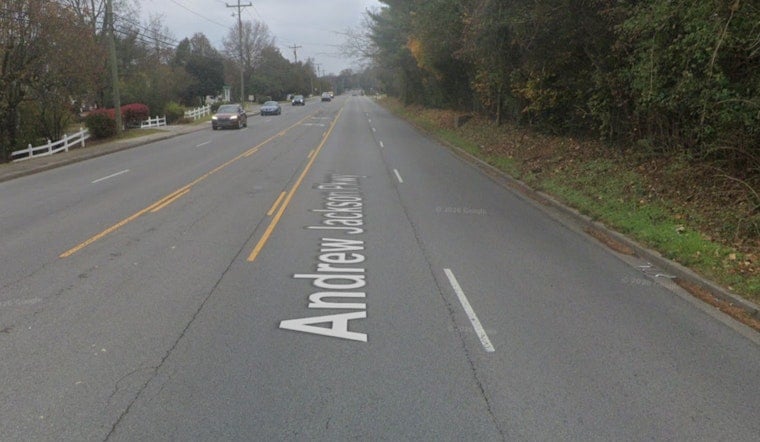
Kelly Peterson, who has three children in Metro Schools ranging from elementary to high school, said her kids are now picked up and dropped off on Andrew Jackson Parkway, where traffic passes at 40 to 60 miles per hour. She has proposed an alternative route that she says stays efficient while accounting for safety, arguing that the two goals do not have to be in conflict. Both Peterson and Bratcher told the station that efficiency should not outweigh student safety.
A Corridor With a History of Crashes
Andrew Jackson Parkway is not an obscure side street. A citywide traffic study reported by a Nashville traffic data breakdown recorded 35 crashes in a single year at the parkway's intersection with Lebanon Pike. The corridor's speed limit was itself raised years ago — the Metro Nashville Traffic & Parking Commission increased sections of Andrew Jackson Parkway from 30 mph to 40 mph to accommodate vehicle flow, according to Metro Nashville Government records. Bratcher put it plainly to the station: the safety risk at these stops is not hypothetical, and he said Nashville can shift quickly between safe and unsafe conditions.
Why the Routes Changed in the First Place
The trigger for this year's reshuffling traces back to February, when the Metro Nashville Board of Education unanimously approved a district-wide schedule adjustment for the 2026-27 school year, pushing high school start times 20 minutes later to 7:25 a.m. and elementary start times 10 minutes later to 8:10 a.m. That change compressed the tiered start schedule window from 55 to 45 minutes, according to Metropolitan Nashville Public Schools. The tighter window was developed through a multi-phase study launched in fall 2025 in partnership with the Mayor's Office and transportation consulting firm 4MATIV, which gathered more than 23,000 survey responses from parents and community members, as reported by WPLN News.
Squeezing that window down forced the district's transportation team to consolidate stops to keep buses on schedule. The scale of the task is considerable: Metro Nashville Public Schools is the second-largest district in Tennessee and the 45th-largest in the country, serving more than 80,000 students across 520 square miles with a bus fleet that logs over 37,000 miles daily, according to district figures. District policy provides bus transportation to students who live more than 1.25 miles from their assigned campus, per Inglewood Elementary guidance describing that threshold.
What Families Can Do About a Specific Stop
Metro Nashville's transportation team has said it will review routes for needed adjustments, and parents with concerns can contact the district's Family Information Center to request a review of a child's bus stop location. The district also offers the Versatrans MyStop mobile app and an online Find My Bus Stop portal, tools that let parents track buses in real time and formally flag individual stops for a safety review by transportation supervisors.
Tennessee law does impose steep penalties on drivers who ignore a stopped school bus. Under Tennessee Code § 55-8-151, failing to stop for a bus with flashing red lights and an extended stop arm is a Class A misdemeanor carrying fines of $250 to $1,000 and eight points against a driver's license, according to legal reference site Justia. If a driver illegally passes a stopped bus and strikes a pedestrian, the charge escalates to a Class E felony carrying up to six years in prison — and to a Class C felony with up to 15 years if the crash proves fatal, per WBIR. State law also authorizes districts to install exterior stop-arm cameras on buses to automatically capture video evidence and issue citations to violators, according to the National Conference of State Legislatures.
For parents like Bratcher and Peterson, though, the core complaint isn't about catching bad drivers after the fact — it's about whether their kids should be standing that close to fast-moving traffic in the first place. Hoodline previously reported on Middle Tennessee bus safety warnings ahead of last year's school year, underscoring that concerns about driver behavior near buses are not new to the region even as this year's dispute centers on where the stops themselves are placed.



