

























































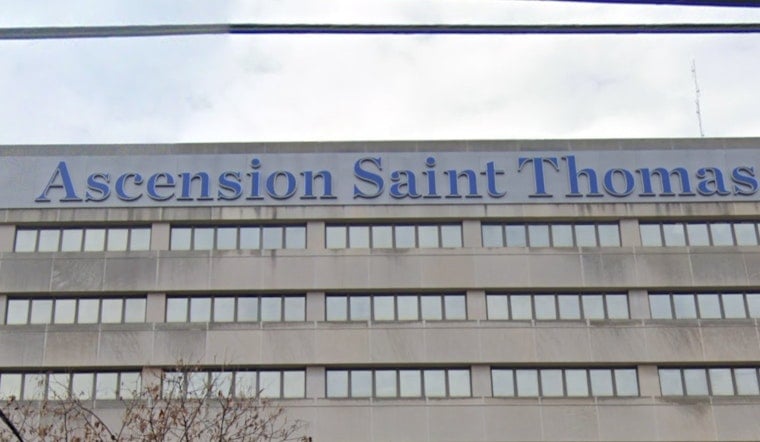
A Centerville woman is permanently paralyzed from the chest down after undergoing knee replacement surgery at Ascension Saint Thomas Hospital Midtown in Nashville, where hospital officials say a pharmacy error caused the wrong medication to be injected during what was supposed to be a routine epidural for pain control. At least three other patients were affected by the same mix-up during joint replacement surgeries at the hospital, and the woman remains in the intensive care unit at a sister facility as her family speaks with an attorney.
According to News Channel 5 Nashville, the hospital pharmacy filled syringes with potassium instead of bupivacaine, the anesthetic that was supposed to be used in the procedures. At least four people underwent joint replacement surgeries at Ascension Saint Thomas Midtown when the error occurred, and the Centerville woman's procedure was intended to include an epidural for pain management rather than the drug she actually received. She was later transferred to Ascension Saint Thomas West, where she remains in the intensive care unit, according to the same report.
Potassium can stop the heart and can be lethal, a danger underscored by the Institute for Safe Medication Practices, which classifies both concentrated potassium chloride for injection and neuraxial anesthetics like bupivacaine as “high-alert medications” carrying a heightened risk of catastrophic harm or death when administered in error, according to the Institute for Safe Medication Practices. A 2025 systematic review published by the National Center for Biotechnology Information found that accidental administration of potassium chloride into the epidural space causes severe neurological consequences, including acute neurotoxicity, persistent motor block, and permanent paralysis, since the neuraxial space around the spinal cord is exceptionally vulnerable to toxic electrolyte concentrations compared to intravenous lines, per the National Center for Biotechnology Information.
Hospital Says It Notified Regulators and Met With Families
Dr. Shubhada Jagasia, president and CEO of Ascension Saint Thomas Midtown, said the hospital is deeply sorry for the harm caused to its patients, per the same News Channel 5 report. Ascension Saint Thomas Midtown said its hearts are with the four patients and their families impacted by the event, and the hospital has met with each affected family, connecting them with spiritual care teams and providing access to appropriate resources and ongoing care.
The hospital said it launched a thorough investigation on the day of the event and has since identified the cause, implementing corrective safeguards afterward. Ascension maintained that it reported the event to state regulators, who are now investigating the mix-up, the station's report notes. Under Tennessee Department of Health regulations, hospitals are legally required to immediately report so-called sentinel events — unexpected occurrences involving death, serious physical injury, or loss of body function — and submit a formal plan of correction to state authorities, according to the University of Tennessee Health Science Center.
A Familiar Fear in a City Still Shadowed by the Vaught Case
The mix-up lands in a city still marked by one of the most consequential medical-error prosecutions in the country. Davidson County was the site of the March 2022 conviction of former Vanderbilt University Medical Center nurse RaDonda Vaught, found guilty of criminally negligent homicide after accidentally administering the paralyzing drug vecuronium instead of a sedative called Versed, a case that sparked nationwide debate over hospital systemic failures versus individual criminal liability, according to Hancock Daniel. That history means Nashville families and clinicians alike are watching closely to see whether responsibility for this latest error is traced to systemic pharmacy failures or individual accountability.
Wrong-drug neuraxial errors are not unheard of nationally, even if rare. A June 2024 analysis from the Anesthesia Patient Safety Foundation documented six reported incidents over a ten-year period in which local anesthetics like bupivacaine were confused with other surgical injectable medications, with safety organizations recommending clear color coding, distinct syringe connectors, and automated barcoding to prevent such nerve-block mix-ups. It remains unclear exactly how the syringes prepared at Ascension Saint Thomas Midtown's pharmacy were filled with the wrong agent or which safeguards failed before reaching the operating room.
A High-Volume Hospital Under Recent Scrutiny
Ascension Saint Thomas Hospital Midtown, originally opened in 1919 as Protestant Hospital before becoming Baptist Hospital, is licensed for 683 acute and rehabilitation beds and is the largest non-profit community hospital in Middle Tennessee, according to the University of Tennessee Health Science Center. The hospital just closed out a record-breaking fiscal year, delivering 7,008 babies — about one birth every 75 minutes — and accounting for roughly one in every three births in Middle Tennessee.
The Centerville woman was transferred to Ascension Saint Thomas West for intensive care, a hospital currently in the midst of its own transformation. In a $120M West Nashville revamp, that facility launched a multi-year overhaul in July to modernize its operating rooms, cardiac catheterization labs, and critical care infrastructure. Midtown itself faced separate regulatory scrutiny recently, having been among nine Middle Tennessee facilities flagged by watchdog group Hospital Watch in July for noncompliance with federal price-transparency rules, exposing it to potential civil monetary penalties.
Ascension Saint Thomas operates 18 hospitals and more than 320 care sites across 45 Tennessee counties, employing more than 13,000 healthcare personnel statewide as one of the largest Catholic non-profit health systems in the nation. As state regulators continue investigating what went wrong inside the Midtown pharmacy, the Centerville woman's family is speaking with an attorney, and questions remain open about whether the error will lead to civil litigation or further regulatory action against the hospital system.





