

























































Nevada Transportation Authority commissioners voted Thursday to approve fare-charging driverless ride applications from Tesla Robotaxi, Waymo and Uber subsidiary Aviari Services, opening the door to as many as 7,000 permitted autonomous vehicles across Clark County. The vote authorizes Tesla for up to 5,000 fully autonomous vehicles in its first permit year, while Waymo and Aviari Services are each cleared for up to 1,000 vehicles. All three companies must clear a string of administrative hurdles, including rate reviews and vehicle inspections, before any of those cars can actually start picking up paying passengers.
The approvals mark a dramatic expansion from where things stood just weeks earlier. As reported by KSNV, the three companies must submit planned passenger rates for regulatory review, provide vehicle inspection records, maintain insurance, and turn over app information before placing any cars into service. They also have roughly four months from when the permits are issued to actually begin operations, per the outlet's reporting.
Despite the size of the ceiling Tesla secured, the company itself is tempering expectations for how fast it will scale in Southern Nevada. Tesla Cybercab Chief Engineer Eric Early told regulators during Thursday's hearing that the 5,000-vehicle cap is a maximum rather than a deployment target, and that Tesla would view roughly 2,500 autonomous vehicles operating in Clark County within the first year as a success, according to PCMag.
From a 10-Car Trial to a 5,000-Car Ceiling
The scale of Thursday's decision looks even more striking next to where Tesla stood less than a month earlier. Electrek reports that the vote replaced an interim order issued on July 27, 2026, under which state regulators had restricted Tesla Robotaxi to just 10 vehicles operating under a 45 mph speed limit within a narrow corridor of the Las Vegas Strip. That earlier limit sat far below the 5,000 vehicles Tesla had originally requested when it filed its permit application, a gap Hoodline detailed in its earlier report on Tesla's bid for a 5,000-vehicle fleet.
Uber is not planning to run its own fleet of self-driving cars to fill its 1,000-vehicle Aviari Services permit. Instead, the company intends to partner with third-party autonomous vehicle developers, including Hyundai-backed Motional and Amazon-owned Zoox, according to TechDogs. Zoox already has a foothold on the Strip: the Amazon subsidiary holds Nevada's first Autonomous Vehicle Network Company permit, covering up to 100 vehicles, and began charging fares for driverless trips there in August 2026 after operating a free-ride interim phase.
Safety Conditions and an Airport Carve-Out
Regulators attached public-safety strings to Thursday's approvals. Each operator must provide local first responders with a 24-hour emergency contact, and Tesla says it is producing a five-minute instruction video to walk emergency personnel through how to handle its vehicles, per Engadget. The permit also lets Tesla eventually expand its robotaxi service beyond Clark County into other parts of Nevada, provided it gives state regulators advance notice before widening its geofenced operating area, Teslarati reports.
None of the newly approved vehicles will be picking up or dropping off riders at Harry Reid International Airport just yet. Commercial transportation companies need separate Automated Vehicle Identification transponder permits under landside directives enforced by the Clark County Department of Aviation before they can access airport terminals, and Thursday's NTA approval explicitly excluded that access pending the county's sign-off.
Taxi Industry Warns of Traffic and Job Losses
Not everyone welcomed the scale of the approvals. Representatives of the Livery Operators Association spoke against the multi-thousand-vehicle permits during Thursday's hearing, warning that deploying thousands of robotaxis at once could clog Las Vegas streets and undercut human rideshare and taxi drivers who make up a significant part of Southern Nevada's workforce.
Nevada Department of Business and Industry Director Kristopher Sanchez said the state has built a regulatory framework specifically for autonomous vehicle network companies, and he voiced support for the NTA's commitment to keep evaluating that framework and adjust it when appropriate. The legal groundwork traces back to 2017, when the Nevada Legislature passed Assembly Bill 69, permitting fully autonomous vehicles to operate on public roads without human safety drivers as long as automated failure-detection systems are in place — a framework that followed the state's first AV testing law in 2011.
Waymo's Head Start on the Strip
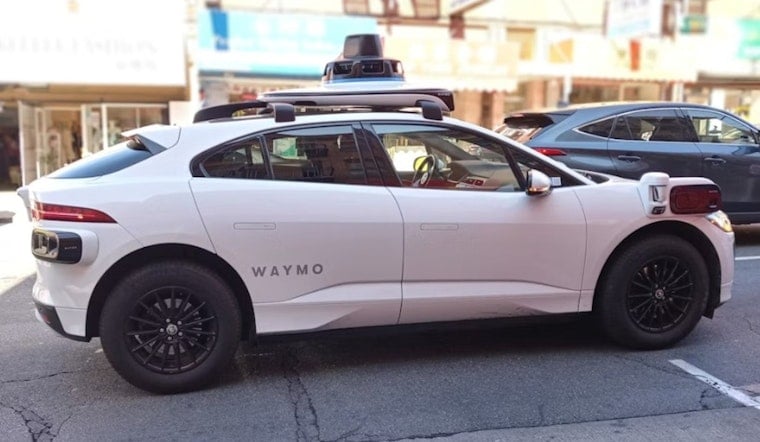
Waymo, which operates autonomously driven Jaguar I-PACE electric SUVs, was already active on Las Vegas streets before Thursday's fare approval. The company began driverless passenger testing in the city in July and partnered with the Las Vegas Raiders that same month to set up designated robotaxi pickup zones at Allegiant Stadium, a rollout Hoodline covered in its stadium pickup zone story. That early Las Vegas push followed months of preparation after Waymo first announced plans to bring robotaxis to the market. The company's testing phase wasn't entirely trouble-free, either — Hoodline previously reported on a collision involving a driverless Waymo on Polaris Avenue, in which the company blamed a human driver.
Even with Thursday's broad regulatory green light, the actual number of robotaxis on Las Vegas streets is expected to grow gradually rather than all at once. Companies still need to clear rate approvals, vehicle inspections and county-level permissions in the coming weeks, and Tesla's own projection of roughly 2,500 vehicles in year one — half its permitted ceiling — suggests fleet scaling will hinge on demonstrated software safety on the Strip as much as on the paperwork now in hand.




