

























































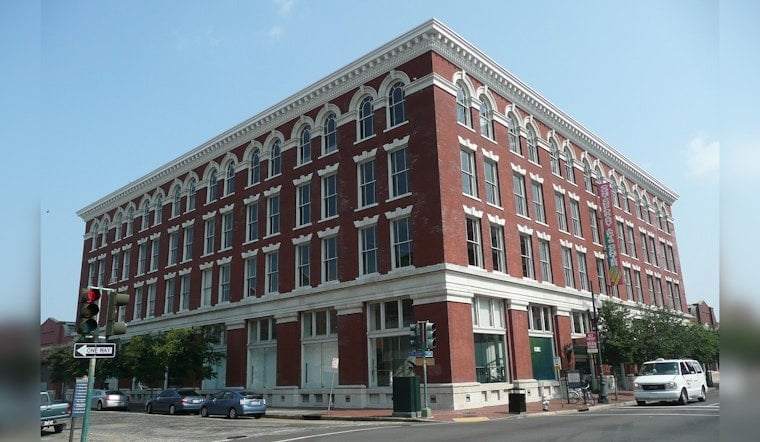
Step through the doorway of a gallery inside the Contemporary Arts Center New Orleans and you land somewhere unexpected: a living room built to look and feel like it did before Hurricane Katrina tore through the city in 2005. The installation, created by New Orleans artist and filmmaker Edward Buckles Jr., reimagines the home he shared with his family before the storm changed New Orleans forever.
Buckles wants visitors to feel like they are walking through a time portal to a time before Hurricane Katrina made landfall in New Orleans in August 2005, according to WDSU. The room itself is not unfamiliar territory for Buckles fans: it was featured in his documentary Katrina Babies, the film that first put his memories of the storm on screen. The installation preserves memories of the home Buckles shared with his family before the hurricane, the station reports.
The piece, titled The Living Room (Before Katrina), was built with help from Dillard University's Theatre Department, led by Cortheal Clark, along with set designer Christianinix, textile artist Jas Monique, projection artist Cristina Molina and lighting designer Jade Proctor, according to a video Buckles posted on Facebook. Buckles graduated from Dillard in 2015, where he studied theater and film, giving the collaboration a full-circle quality. Inside, archival video footage plays pre-Katrina domestic scenes, including a clip of artist and dancer André Hubbard's family gathered in their own living room, dancing to New Orleans bounce pioneer DJ Jubilee.
From a College Film Class to a Physical Room You Can Walk Into
Buckles first conceived the idea that became Katrina Babies at age 20, while he was still an undergraduate film student at Dillard, after a phone call from a displaced cousin left her in tears, as detailed by TIME. He was 13 when the storm struck, and that call pushed him to start documenting his peers' childhood experiences of displacement, a project that would take seven years to make. Before he finished the film, Buckles worked as a digital media instructor at his own high school alma mater, Edna Karr High School on New Orleans' Westbank, gathering interview subjects through local social media outreach along the way.
The documentary premiered at the 2022 Tribeca Festival in New York, where it won the inaugural Human/Nature Award and the Albert Maysles Award for Best New Documentary Director before it went on to air on HBO. The recognition kept coming: in May 2023, the New Orleans Film Society gave Buckles its inaugural Rising Star Award, in a ceremony presented by Golden Globe-nominated actress and New Orleans resident Lynn Whitfield.
A Debut Timed to White Linen Night
The installation made its public debut on August 1, 2026, during the 32nd annual Fidelity Bank White Linen Night, the arts stroll that draws crowds along Julia Street in the Warehouse Arts District, as Hoodline previously reported. The Contemporary Arts Center is hosting the piece alongside its summer visual art program, Idyll: Pleasures of Summer, and both are on view through September 29, 2026. WDSU anchor Darryl Forges is set to present an extensive look at the exhibit on WDSU News This Morning, with the segment produced under executive producer Farrah Reed.
The installation lands during a broader season of Katrina remembrance in New Orleans. In June 2025, Film New Orleans, a division of the Mayor's Office of Cultural Economy, launched a citywide 20th-anniversary retrospective series with a free public screening of Katrina Babies and a community discussion at Gallier Hall's Ty Tracy Theater, per OffBeat Magazine. That civic embrace echoes the citywide commemorations Hoodline covered in its 20th anniversary summit coverage last year.
The Scale Behind One Family's Living Room
Buckles' installation is deeply personal, but it sits atop a much larger story of displacement. Hurricane Katrina displaced roughly 600,000 families across the Gulf Coast and pushed nearly 200,000 residents out of New Orleans alone, uprooting an entire generation of children during their formative years, according to figures reported by EBONY. The storm killed more than 1,800 people and caused over $100 billion in damage.
That scale is part of what makes Buckles' approach distinct: he has said he sees his work not just as historical preservation but as a space for community dialogue and therapeutic processing for a generation whose childhoods were interrupted without warning. By turning a private memory into a public sculpture, one visitors can physically enter, Buckles is asking his hometown to sit inside a moment that, for thousands of families, simply vanished.





