

























































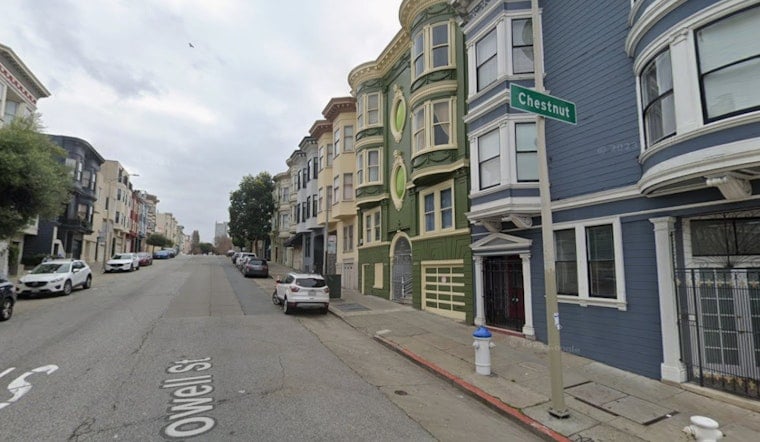
Six households at 2055 Powell Street in North Beach are fighting to stay in apartments some have called home for decades, after a group of new owners invoked California's Ellis Act to clear the rent-controlled building. Official filings show six eviction notices under Rent Board case numbers M252015 through M252020 were submitted for the building on November 3, 2025, setting off a legal battle that is now playing out in San Francisco courts.
Among the tenants is Yok Lin Chui, who immigrated from Hong Kong in 1971 and has lived in the Powell Street building for more than 50 years. As reported by NBC Bay Area, Chui said she does not know where she would go if forced to move, and that she does not even know how to take a taxi to get around. She hopes to find housing assistance from the city, but for now remains one of six households refusing to leave quietly.
Also fighting eviction is Bernard Dethiers, a tenant in the building for more than 30 years who serves as president of the San Francisco Taxi Coalition, a local advocacy group representing taxicab medallion holders and drivers before city transportation authorities. Dethiers refused an offer to buy into the tenancy in common that now owns the building, and he told the outlet that the tenants are fighting for other rent-controlled tenants across San Francisco. He added that he believes the Ellis Act is legal but immoral.
A Childhood Home Now at Risk
Meagan Cunningham moved into the building as a child in 1987 and now lives there with her adult son, Max. A voice-over artist by trade, Cunningham said losing the apartment could end her North Beach life — and perhaps her San Francisco life altogether, according to the same report. She said two of the new owners had previously rented units in the building themselves.
The tenants pay far below market rent: no tenant pays more than $1,300 a month, and one pays about $600, according to Tenderloin Housing Clinic managing attorney Steve Collier. That gap exists because San Francisco's Residential Rent Stabilization and Arbitration Ordinance, which applies to multi-unit properties built before June 13, 1979, capped allowable annual rent increases at just 1.4 percent for the year running through February 2026, according to the City of San Francisco. Zumper has reported that the median one-bedroom rental in San Francisco now exceeds $4,000 a month, a chasm Collier said makes relocation payments insufficient for many rent-controlled tenants to actually secure market-rate housing.
Seven New Owners, One Tenancy in Common
Seven new owners purchased the building last year through a tenancy in common, a structure that allows each buyer to own a share of the property rather than an individually deeded unit. Tenancy in common purchases typically sell at a 10 to 20 percent discount compared to condominiums, since buyers must use specialized fractional loans rather than conventional mortgages, according to the Warrin Team. Under San Francisco Administrative Code Chapter 37, landlords invoking the Ellis Act must offer a baseline 120-day notice to vacate, but the Ellis Act terms in this case require the tenants to move out by November — reflecting an extended timeline that state and local law grants to tenants who are at least 62 or disabled and have lived in a unit for at least a year.
The tenants have sought help from the Tenderloin Housing Clinic, which offers legal aid to low-income San Francisco residents, and have since decided to fight the eviction rather than accept it. In 2026, they filed a cross-complaint against the building owners, alleging housing discrimination and other civil violations. The complaint alleges that only Caucasian tenants were offered opportunities to buy into the ownership group, while Asian families, including Cunningham's household, were not offered that chance despite expressing interest, per Collier's account to the outlet. Collier said the alleged discrimination is illegal whether it was intentional or simply a consequence of how the offers were made.
Owners Say They Are Not Speculators
The building owners filed a lawsuit against their tenants in April 2026, seeking to resolve the eviction dispute and limit potential legal defenses. In a statement, the owners said they are legally pursuing home ownership in a city with an evergreen housing shortage, describing themselves as long-term North Beach renters and families seeking to raise young children in San Francisco. They said they are not developers speculating on the AI bubble, and that they hope displaced tenants will use available housing opportunities the city provides. The owners' statement did not address the cross-complaint's discrimination allegations, and NBC Bay Area said it had requested comment from the owners specifically on those claims.
Collier countered that city housing assistance is in short supply and even harder to find for multigenerational households, and he argued the Ellis Act should not be used as an eviction tool by brand-new owners who just purchased a building. Under state and local law, property withdrawn from the rental market via the Ellis Act carries lasting consequences: owners cannot re-rent units for two years, must cap rents at previous levels if they do re-rent within five years, and must grant evicted tenants a 10-year right of first refusal to return. San Francisco ordinances also generally bar buildings with a history of no-fault evictions from converting into individually deeded condominiums, according to Andy Sirkin Law.
Part of a Decades-Long Pattern
The dispute at 2055 Powell Street is not an isolated case. City records show more than 4,300 Ellis Act eviction notices have been filed with the San Francisco Rent Board since 1997, according to DataSF, reflecting a long-running pattern of landlords withdrawing rent-controlled units from the market. North Beach has seen this fight before: Hoodline covered a similar Ellis Act fight in 2016 involving an 81-year-old poet facing displacement in the neighborhood.
For now, the six households at 2055 Powell Street and the building's new owners are fighting the eviction in court, with the discrimination allegations, the November move-out deadline, and the fate of a half-century of tenancy all still unresolved.





