

























































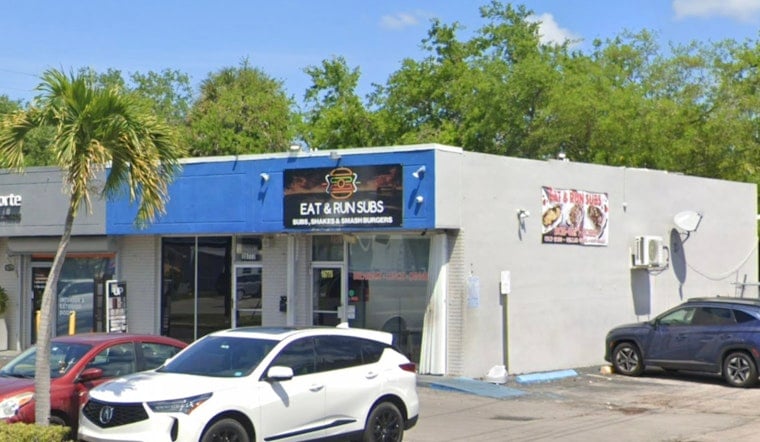
A routine health inspection turned up live roaches crawling on a kitchen curtain and dozens of rodent droppings scattered across the floor of a North Miami Beach sub shop, prompting state regulators to shut the business down on the spot. Eat & Run Subs, located at 16775 N. Miami Ave., was allowed to reopen the very next day after a follow-up check cleared the violations that triggered the closure.
The Florida Department of Business and Professional Regulation's Division of Hotels and Restaurants closed the sandwich shop following an inspection on August 20, according to the Miami Herald. Inspectors documented ten total violations, four of them high-priority, and found rodent droppings piled up in multiple spots throughout the kitchen: more than 20 under the fryers, more than 25 on the floor beneath the three-compartment sink, more than 20 under the display case near the front-counter handwash sink, more than 10 under the bread shelves, and five each under the mop sink and on top of the water heater. Inspectors also reported spotting two live roaches crawling on the curtain hanging at the kitchen entrance.
Under Chapter 509 of the Florida Statutes, the Division of Hotels and Restaurants has the statutory authority to issue an Emergency Closure Order and immediately suspend a food establishment's license whenever inspectors identify conditions that pose an immediate threat to public health, according to MyFloridaLicense.com. That authority is exactly what shut down Eat & Run Subs after the August 20 inspection, following the same routine visit that turned up the roaches and droppings.
What Counts as a High-Priority Violation
Florida adopted the 2017 FDA Food Code in 2019, which sorts restaurant violations into three tiers: High Priority, Intermediate, and Basic, with high-priority infractions being those most directly linked to foodborne illness or injury, per the same state licensing agency. Beyond the rodent droppings and roaches, inspectors at Eat & Run Subs also found the three-compartment sink without any sanitizer, meaning the sink meant to wash, rinse and sanitize dishware was missing a key step in that process. The kitchen handwash sink had no paper towels or mechanical hand-drying device and was coated in old debris, the walk-in cooler floor was heavily soiled with old food debris, and the slicer also had old food debris on it, the Miami Herald reported.
The health risk tied to roaches isn't just cosmetic. Research published by the National Institutes of Health has found that cockroaches act as mechanical vectors for more than 25 foodborne pathogens, including E. coli, Salmonella, and Staphylococcus aureus, picking up microorganisms on their bodies while crawling through filthy environments and depositing them on food-prep surfaces through contact, regurgitation, or feces.
Quick Turnaround Before the Weekend
DBPR rules require a callback inspection within 24 hours of an emergency closure, or sooner if the business requests it, and the establishment can only reopen once an inspector confirms the high-priority violations have been fixed, according to MyFloridaLicense.com. Eat & Run Subs passed its callback inspection on August 21, just a day after the shutdown, and reopened in time for weekend business. The Herald noted the shop had passed three previous inspections without falling short of standards since opening in March 2024.
Florida law does not require restaurants to post letter grades or inspection scores at their entrances the way states like New York or North Carolina do, according to a guide on checking Florida restaurant inspections, which means diners largely rely on media coverage or the state's online inspection portal to learn about violations like the ones found at Eat & Run Subs. The shop serves North Miami-Dade and South Broward communities including Golden Glades, Miami Gardens, Aventura, Ojus, and Sunny Isles Beach, and the location previously operated under the name Albie's Sub Factory before the current business took over.
Open Questions and Broader Enforcement
Under Rule 61C-1.005 of the Florida Administrative Code, an emergency license suspension typically carries a standard first-offense administrative fine of $500, rising to $1,000 with potential license suspension or revocation for repeat offenses. It remains unclear whether DBPR will pursue a formal fine against Eat & Run Subs for the violations found on August 20, and whether the shop is maintaining regular pest control to prevent the problems from recurring.
The case is a small piece of a much larger inspection effort statewide. DBPR inspectors conducted 178,211 public food service and lodging inspections across Florida during the 2024–2025 fiscal year, according to data compiled by Glover Law, covering more than 66,000 licensed food service establishments statewide. Nationally, the Centers for Disease Control and Prevention has reported that more than half of all foodborne disease outbreaks stem from restaurants, delis, and other commercial food service facilities, underscoring why routine inspections like the one at Eat & Run Subs matter to public health.



