

























































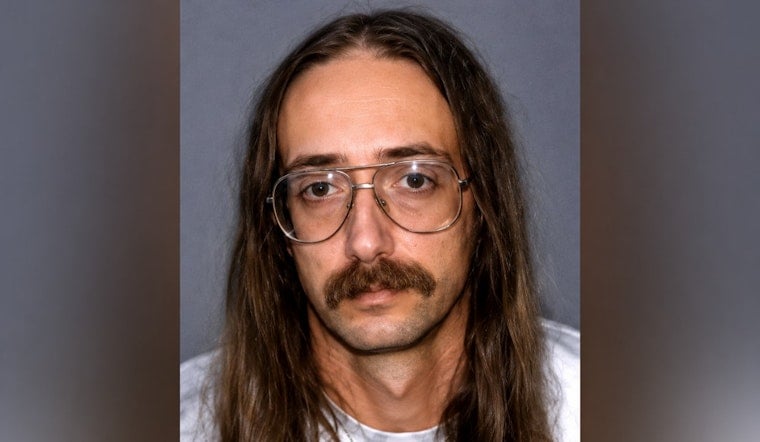
A Vista courthouse jury has convicted 60-year-old Oceanside resident Jeffrey Roberson of first-degree murder for beating a paralyzed military veteran to death with a wooden log inside the victim's own home in 2008, closing a case that sat unsolved for more than 17 years. Cecil Zachary Jr., who was 51 and had been paralyzed from the waist down since a traffic collision decades earlier, was found dead in his living room hospital bed on June 19, 2008, with a towel covering his face and clear signs of severe trauma.
A home-care nurse discovered Zachary's body inside his home on Molly Circle, in Oceanside's Fire Mountain neighborhood, according to the Coast News Group. Police noted immediate signs of blunt-force injuries at the scene, and investigators recovered a wooden log at the residence that they suspected was the murder weapon. The case went cold for years until forensic DNA advances allowed investigators to extract a genetic profile from the log, a breakthrough that eventually linked Roberson to the killing.
According to the SD District Attorney, Oceanside Police Department cold-case detectives arrested Roberson in Spring Valley in February 2025, more than 16 years after Zachary's death. He was booked into San Diego Central Jail and held without bail following the arrest, which came directly out of the DNA match to the log. During a police interview at the time of his arrest, Roberson admitted to killing Zachary but claimed he had acted in self-defense.
Un jurado declaró culpable a Jeffrey Roberson de asesinato en primer grado por la muerte en 2008 de Cecil Zachary Jr., un veterano militar con paraplejia, quien fue golpeado hasta la muerte con un tronco de madera. DETALLES: https://t.co/3YghkJbb7k pic.twitter.com/YKudpaJdPG
— SD District Attorney (@SDDistAtty) August 28, 2026
Prosecutors Point to Recorded Admission and Weight of the Weapon
The trial opened with jury selection last Tuesday, before Judge Anthony J. Campagna at the Vista Courthouse in San Diego County Superior Court — a proceeding that arrived more than 18 years after the homicide itself. Deputy District Attorney John Philpott, in opening statements the following day, argued that Roberson's own recorded statement to police, “I was pissed,” established his motive, and that the sheer weight of the wooden log demonstrated he was intentionally choosing death with each blow, the same Coast News Group report states. The defense countered that Roberson had acted in self-defense, but the jury rejected that claim and returned a verdict finding him guilty of first-degree murder on Thursday.
Philpott, who has served as a San Diego County prosecutor for over 27 years and is assigned to the DA's Cold Case Homicide Unit, tried the case as an assistant prosecutor. She credited Oceanside Police Department investigators and the DA's Cold Case Homicide Unit, singling out Philpott, for their perseverance in pursuing justice for Zachary and his family.
A Documented History of Violence Predated the Cold-Case Arrest
Court records reviewed by Ramona Patch show Roberson had a prior violent conviction: in 2013, he pleaded guilty to attempted murder and personal use of a firearm after shooting an acquaintance in Julian, California, following a dispute with a gold-mining business partner outside a trailer home, and was sentenced to 14 years in state prison. That conviction predated his 2025 arrest in the Zachary case, though the dossier does not detail how the earlier prison term affected the timing of his identification as a suspect in the cold case.
Under California Penal Code Section 187, a first-degree murder conviction carries a statutory penalty of 25 years to life in state prison, with additional sentencing enhancements possible for use of a deadly weapon under Section 12022(b)(1), according to the Shouse Law Group. California law requires proof of malice aforethought and premeditation to support a first-degree murder finding. Roberson's sentencing hearing is scheduled for November 16, in Department 20 of the Vista courthouse.
Part of a Broader Push to Reopen San Diego's Cold Cases
The Zachary case reflects a wider trend across San Diego County, where the DA's Cold Case Homicide Unit has repeatedly leaned on modern forensic genetic technology to resolve legacy homicides. The Times of San Diego reported that the same unit pursued a prosecution in March 2026 tied to the 1994 stabbing death of Clive Bland in Pacific Beach, part of a broader pattern of advances in genetic genealogy reopening decades-old cases across the county. The unit is dedicated to seeking justice in homicide cases that remain unresolved, using re-examined evidence, modern investigative techniques and advances in forensic science.
Following Roberson's 2025 arrest, the Oceanside Police Department had publicly asked anyone with additional information about the case to contact lead Detective Ryan Malone. The department's outreach underscored just how long the case had gone unresolved before the DNA match finally identified a suspect. For Zachary's family, the conviction closes a chapter that stretched across nearly two decades of uncertainty about who killed him and why.




