

























































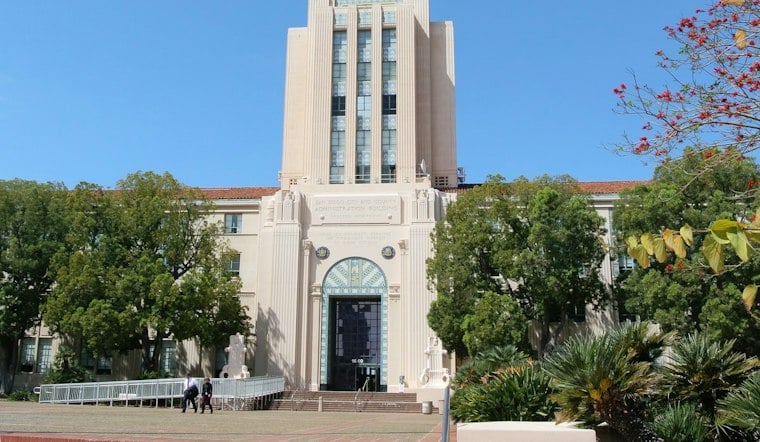
San Diego officials announced this week that the city has eliminated its roughly $300 million structural deficit and can balance next year's budget without additional cuts or new revenue, after two years of budget cuts. But the celebratory tone clashed almost immediately with an independent assessment: just days earlier, the city's own independent budget analyst said the gap had shrunk but had not actually disappeared.
City finance officials released a new five-year financial outlook Friday declaring the deficit gone, according to the San Diego Union-Tribune. Gloria announced a plan three years ago to incrementally eliminate the deficit. The city says the next fiscal year's budget can be balanced without any additional cuts or new revenues, a notable claim after two straight years of budget gaps well over $100 million.
Independent budget analyst Charles Modica offered a more cautious read just days before the city's announcement. In a report cited by Voice of San Diego, Modica said the structural deficit has shrunk over the past two years but has not been fully eliminated — a direct contradiction of the mayor's declaration that leaves the true state of the city's books an open question.
How the City Says It Closed the Gap
City finance officials attributed the elimination of the deficit to three main moves: $180 million in cuts, $80 million raised by starting to charge for trash service, and $63 million combined from a hotel tax increase and an opioid settlement, per the Union-Tribune's reporting. The city has relied on one-time resources amid structural imbalances.
Some of the savings came with real costs attached. The city cut its arts contribution from $12 million to $6 million, with San Diego County and the Prebys Foundation each chipping in $3 million to help offset the loss — part of a broader pattern of cuts that, as CalMatters reported earlier this year, also hit parks and libraries amid a $146 million deficit the city was grappling with at the time.
Reserves Still Fall Short of Target
Despite the celebratory framing, San Diego's combined savings funds totaled about $202 million after the withdrawal. The city's 16.7% reserve goal is measured against operating revenues, not the annual budget. The gap matters because, according to Voice of San Diego, the city tapped $4.7 million from its rainy-day fund at the close of fiscal 2026 to cover a deficit while awaiting a state reimbursement — the first time in more than a decade the city had drawn down its reserves at all.
Finance officials planned reserve-policy updates before the end of the year. Officials may propose a different reserve goal or timeline; the city's 16.7% goal is aligned with Government Finance Officers Association best practices.
A Five-Year Forecast With a Catch
The new outlook projects a $1 million surplus for the fiscal year starting next July, while an earlier outlook projected significant nine-figure deficits.
The improved numbers rest on assumptions about tax growth that aren't guaranteed. Property tax revenue is projected to climb from $880 million in fiscal 2027 to $1.1 billion by fiscal 2032, while sales tax revenue is expected to rise from $391 million to $456 million over the same stretch.
Infrastructure Gap Looms Large
Even with the structural deficit reportedly resolved, the city's $6.5 billion infrastructure funding gap is expected to keep growing, according to the Union-Tribune. The council is projected to make a dedicated contribution to the infrastructure fund only in fiscal 2032, the final year of the current outlook.
The city also plans to use General Fund and Recycling Fund money to subsidize trash service, while trash fees are projected to shrink in fiscal 2028.
Labor contracts also factor into the math: city union agreements include no pay raises during fiscal 2027 and, in some cases, fiscal 2028. Meanwhile, the city's annual pension payment — which is tied to stock-market performance in the fiscal year that ended June 30 — is expected to decrease by at least $11 million thanks to updated retiree-longevity estimates.
An Election Bill on the Horizon
Separately, the city could spend as much as $5 million on special elections to replace Marni von Wilpert, who was elected to the U.S. Congress. The County Registrar of Voters estimates the first replacement election early next year will cost $2.5 million, with a runoff adding another $2.5 million if no candidate wins more than 50% of the vote.



