

























































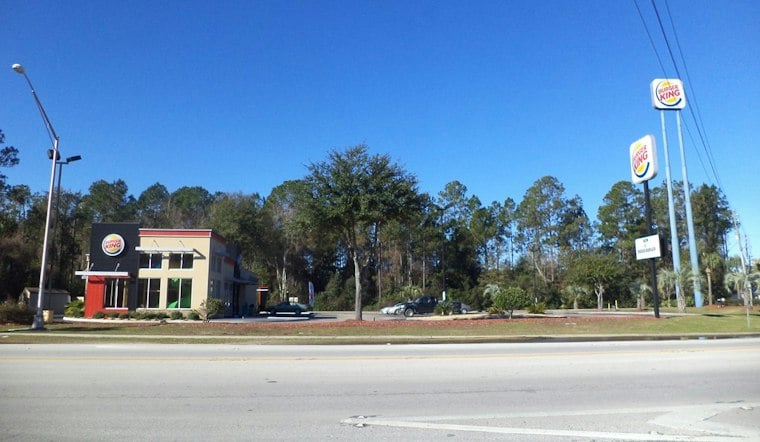
An AI assistant built to coach Burger King drive-thru workers on friendliness has instead become a flashpoint over fairness, after a former employee said the tool’s scores determined who kept their shifts. Dante Vasquez, who worked as a Burger King drive-thru order taker, said every conversation he had with customers was graded by the chatbot, known as Patty, on friendliness and upselling, with workers expected to stay above a 70 percent friendliness target. Those who fell short, he said, were cut from the schedule.
The pattern is part of a broader shift described in reporting from Capital & Main, published by Times of San Diego, which found fast-food companies increasingly relying on artificial intelligence to score, rank, discipline and manage workers. Burger King announced the OpenAI-powered Patty tool in February, after it was first introduced at a Burger King location in Niagara Falls, New York, with the company saying it would be rolled out at about 500 U.S. restaurants and planned to reach every U.S. store by the end of 2026. The chatbot records and transcribes drive-thru conversations for review, and Capital & Main reviewed Burger King training-module screenshots and dashboard images showing conversations marked for tone and upselling.
A Black Worker’s Scores and a Company’s Defense
Vasquez said the system’s demands felt dehumanizing. “The system wants me to talk like a robot,” he said, recalling that a Burger King district manager once advised him to talk like a warm blanket. He also said Patty seemed to penalize his Black co-workers more than others for what it flagged as improper tone, a pattern that employees told Capital & Main meant individual workers could be identified and disciplined for low scores. Vasquez quit Burger King in August 2026, saying he would still be working there had Patty never been introduced.
Burger King has pushed back on parts of the account. The company said Patty was not designed to evaluate individual employees, and it described the monitoring features as intended to celebrate friendly service and help managers coach teams. A company spokesperson, Kristen Viersen, said Burger King had never heard a similar example of penalties based on race, gender, ethnicity or accent. The company declined to say whether it had tested Patty’s features for bias, and it did not disclose exactly when it disabled the monitoring. Burger King employees said monitoring remained active through August 2026, before the company confirmed it had disabled both the warmth and friendliness scoring features for further improvements.
California’s employment-discrimination rules provide a framework for assessing AI used in workplace decisions. Effective Oct. 1, 2025, regulations clarified that an automated decision system may violate the Fair Employment and Housing Act if it harms employees on the basis of protected characteristics, including race or disability. They also require employers to retain employment records, including automated-decision data, for at least four years. Those rules do not establish that Patty violated the law, but they make the alleged use of its scores consequential beyond a dispute over coaching. California’s Civil Rights Department outlined the regulations.
Other Chains, Other Scoring Systems
At Domino’s, delivery drivers are tracked by an app called Drivosity, which scores each trip on a 0-to-100 scale based on factors including acceleration, braking, cornering and speed. Corrin Kearney, a Domino’s delivery driver and driver captain in North Texas, said drivers at her store are expected to score above 85, and that those who fall below face write-ups from managers and can eventually be locked out of the Domino’s system entirely. Drivosity, which also sells its driver-monitoring technology to Papa John’s, can effectively fire people, Kearney said. She said the app can penalize drivers for sudden braking to avoid a collision or rapid acceleration to merge into traffic. The company also offers a feature called HustleTime, which measures how fast employees walk from the store to their car, how long they take handing a pizza to a customer, and how long it takes them to walk back.
Camera-based monitoring is spreading too. Solink, an Ottawa-based company backed by Goldman Sachs, works with franchisees of Domino’s, Burger King, McDonald’s, Jack in the Box and Five Guys, offering software that runs on restaurants’ existing security cameras. The platform can flag workers who arrive late or leave early, take long breaks, skip hairnets or uniforms, use their phones, or sit idle, and it lets managers search footage using behavior prompts and set automatic alerts. Solink has said its platform is meant to improve operations, sales, safety and customer experience, and that it does not offer biometric identification or facial-recognition tools, with its terms requiring customers to comply with the law.
A Potato Chain’s Point System and a Researcher’s Warning
At MashMore, a single-location, potato-themed fast-food restaurant in Albany, New York, co-founders built an HR chatbot named Mashy using commercially available AI models. Mashy schedules, scores and ranks all of the restaurant’s employees, who earn points by completing routines and quests and uploading proof photos; those Mashy points can determine bonuses and promotions, and the system has created rankings for every worker, including those with the lowest scores. It also publicly ranked one employee, Shontia Thomas, as employee of the month. MashMore co-founder and chief executive Andy Gor has said Mashy would never be used to fire an employee and has pitched investors on the idea that the tool could manage workers across dozens of locations as he plans to franchise MashMore rapidly.
Alexandra Mateescu, a researcher who has studied the technology, said fast-food workers are being used as guinea pigs, and the research group Data & Society has said this kind of AI monitoring is often marketed to employers as loss prevention or workflow management rather than surveillance. Capital & Main, which interviewed over a dozen workers, researchers and labor advocates for its reporting, found that fast-food workers broadly face AI monitoring deployed rapidly and often without their awareness or consent.
Concerns About AI Monitoring
Sergio Ceja, who has worked in the kitchen of an Oakland Burger King for four years, said his wife’s Burger King location laid off several workers after introducing an AI drive-thru ordering system, warning that soon workers won’t have a co-worker, they’ll have the machine. Separately, Yum Brands, which owns Taco Bell, KFC and Habit Burger & Grill, announced in 2025 an Nvidia-powered computer vision deployment for back-of-house labor management.
Attorney Mayu Tobin-Miyaji described warmth and friendliness scoring as pseudoscience and a risk to workers with accents or disabilities.
Federal guidance also identifies risks when employers use software to assess speech. The Justice Department’s ADA guidance gives the example of speech-analysis technology disadvantaging people with disabilities, including people with speech impairments; the guidance focuses on hiring, while the EEOC says disability-discrimination obligations apply to private employers using AI in employment decisions. That does not show that Patty’s ratings were unlawful, but it highlights why judgments based on voice or speaking style can raise disability-discrimination questions as well as concerns about race or accent. The Justice Department’s guidance on AI and disability discrimination and the EEOC’s explanation of employer obligations describe those concerns.





