

























































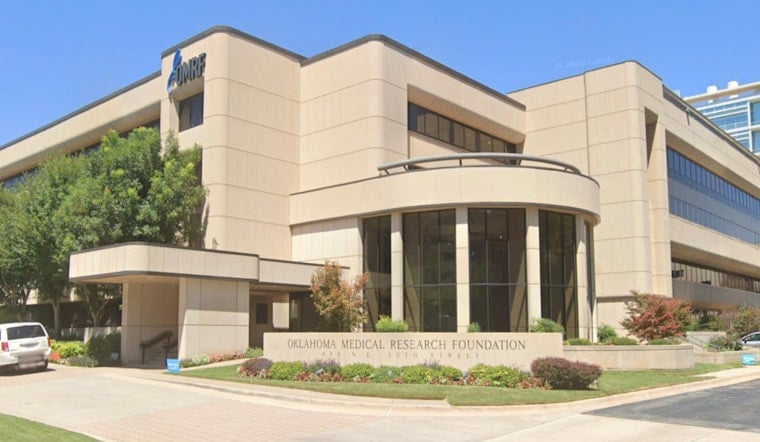
An Oklahoma City research center has secured a five-year, $12.8 million federal award that will keep its cellular metabolism work moving while giving four early-career scientists a bigger runway to build independent labs. The research starts at the microscopic level—how cells make energy, repair damage and stay alive—but its targets include lupus, heart disease, stroke, obesity and age-related vision loss.
The award comes through the National Institutes of Health’s Centers of Biomedical Research Excellence program, known as COBRE, which is designed to strengthen biomedical research capacity in states that historically receive a smaller share of federal research funding, according to The Journal Record. The grant will fund the Oklahoma Medical Research Foundation’s Center for Cellular Metabolism Research in Oklahoma.
Four Researchers Get A Bigger Launchpad
The new award represents the center’s second phase, building on work that began with an earlier federal grant. OMRF says the program is meant to combine research tools, mentoring and collaborations so junior scientists can move toward independent, competitive funding.
The supported researchers include Jon Iker Etchegaray, who is studying a degenerative eye condition associated with aging; Audrey Cleuren, whose work examines how blood-vessel-lining cells may contribute to neurodegenerative disease and obesity; Brian Coon, who studies blood-vessel growth in conditions including high cholesterol, stroke and heart attacks; and Rufei Lu, who researches autoimmune diseases such as lupus, The Journal Record reported.
Why Cellular Metabolism Matters
Cellular metabolism is the collection of chemical processes that lets cells produce energy, repair damage and survive. OMRF’s research infrastructure includes tools for measuring cellular respiration, mitochondrial function, isotope-labeled metabolites and other chemical changes through mass spectrometry, according to the foundation’s cellular metabolism center.
The premise is that disrupted cell functions can help drive chronic disease, even when the conditions themselves look unrelated. OMRF’s center links metabolism-focused research across cardiovascular biology, aging and metabolism, and arthritis and clinical immunology, creating a shared scientific base instead of leaving each lab to build its own expensive toolkit.
A Follow-Up To OMRF’s $13.1 Million Grant
The new funding follows a $13.1 million NIH grant awarded in 2021 to establish the center and support five junior researchers studying cancer, neurodegenerative disease, autoimmune disorders, diabetes and cardiovascular disease. OMRF said that earlier award also helped create a metabolic phenotyping core and expand access to flow-cytometry equipment.
The COBRE program is built around sequential five-year stages: development, expansion and sustainability, according to the National Institute of General Medical Sciences. In practical terms, the latest award is a bet that OMRF’s first round of metabolism research has grown strong enough to support more faculty, more projects and a deeper research pipeline in Oklahoma.
For OMRF director Lijun Xia, the career-building angle is personal: He was a junior investigator on one of the foundation’s first COBRE grants in 2003, and he has said that support helped launch his own research career. The immediate payoff is more lab capacity and mentorship in Oklahoma City; any new treatments that emerge from the work will be years down the road, but the researchers now have considerably more room to chase them.





