

























































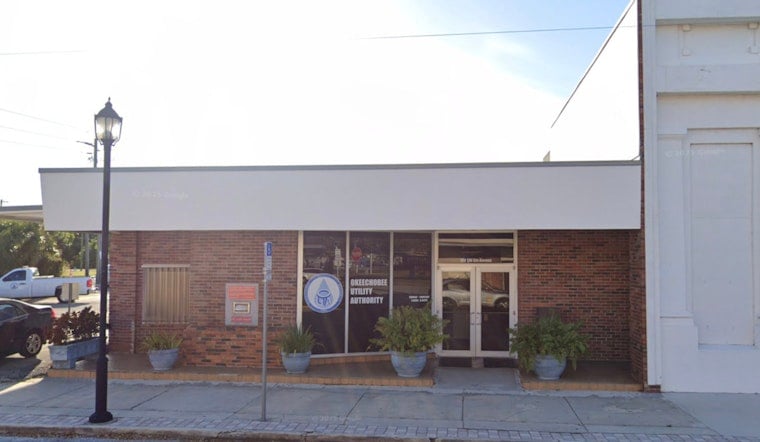
Elevated lead levels have turned up in Okeechobee's drinking water, and local officials are now urging parents across the city to get both their taps and their children tested. The Okeechobee Utility Authority collected 70 water samples from across the city beginning on June 26, and more than 10 percent of them exceeded the federal action level for lead, according to the agency's own findings.
The utility issued an official Drinking Water Warning on Sunday, laying out the exact scope of the problem: samples gathered between June 26 and July 26 came back above the federal lead action level of 15 parts per billion, or 0.015 milligrams per liter, according to the Okeechobee Utility Authority. As reported by WPBF 25, the utility said it will continue monitoring the situation and is urging parents to test their children for potential lead exposure.
Local resident Ping Warner did not hold back in describing the situation, telling the station the drinking water is completely unhealthy and expressing concern about both the health risks and potential solutions. Warner recommended changing the pipes and seeking government funding to address the problem, per the same report.
Why The Water Mains Aren't To Blame
Despite the alarming test results, the contamination almost certainly is not coming from the city's public infrastructure. In its published Lead and Copper Service Line Inventory, the utility confirmed that its public water mains and utility-owned service lines contain no lead, pointing instead to private property between the meter box and individual household plumbing fixtures as the likely source. Old pipes on that private side of the connection can cause lead to leach into drinking water, and the contamination is understood to originate from aging plumbing rather than the water source itself, the article notes.
Dr. Celina Moore, a pediatrician with Palm Beach Health Network, estimated that roughly 1 in 10 houses in Okeechobee might have lead in their water. She recommended that parents in the city test both their children and their water for elevated lead levels, warning that lead cannot be tasted, smelled, or seen once it's in the tap. Water lead test kits are available at local hardware stores for residents who want to check their own homes.
No Safe Exposure Level, Doctor Warns
Moore was blunt about the stakes involved, telling WPBF 25 there is no safe level of lead for anyone, but especially not for children. Lead exposure particularly affects young children under age 6, and it can cause brain damage and intellectual decline, according to the pediatrician's comments in the same report. The U.S. Centers for Disease Control and Prevention uses a Blood Lead Reference Value of 3.5 micrograms per deciliter for children aged 1 to 5 to flag levels higher than 97.5 percent of the U.S. pediatric population, a threshold the agency lowered from 5.0 in October 2021 specifically to catch problems earlier.
Federal rules add urgency to the utility's response. Under EPA regulations updated in October 2024, public water systems that record a lead action level exceedance must issue a Tier 1 public notification within 24 hours of learning the result and begin mandatory public education, corrosion treatment adjustments, and service line replacements, according to the U.S. Environmental Protection Agency. The state's own oversight runs through Chapter 62-550 of the Florida Administrative Code, which requires utilities to perform targeted tap sampling in homes built with lead solder or copper pipes, per the Florida Department of Environmental Protection.
A Pattern Emerging Around Lake Okeechobee
This is not the county's first lead scare this year. Four months before the utility's warning, the EPA issued a public lead exceedance notice on April 23 for the Florida Power & Light Company Okeechobee Clean Energy Center public water system, after more than 10 percent of its tap samples also exceeded the 15 ppb threshold. The recurrence within the same county underscores the kind of regional scrutiny already building around Okeechobee's water infrastructure.
The Okeechobee Utility Authority itself was established on September 29, 1995, through an interlocal agreement between local municipalities and is governed by a five-member board serving roughly 10,000 residential and commercial customer connections across Okeechobee County and parts of Glades County. That customer base sits in a county the U.S. Census Bureau estimates at roughly 40,800 residents, where children under 18 make up 21.5 percent of the population and the poverty rate runs about 18 percent — roughly 1.4 times the statewide average.
The Cost Question Looming Over Private Pipes
That poverty rate matters because the fix for lead-tainted taps in Okeechobee is not a utility project — it's a private one. Since the contamination traces back to plumbing between the meter box and the kitchen sink, homeowners themselves generally bear the cost of replacing old lines and fixtures, a burden that falls heaviest in lower-income households already stretched thin.
Help may be available through the state, however. The Florida Department of Environmental Protection administers low-interest loans and principal forgiveness grants through the Drinking Water State Revolving Fund to assist eligible utilities and disadvantaged communities with lead line replacements and corrosion control design. That funding stream could become more relevant in the years ahead: under the EPA's finalized 2024 Lead and Copper Rule Improvements, the federal lead action level itself is set to drop from 15 ppb to 10 ppb, with utilities nationwide required to hit 100 percent lead service line replacement within 10 years starting in 2027.
For now, the message from both the utility and local doctors is the same — get tested. Moore's recommendation to check both water and children echoes the utility's own public plea, and with test kits available at hardware stores around town, officials are hoping Okeechobee families won't wait to find out what's coming out of their taps.



