

























































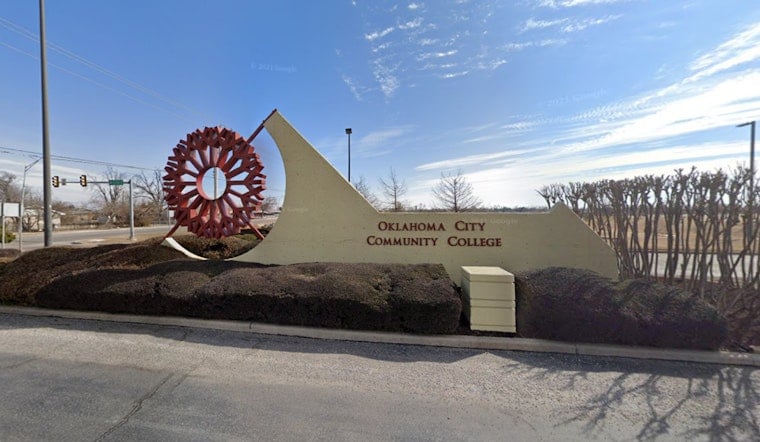
Nineteen Choctaw soldiers changed the course of modern warfare in October 1918 when they transmitted encrypted messages the Germans could never crack, using a language their own government had spent decades trying to erase. This month, Oklahoma City Community College becomes the latest stage for keeping that story alive, as the Red Clay Roots Music Festival returns August 21 and 22 with an encore performance on August 27 to honor their legacy.
The festival serves as the annual fundraiser for the Choctaw Code Talkers Association, with tickets priced at $15 in advance or $20 at the door, according to KGOU. Proceeds directly support preservation efforts, educational outreach, and storytelling programs tied to the code talkers' history, the station reports. As News 9 reports, tickets will be available at Oklahoma City Community College's box office, with the event blending entertainment, visual art, film, comedy, and diverse styles of music.
A Language Once Forbidden Became a Battlefield Weapon
The Choctaw soldiers who pioneered this form of communication served in the 142nd Infantry Regiment of the 36th Infantry Division, transmitting radio and telephone messages during the Meuse-Argonne Offensive that German interceptors could not decode, according to the National Museum of the United States Army. Colonel Alfred Wainwright Bloor instituted the strategy after overhearing two Choctaw soldiers conversing in their native language in France, the museum notes. Because Choctaw lacked modern military terminology, the men adapted their vocabulary on the fly, using terms like big gun for artillery, little gun shoot fast for machine guns, and grains of corn to designate battalion numbers, according to research compiled by O.K. With the War.
The irony at the center of that achievement is difficult to overstate. At least 14 of the original 19 code talkers had attended Armstrong Academy, a state-run boarding school in the Choctaw Nation where speaking Indigenous languages was strictly prohibited and punished, per the museum's records. Those same men then used that forbidden language to help win a world war while serving a country that, per the Library of Congress, did not recognize an estimated 40% of Native Americans as U.S. citizens at the time. Full citizenship for Native Americans did not arrive until the Indian Citizenship Act of 1924, six years after the armistice.
Recognition That Took Nearly a Century
Formal federal recognition was slow in coming. The Code Talkers Recognition Act of 2008 directed the Secretary of the Treasury to strike Congressional Gold Medals for recognized tribes and silver duplicate medals for individual veterans or their families, according to records published on GovInfo. It would be another five years before that promise was fulfilled: on November 20, 2013, Congress formally presented the medals honoring 33 Native American tribes, including the Choctaw Nation, in a ceremony held in Emancipation Hall at the U.S. Capitol, the U.S. Department of Veterans Affairs notes. Texas had moved earlier, when its Military Department posthumously conferred the Lone Star Medal of Valor, the state's second-highest military decoration, on all 19 World War I Choctaw Code Talkers in September 2007.
That Texas connection traces back to the regiment's origins. The 142nd Infantry Regiment was originally mobilized and trained at Camp Bowie in Fort Worth, and the memorialization effort has continued there in recent months. In April, descendants of the code talkers and leaders from the Choctaw Code Talkers Association unveiled a historical marker at Veterans Memorial Park in Fort Worth, building on earlier efforts including a bronze sculpture placed at the Choctaw Cultural Center in Durant, Oklahoma, according to reporting from the Fort Worth Star-Telegram. The same association also successfully advocated to rename 23 Oklahoma bridges in honor of Native veterans.
Film, Dance, and Comedy Carry the Story Forward
Back in Oklahoma City, the festival itself is built to carry that history to new audiences through multiple art forms. Per News 9, the lineup includes a historical film about the Choctaw Code Talkers, a ballet performance depicting innocence to adulthood, and comedy intended to connect audiences with the story. The festival honors the legacy of both World War I and World War II code talkers, distinguishing the lesser-known Choctaw pioneers from the more widely recognized Navajo Code Talkers of the later war.
Among the featured works is the documentary Voices of Valor, a short film showcasing the historical storyline of the World War I code talkers. It was directed by Ta'Na Alexander, the great-great-granddaughter of code talker Ben Carterby, who documented the soldiers' service in France through archival records and descendant interviews, according to the Alliance Française d'Oklahoma City. Alexander, who is affiliated with the Choctaw Code Talkers Association, told News 9 the festival provides an opportunity to tell the Choctaw Code Talkers' stories to people across nations, Oklahoma, and the educational system.
The festival, which celebrates Indigenous talent across entertainment, visual art, film, comedy, and music, runs its main event August 21 and 22 before the free community encore titled Red Clay Echoes on August 27. For a story built on soldiers whose language was once forbidden and whose citizenship was once denied, the gathering offers a rare chance for that history to be spoken, sung, and performed in the open.





