

























































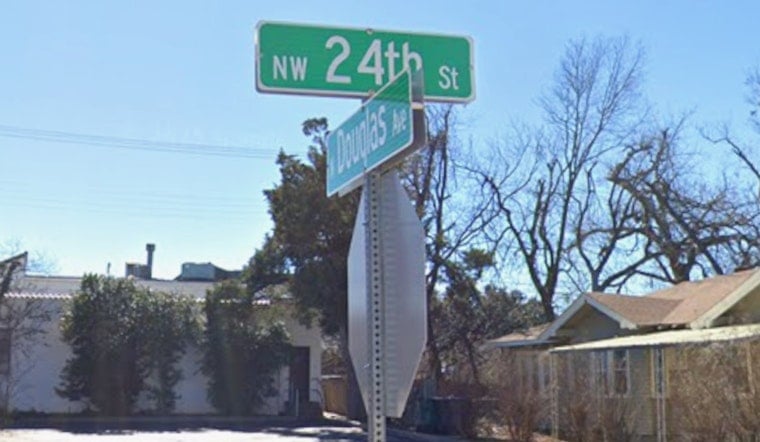
Oklahoma City's Asian District is set to gain a 49-unit apartment building after the city's Urban Design Commission signed off on the project's design plan Wednesday. The development, called Lotus Apartments, will sit near NW 24th Street and Douglas Boulevard and is expected to bring a restaurant, a dog park and office space to the site along with new housing.
The commission's approval, granted during its August 26 meeting at the City Council Chamber, according to the City of Oklahoma City, clears a key hurdle for the adaptive reuse project. As reported by KOCO, developer Chad Khoury said the project is an adaptive reuse effort, with the team working to preserve the community's existing building rather than tear it down. Khoury said the project will benefit the community and create what he described as a bridge between Oklahoma City University, the Asian District along 23rd Street, and Uptown.
A Site Governed by Strict Design Rules
The Lotus Apartments site falls within the Asian District Urban Design Overlay District, a zoning designation under the city's Chapter 59 code that stretches along North Classen Boulevard from NW 23rd to NW 30th Street and extends west to North Douglas Avenue between NW 23rd and NW 26th Streets, per the Code of Ordinances. Projects inside that overlay must clear architectural design review before construction can proceed, which is why the commission's sign-off matters for the project's timeline. The surrounding blocks near NW 23rd Street and Classen Boulevard also sit within the Classen Corridor Tax Increment Financing District and the Uptown 23rd Business Improvement District, according to Hoodline's earlier reporting on the district's redevelopment tools, frameworks designed to capture tax growth and help fund corridor revitalization.
The station's report notes that the Lotus Apartments team is now securing a few final permits, with construction hoped to start by the end of September. If that timeline holds, developers expect the building to be completed by the end of 2027.
Neighborhood Rooted in Vietnamese Resettlement
Oklahoma City's Asian District traces its origins to 1975, when thousands of Vietnamese refugees fleeing the Fall of Saigon resettled along Classen Boulevard through local church sponsorships and nearby Fort Chaffee in Arkansas, according to 405 Magazine. That history helped shape the neighborhood into the culturally distinct commercial and residential hub it remains today. The nonprofit Asian District Cultural Association later formed after a 2007 municipal bond funded streetscape improvements along Classen Boulevard, per the Greater Oklahoma City Chamber, and the association now hosts community events including the annual Asian Night Market Festival.
The district also borders notable Route 66 landmarks, including the 1930 triangular Milk Bottle Grocery building at 2426 N. Classen Blvd. and the 1958 geodesic Gold Dome building at 2200 N. Classen Blvd., both listed on the National Register of Historic Places, according to Visit Oklahoma City. Hoodline previously reported on the Gold Dome's funding fight, as the historic landmark near the district's southern entrance faces a sheriff's auction unless the city secures a $3 million TIF lifeline.
Housing Demand Near a Growing Campus
Oklahoma City University sits immediately west of the Asian District near NW 23rd Street, functioning as an institutional anchor that generates steady student and staff housing demand between campus and Uptown, according to Visit Oklahoma City. Khoury is himself an OCU alumnus and serves as managing broker and principal of Solas Real Estate LLC, a firm founded in Oklahoma City in 2019 that focuses on urban commercial and residential projects, according to a LoopNet profile. Solas Real Estate won a 2024 Urban Land Institute Impact Award for boutique development.
Historical rental data from Zumper and Apartment Guide showed median rents for one-bedroom apartments in the Asian District around $700 per month, with budget units ranging between $550 and $650, Hoodline reported in 2019. Adding 49 new units would expand the area's multi-family housing inventory near a corridor that already draws steady demand from nearby employers and OCU. The Lotus Apartments plan also fits within the city's broader push toward adaptive reuse and urban infill density over greenfield suburban expansion, a strategy municipal design overlays are meant to encourage while preserving district character, according to a comparison published by Redfin.
For now, the project's next steps hinge on the outstanding permits the Lotus Apartments team is working to finalize before breaking ground. Balancing new density with the Asian District's historic architecture and small-business identity remains an ongoing focus for local stakeholders as the corridor continues to evolve.



