

























































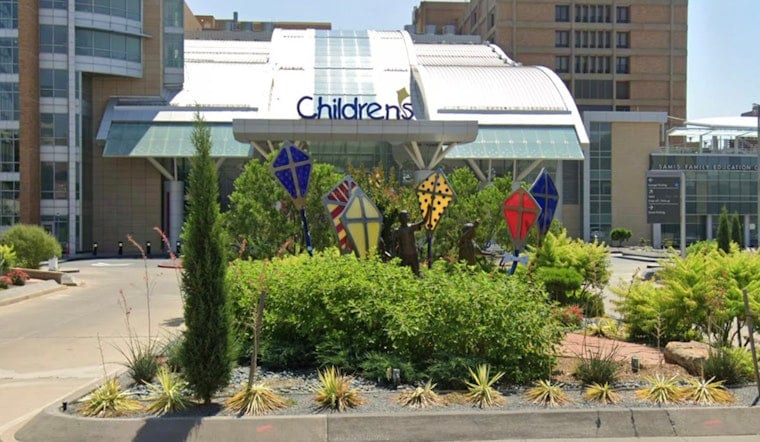
An infant at Oklahoma Children's has become the first patient in state history to receive a partial heart transplant, getting living donor heart valves designed to grow along with the child instead of a fixed-size replacement that would eventually fail. The procedure, performed by the pediatric cardiac team at Oklahoma Children's OU Health, targets severe heart valve disease in cases where traditional valve replacement methods do not work.
Oklahoma Children's OU Health confirmed the operation as the state's first partial heart transplant, as reported by KOKH. According to OU Health, it is the first procedure of its kind among any pediatric or adult transplant program in Oklahoma. Rather than replacing the entire heart, surgeons use living tissue from a donor heart to replace only the damaged valves, a technique that begins, like any transplant, with a family's decision to donate.
Standard valve replacements rely on non-living human donor tissue, animal tissue, or mechanical components, none of which grow with a child, according to Children's National Hospital. Fixed-sized valves can become too small or stop functioning as a child grows, according to OU Health, often forcing multiple open-heart surgeries throughout childhood. Repeated re-operations and, for mechanical valves, a lifetime of blood-thinning medication raise long-term risks of stroke and organ complications, per the same research.
A Technique Born at Duke, Now Adapted in Oklahoma
Partial heart transplantation was pioneered at Duke Health in April 2022, when surgeons there performed the world's first such procedure on 17-day-old Owen Monroe, who was born with truncus arteriosus and was unlikely to survive a wait for a full-organ heart transplant. A January 2024 study confirmed that the living donor valves implanted in that first case grew alongside the child while requiring roughly a quarter of the immunosuppressant medication needed for a full organ transplant, according to Duke Health.
Oklahoma Children's surgeons adapted techniques from other pediatric heart surgeries to perform their own version of the procedure, per KOKH's report. Dr. Harold Burkhart, an OU Health pediatric cardiothoracic surgeon and director of the pediatric cardiothoracic surgical program at Oklahoma Children's, said living valves that grow with a child can spare a family from repeated surgeries. Dr. R. Erik Edens, an OU Health pediatric cardiologist and medical director of pediatric heart failure and transplant at Oklahoma Children's, said each partial heart transplant depends on a family's decision to donate, noting that unused donor-heart tissue can help save children's lives when a whole heart cannot be transplanted.
Part of a Decade-Long Build-Up in Oklahoma Pediatric Cardiac Care
The milestone follows a rapid expansion of transplant capabilities at Oklahoma Children's OU Health. The hospital received approval from the United Network for Organ Sharing in February 2024 to list pediatric transplant candidates locally, and it performed Oklahoma's first full pediatric heart transplant in more than 30 years that October, according to the University of Oklahoma. Historically, an average of five Oklahoma children per year had to travel out of state for pediatric heart transplants.
That build-up traces back further still. OU Health's pediatric heart surgery volume grew from about 100 procedures annually between 2005 and 2013 to more than 500 procedures per year by 2024, capturing 97% of Oklahoma's pediatric heart surgery market share, per the university's figures. Before 2014, a lack of senior cardiac surgeons at the facility forced most families to seek care out of state.
A Rare Procedure, Still Confined to a Handful of Hospitals
Partial heart transplants have been performed fewer than 50 times in the United States, according to OU Health, and as of 2026 the procedure remains restricted to fewer than a dozen elite pediatric medical centers nationwide. Boston Children's Hospital performed its first case in 2024, Children's National Hospital followed in 2025, and Nicklaus Children's Hospital in Florida performed its own inaugural case in 2026, according to Nicklaus Children's Hospital. There is currently no formal national training program for the procedure, forcing surgical teams to adapt specialized techniques on their own.
The technique has also given rise to so-called domino heart transplants, in which a child receiving a full-organ transplant donates their own healthy native valves to another infant in need. Roughly half of all donated hearts fail to meet full-organ transplant criteria but still contain healthy, usable valves, according to Duke Health, effectively doubling the clinical value of a single donated heart. Congenital heart defects affect nearly 1 in every 100 births in the United States, with about 1 in 4 affected infants facing critical conditions requiring surgery or invasive procedures within their first year of life, according to the CDC.
Looking Ahead to a Dedicated Heart Center
Oklahoma Children's OU Health plans to open the Presbyterian Health Foundation Heart Center by 2030, a dedicated facility that will provide space for Oklahoma surgeons to explore innovative cardiac procedures, according to the University of Oklahoma. Partial heart transplant protocols also allow care teams to reduce immunosuppressant dosages faster than with full organ transplants, since catheter biopsies show transplanted living valves function normally even under reduced immune suppression, according to Boston Children's Hospital.
Lower immunosuppression levels help prevent chronic kidney failure and infection risks tied to lifelong anti-rejection therapy, per the same account. As more hospitals adopt the procedure and domino transplants become more common, how organ allocation protocols evolve to accommodate them remains an open question for the pediatric transplant field to sort out in the years ahead.





