

























































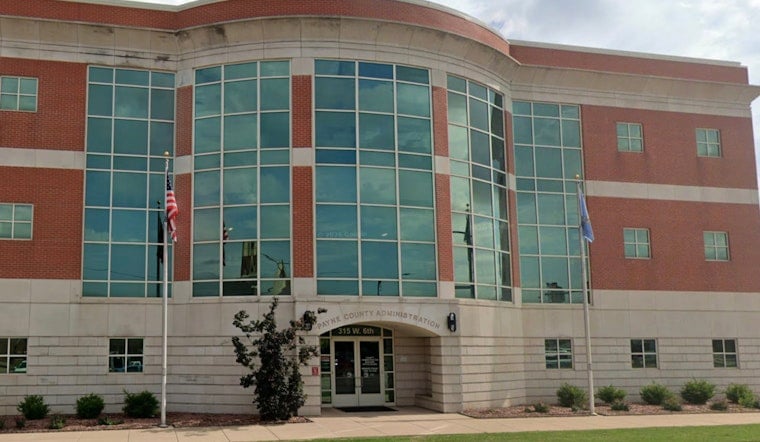
Oklahoma State forward Parsa Fallah has been granted a temporary restraining order clearing his path back onto the Cowboys' roster, a legal win in his ongoing eligibility case against the NCAA. The Payne County District Court order comes as Fallah pursues a sixth season of college basketball after a torn ACL appeared to end his 2025-26 campaign in February.
The order was reported by The Oklahoman, which detailed Fallah's push to rejoin the Cowboys as his broader legal fight with the NCAA continues. Fallah is now the third Oklahoma State athlete this summer to seek court intervention over NCAA eligibility, following men's basketball guard Kashie Natt and defensive tackle Iman Oates, both of whom secured their own temporary restraining orders in the same county, according to Pistols Firing. Hoodline previously reported on Natt's reinstatement after Payne County District Judge John Canavan granted him an emergency ex parte order on July 6, preventing the NCAA from enforcing its eligibility denial or penalizing Oklahoma State, per Sports Illustrated.
A Legal Fight That Started With a Torn ACL
Fallah's college career appeared over on February 24, when he tore the anterior cruciate ligament in his knee during the closing minutes of Oklahoma State's win over West Virginia. He limped into the postgame press conference afterward to express his appreciation for the university and its fans, the same account notes. Before the injury, Fallah was Oklahoma State's second-leading scorer, averaging 14.7 points and a team-high 6.0 rebounds per game through 15 appearances, while shooting 57.9% from the field and 42.3% from three-point range.
In June, Oklahoma State head coach Steve Lutz publicly confirmed the Cowboys were holding one of their 15 roster scholarships open for Fallah while he petitioned the NCAA for a sixth season of eligibility. Lutz noted that Fallah had remained involved in team meetings and rehabilitation throughout his recovery. Fallah's unusual eligibility timeline traces back to his first season at Southern Utah in 2021-22, which became a redshirt year after he spent six months stranded in Africa awaiting a visa following his departure from his home country of Iran — a delay he had expected to last only two days.
From Southern Utah to a WCC All-Star
Fallah's path to Stillwater ran through two other programs. Before transferring to Oklahoma State in April 2025, he earned second-team All-West Coast Conference honors at Oregon State during the 2024-25 season, averaging 12.8 points and 4.0 rebounds per game while shooting nearly 60% from the floor, according to Oklahoma State University Athletics. He led his respective conferences in field goal percentage in back-to-back seasons at Southern Utah and Oregon State.
Fallah's individual case has since folded into a much larger legal battle. In July, attorneys Ryan Downton and Darren Heitner filed a California-based antitrust lawsuit on behalf of Fallah and roughly 44 other Division I student-athletes, seeking an injunction for an extra season of eligibility, as 247Sports reported. Fallah was included in the suit after completing four active playing seasons across five college years.
The NCAA's New Rules and a Nationwide Court Clash
The lawsuits trace back to June 23, when the NCAA Division I Cabinet unanimously approved a new age-based five-for-five eligibility framework, granting athletes up to five years to complete five seasons of competition starting from full-time enrollment or age 19, while phasing out traditional redshirt seasons and waivers. Front Office Sports reported that the NCAA set a July 31 deadline for waivers submitted under the former rules during the transition.
That same day, U.S. District Judge Charlotte N. Sweeney in Colorado issued a nationwide preliminary injunction in Wisne v. NCAA, ordering the organization to grant a fifth year of eligibility to high school Class of 2022 athletes who exhausted four collegiate seasons this spring. The NCAA has announced plans to appeal that ruling to the Tenth Circuit Court of Appeals, per the same Front Office Sports report. The pattern at Oklahoma State reflects a broader tension playing out nationally, with other athletes such as a UCF forward and an NC State lineman also suing the NCAA over the same eligibility transition, according to Hoodline's earlier coverage.
Fallah's return gives coach Lutz immediate frontcourt help heading into the season, but the long-term enforceability of these temporary restraining orders remains uncertain as the 2026-27 athletic year approaches, with the underlying state and federal antitrust cases still unresolved.



