

























































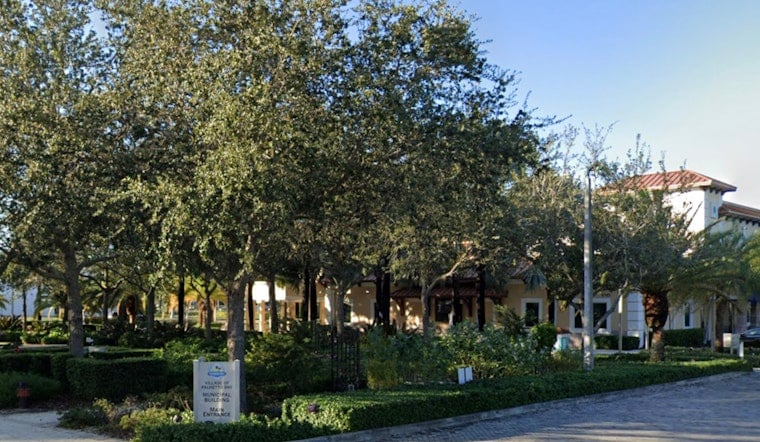
Palmetto Bay is trying to slam the door on data centers before any company even knocks. Village leaders are pushing legislation that would ban the massive server warehouses outright rather than pause them temporarily, and residents worried about noise, water quality and the fate of Biscayne Bay's coastline are being urged to show up when the village council takes up the measure on September 28.
No developer has filed an application to build a data center in the low-density coastal community known as the Village of Parks, according to CBS Miami. But Palmetto Bay Vice Mayor Mark Merwitzer wants the village to act proactively, banning the facilities before anyone tries. Merwitzer has said the data-center issue is generational rather than political, framing it as a fight over the kind of community Palmetto Bay wants to remain rather than a partisan dispute.
Data centers are booming across the country as artificial intelligence expands further into everyday life, and Merwitzer has warned that the industrial-scale facilities could impact the environment and strain local water quality if one ever landed along Palmetto Bay's stretch of US-1. He has specifically raised concern that a server farm could damage Biscayne Bay's coastline, according to the same report. In an earlier public update, Merwitzer noted that even though no formal proposals exist, the preemptive ban is meant to stop developers from quietly aggregating commercial parcels or repurposing existing telecommunications infrastructure — including AT&T facilities along US-1 — for future data-center use.
Why Residents Fear a Server Farm Next Door
Longtime resident Paul Schwiep, who has lived in Palmetto Bay for nearly 20 years, told CBS Miami that data centers become large blocks of dead space that don't invite community activity — a description that cuts against the village's identity as a place built around parks and neighborhood life. Data centers are typically constructed as massive warehouses packed with servers, and residents worry the buildings generate noise and can strain public utilities even when they aren't visibly disruptive from the outside.
Palmetto Bay sits along Biscayne Bay, and that proximity is central to why village leaders are moving fast. The concern isn't hypothetical elsewhere in Florida: environmental advocates including Lake Worth Waterkeeper warned in August that waste heat discharged from large South Florida data centers into surrounding water networks can raise water temperatures, according to The Guardian, heightening the risk of toxic blue-green algae blooms in sensitive coastal ecosystems.
State Law Gives Palmetto Bay Room to Act
Palmetto Bay's push has legal backing. Florida Senate Bill 484, which took effect on July 1, explicitly preserves local governments' authority to zone, condition or prohibit large-scale data centers within their jurisdictions, according to Broadband Breakfast. The law also requires data centers with a peak monthly electric load of 50 megawatts or more to secure a Consumptive Use Permit from regional water management districts or the state Department of Environmental Protection, which can mandate reclaimed water for server cooling, per Gunster.
Palmetto Bay isn't alone in pumping the brakes on hyperscale server facilities. In July, Palm Beach County commissioners voted 5-1 to reject Project Tango, a proposed $2.6 billion, 3.7 million-square-foot AI data center near Loxahatchee, following months of public pushback over noise, water consumption and its proximity to elementary schools, according to The Real Deal. That same county later voted unanimously to advance a one-year moratorium on new large-scale data centers drawing 50 megawatts or more while a task force studies infrastructure impacts, adding Palm Beach to a list that already includes Lake, Hernando and Clay counties.
The financial stakes for ratepayers are also drawing state scrutiny. The Florida Public Service Commission began evaluating its first major test case under SB 484 this month, examining Duke Energy Florida filings meant to ensure that power grid upgrades required by energy-hungry data centers are funded by tech operators rather than residential customers, according to Florida Public Media.
Village leaders are encouraging Palmetto Bay residents to attend the September 28 zoning meeting and voice their opinions before the council votes on the proposed ban. The council will decide whether to make Palmetto Bay one of the first Miami-Dade municipalities to close the door on data centers entirely, rather than simply delaying them.





