

























































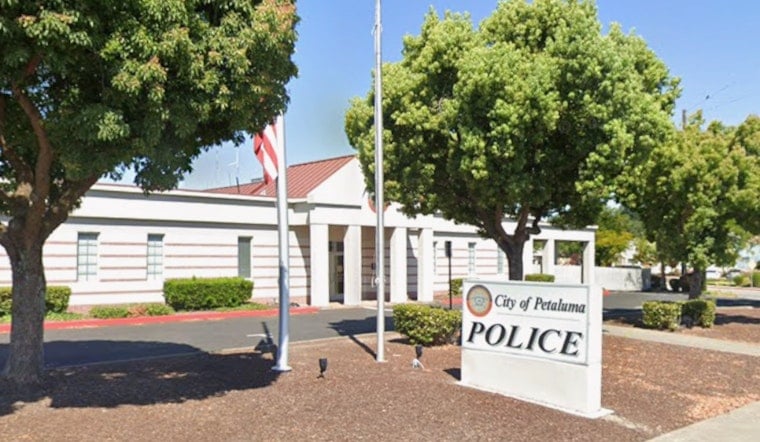
A Petaluma man with reported memory issues drove more than 150 miles from his home before deputies in Humboldt County found him safe, capping off a fast-moving, multi-jurisdiction search that stretched across five Northern California counties. Petaluma police say the man had left his residence and not returned home, prompting a search that leaned heavily on the city's network of automated license plate reader cameras to track his path north.
According to the Petaluma Police Department, officers received the initial report last Friday and quickly entered the man into the state's Missing and Unidentified Persons system as an at-risk missing person, citing his age and reported memory issues. Police personnel began using the city's Flock Safety automated license plate reader network almost immediately to search for his vehicle, according to the department's account. As the search expanded beyond Petaluma, dispatchers began updating allied law enforcement agencies across jurisdiction lines.
Camera Hits Guided Search Up Highway 101
The man's vehicle first traveled outside Petaluma into Solano County, department officials said, before continuing north through Lake and Mendocino counties on its way toward Humboldt County. As reported by SFGate, deputies with the Humboldt County Sheriff's Office ultimately intercepted the vehicle safe more than 150 miles from the man's Petaluma residence. Petaluma police said updated Flock detections throughout the search provided investigative leads on the vehicle's location and direction of travel, helping agencies focus resources along its anticipated route.
Petaluma police said they provided updated vehicle information directly to the Humboldt County Sheriff's Office and the California Highway Patrol as the search progressed. The department credited that flow of Flock network information with connecting multiple jurisdictions during the search, and it thanked the Humboldt County Sheriff's Office, the California Highway Patrol, and other allied agencies once the man was located. Officials said the man's family was notified so arrangements could be made for his safe return home.
How California's Missing Adult Framework Applies
The search unfolded under a legal framework built specifically for cases like this one. California Government Code § 8594.10 authorizes law enforcement to broadcast regional alerts through the California Highway Patrol for cognitively or developmentally impaired adults of any age, according to FindLaw. Separately, Penal Code § 14211 mandates immediate entry of at-risk missing person reports without delay, which explains why Petaluma police moved quickly to log the man's case once his family reported him missing.
National data helps explain why police departments increasingly pair automated plate readers with these missing-persons protocols. Flock Safety itself has noted that roughly six out of ten individuals with cognitive or memory impairments will wander at some point, a trend that has pushed departments nationwide to integrate ALPR hotlists with Silver Alert-style databases. Hoodline reported a similar dynamic played out a day earlier in Georgia, where a Flock camera network helped locate an 83-year-old missing grandmother four hours after she drove away from home under that state's comparable Mattie's Call system.
Petaluma's Camera Network Faces Local Scrutiny
Petaluma installed its four city-owned fixed Flock cameras in October 2025 using grant funding from the Sonoma County Department of Emergency Management, according to the City of Petaluma. The network has already factored into other recent local cases: Hoodline reported this week that the same camera system helped Petaluma police crack a four-month standoff case, and Patch reported in June that a Flock reading on Petaluma Boulevard South helped officers quickly identify a suspect vehicle after a 7-Eleven shoplifting incident.
That same technology has drawn sustained pushback at Petaluma City Hall. In March, the city council and its Public Safety Advisory Committee reviewed community petitions and concerns raised by the ACLU regarding the Flock cameras, prompting city staff to undertake a formal contract and policy review, according to Citizen Portal. Residents at the time expressed concern over data sharing and the broader expansion of surveillance infrastructure in the city.
State law places specific obligations on agencies that operate this kind of technology. Under California Civil Code § 1798.90.5, enacted through Senate Bill 34 in 2015, public agencies running ALPR systems must maintain security safeguards and publish a public usage and privacy policy, and the law separately prohibits sharing plate data for out-of-state immigration enforcement. A February appellate ruling in Bartholomew v. Parking Concepts, Inc. further established that operating ALPR cameras without a compliant, publicly accessible privacy policy is itself an actionable violation under California law, a decision that has since triggered class-action litigation against noncompliant camera operators elsewhere in the state.
Petaluma police continue to ask the public for tips on unrelated cases through their text-tip line, PETPD, sent to 888777. The department's account of this search did not address how the underlying policy review of the city's Flock contract is progressing, leaving the future terms of the camera network's use an open question even as officials point to this case as evidence of its value in emergencies.





