

























































An 83-year-old Franklin County woman with diabetes disappeared from her Georgia home on the evening of August 16, setting off a hours-long search that ended nearly four hours away on Interstate 75. She had no cellphone with her, and her family says automated license plate cameras were the tool that ultimately brought her home safe.
The woman, whose granddaughter Vandala Ballenger spoke publicly about the ordeal, left her Franklin County home around 7 p.m. that Sunday and became lost while traveling, according to Now Georgia. The Franklin County Sheriff's Office launched a search that evening and alerted residents to a heavy law enforcement presence around Pleasant Hill Circle as deputies worked the case. Because she had no phone, investigators had no way to reach her or track her location through normal means.
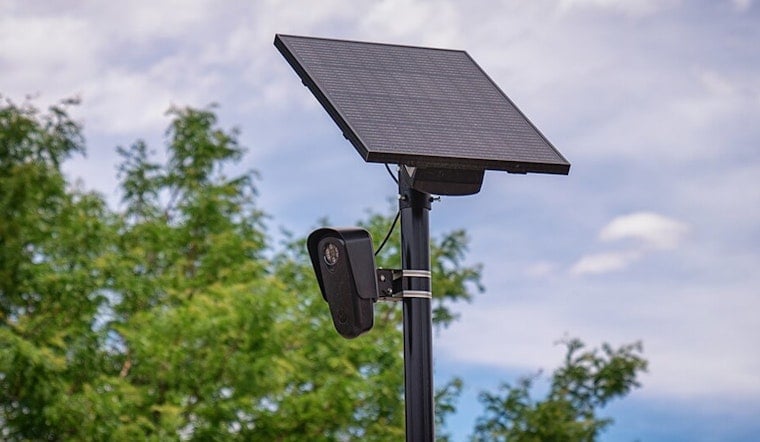
Deputies instead turned to the county's Flock camera system, an automated license plate reader network, to follow her vehicle as it traveled south through multiple counties. The cameras captured vehicle information, including license plate numbers and identifying characteristics, allowing investigators to trace her path far beyond Franklin County's borders. Authorities ultimately located her on Interstate 75, nearly four hours from home, and the sheriff's office announced she had been found safe.
A Grateful Family, a Multi-County Effort
The Franklin County Sheriff's Office thanked the agencies involved in the search and specifically recognized the Houston County Sheriff's Office for its assistance in the recovery. Ballenger praised both agencies for their dedication and compassion throughout the search, and said investigators never stopped looking and used every available resource to bring her grandmother home safely. “Flock helped bring her grandmother home,” Ballenger said, according to the same report, calling the cameras a crucial tool in the outcome.
Law enforcement agencies can search the Flock system for vehicles connected to criminal investigations, missing-person cases, and other public safety incidents. The technology is used in more than 6,000 communities across 49 states, per Flock Safety, which partners with thousands of law enforcement agencies nationwide. Cases like this one echo a similar recovery this month in which Coweta County and Senoia officers used Flock alerts to intercept a missing child traveling from Florida along Highway 16.
Georgia's Legal Framework for Elderly Missing-Person Alerts
Searches for missing disabled adults and seniors facing health or safety risks in Georgia typically fall under Mattie's Call, a statute that authorizes local police agencies to activate statewide alerts once a disappearance is verified, according to the Georgia Bureau of Investigation. Established in 2006, Mattie's Call requires entry into the national crime database and a statewide broadcast alert. Georgia Code also limits how long agencies can retain automated license plate reader data, allowing retention for up to 30 months, though Flock Safety's system automatically purges unflagged footage after 30 days unless it is flagged as evidence in an active investigation, according to the Gwinnett County Police Department.
Ballenger acknowledged concerns about Flock's privacy and surveillance implications even as she credited the technology with her grandmother's recovery. Her acknowledgment comes as Flock camera use has prompted broader scrutiny nationwide over privacy, data retention, information access, and how officers use the system. More than two dozen Georgia law enforcement officers have been arrested or fired for misusing Flock cameras, a wave of discipline that has included multiple Richmond County deputies charged following a June audit, according to Lexipol.
Misuse Concerns Shadow a Life-Saving Tool
Under Georgia Code § 35-1-22(d), accessing or using license plate reader data under false pretenses or for any purpose outside official law enforcement duties is a high and aggravated misdemeanor offense, with convictions requiring criminal fingerprinting. An open records audit of Northeast Georgia agencies found that Rabun County Sheriff's Office deputies alone conducted more than 3,200 Flock database searches during the first seven months of 2026, while local cameras recorded over 4.4 million vehicle plate scans, reporting from Now Georgia shows.
Not every agency's audit has raised red flags. A July internal review by the McDonough Police Department in metro Atlanta found that all 32 Flock camera searches conducted by its officers over seven months complied with written policy and legitimate law enforcement duties, Hoodline previously reported on the audit. Flock Safety says it updated its platform in August to include automated audit-assistance software that flags anomalous search patterns and requires officers to manually confirm plate reads before initiating stops, a safeguard the company says yields fewer than nine human-reported errors per million alerts.
The debate over the technology's footprint is also playing out in Washington. U.S. Representative Thomas Massie pledged in July to introduce federal legislation blocking federal grant funding for municipalities and police departments that operate Flock Safety or similar license plate reader networks, a push Hoodline covered in its report on Massie's proposed cuts. Nationwide, more than 600,000 people are reported missing annually, and Flock Safety says its camera network compares passing vehicles against national and regional hotlists, technology the company reports supported over 1 million investigations and helped find more than 10,000 missing individuals in 2025. For Ballenger's family, that statistic became personal the moment deputies spotted her grandmother's car on Interstate 75, safe and finally within reach.





.jpg)