

























































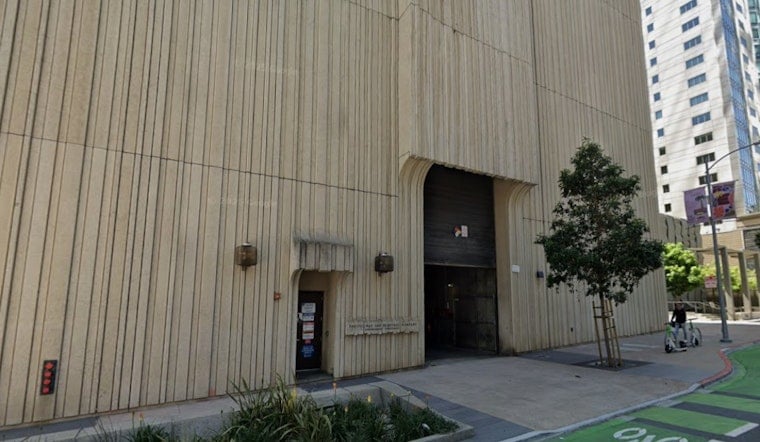
PG&E is looking to unload a vacant power substation at 111-117 8th Street in South of Market, a three-story property with 12 megawatts of pre-entitled electrical capacity that real estate brokers say is unlike anything else on the San Francisco market. The utility has tapped commercial real estate firm JLL to find a buyer, marketing the roughly 21,000-square-foot building under the name Power Bunker to tech and artificial intelligence companies hungry for computing space.
According to The Real Deal, JLL says the 8th Street site is San Francisco's only commercially available power-entitled property of its kind, and the listing pitches it as suited for AI, advanced computing, technology operations, and research and development. The brokerage team handling the sale — Erik Hanson, Brendan Bury and Tasman Lynch — is marketing the property directly at the type of tenant now devouring San Francisco office space: AI companies running large language models like ChatGPT and Claude, which need enormous amounts of electricity to operate.
The timing is no accident. San Francisco recorded 2.3 million square feet of positive net office absorption in the first quarter of 2026 alone, its strongest quarter on record, with AI companies responsible for 58 percent of all leasing activity, per The Registry. That surge helped push the city's office vacancy rate down from 32.8 percent to 30.4 percent in just three months, a dramatic shift for a market that spent years struggling with empty towers.
AI's Land Grab Reshapes SoMa
The scale of the shift is striking. Between 2021 and July 2026, AI companies expanded their share of San Francisco's total office supply from under 2 percent to 10 percent, and leased more than 2.1 million square feet in just the first seven months of this year, according to the same Registry report. The Real Deal's reporting on the 8th Street listing notes that AI firms have now committed to more than 7.1 million square feet across San Francisco, with San Francisco recording only two AI-related leases back in 2020 compared to 257 by the end of last year. Companies including Anthropic and OpenAI now have a presence in the city, and per JLL, South of Market hosts the highest concentration of AI companies in the world.
Not all of that demand is for typical office floors. AI robotics and hardware startups made up roughly 10 percent of AI leasing activity in San Francisco this year, and that segment is driving a surge in demand for production, distribution, and repair spaces built to handle heavy electrical loads, the Registry reports. The Real Deal frames Waymo and Amazon as examples of the kind of manufacturing and hardware operations tied to that PDR appetite. The trend already has precedent nearby: developer Group I recently listed 1301 Folsom Street in SoMa after leasing its 2,000-amp power capacity to robotics AI startup Medra, according to The Real Deal.
A Familiar Pattern for PG&E
Selling off underused urban real estate is not new territory for the utility. PG&E previously offloaded its 77 Beale Street and 245 Market Street headquarters complex to Hines for $800 million in May 2021, a sale that returned roughly $400 million in net gains to utility customers as PG&E relocated its headquarters to Oakland to cut long-term operating costs, per the company's own announcement.
The 8th Street building carries a California 3B historic designation, which could make it eligible for the Mills Act, a state program that, per San Francisco's Administrative Code Chapter 71, can reduce property taxes by 40 to 60 percent for qualifying historic buildings. The Real Deal's reporting adds that Mills Act eligibility could also unlock a 20 percent federal rehabilitation tax credit. But San Francisco planning rules generally cap that benefit for commercial and industrial properties at pre-contract valuations of $5 million or less, unless the Board of Supervisors grants an exemption — a hurdle any serious bidder for a power-hungry AI build-out would need to clear.
PG&E has walked this preservation-meets-upgrade path before. At Station N on 9th Avenue in the Inner Sunset, the utility built a modernized control building with new transformers while keeping the 1930s facade intact, part of more than $1 billion PG&E poured into citywide grid upgrades during the 2010s, as Hoodline previously reported.
Power Access Now Drives Where AI Lands
The push to unload the 8th Street substation lands amid growing anxiety that California is losing AI data center investment to states with faster grid connections. PG&E chief executive Patti Poppe has said that speed to power is now the deciding factor for where tech companies choose to build, and the utility has tried to expedite projects like the 40-megawatt Equinix SV12 facility in San Jose, Hoodline reported in January. A pre-entitled 12-megawatt property sitting empty in the middle of SoMa is exactly the kind of asset that shortcuts years of grid-connection delays for a buyer willing to navigate the historic-preservation rules attached to it.
That urgency exists alongside real public wariness about SoMa's electrical infrastructure. A fire at PG&E's 1940s-era Mission Substation at 8th and Mission streets knocked out power to 130,000 customers in December 2025, stranding autonomous Waymo vehicles at dark intersections across the city, an incident Hoodline covered at the time. An independent engineering report released in May pointed to condensation buildup and unreplaced insulation boards as the cause, a finding Hoodline later cited again after a Sunset District outage this month. San Francisco has since logged repeated grid failures, including an outage that darkened Russian Hill, North Beach and Chinatown earlier this month.
The 8th Street substation sale also reflects a broader citywide scramble to meet industrial space demand. In December 2025, the Board of Supervisors approved Prologis's SF Gateway project, a 1.6-million-square-foot multi-story industrial logistics facility planned for Bayview Hunters Point that will replace four World War II-era warehouses, according to GlobeSt. That massive outer-neighborhood project stands in sharp contrast to the compact, power-dense infill site PG&E is now shopping in the heart of SoMa — two very different bets on where San Francisco's next wave of industrial and AI-driven growth will land.



