

























































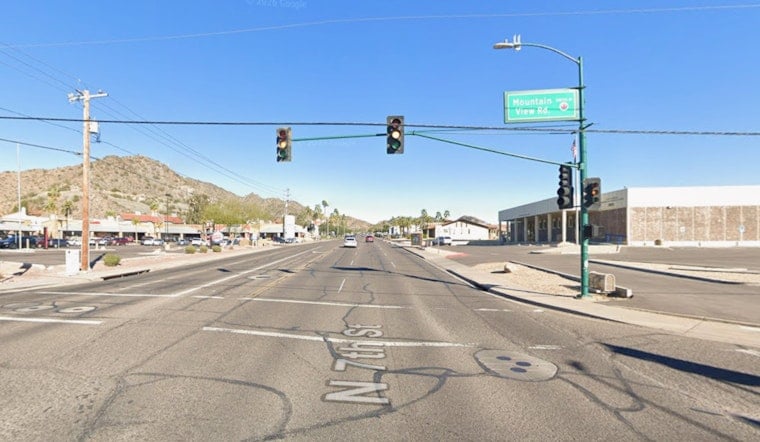
Phoenix Fire Department technical rescue crews were dispatched Wednesday evening to a mountain rescue near 7th Street and Mountain View Road, at the foot of North Mountain Park. The department said crews were actively engaged in the operation as of 3:28 p.m. local time, deploying its specialized technical rescue teams to reach a hiker in the rugged terrain.
The call, announced by the Phoenix Fire Dept. on social media, places this rescue squarely within the eastern access corridor to North Mountain and Shaw Butte, an area threaded by popular routes including Trail #44 and the Charles M. Christiansen Trail #100 within the Phoenix Mountains Preserve, according to the City of Phoenix. The terrain around North Mountain is known for steep desert climbs and paved access roads that wind up toward summit communication towers, features that can turn a routine hike into a lengthy extraction when something goes wrong.
A Summer of Surging Rescue Calls
This latest response adds to what has already been an unusually active year for Phoenix Fire's mountain rescue teams. In the first five months of 2026, the department responded to 74 mountain rescues across city trails, a 50 percent jump compared to the 49 rescues recorded over the same stretch in 2025, according to the Surprise Independent. Phoenix Assistant Fire Chief Mark Gonzales presented the figures to the City Council's Public Safety subcommittee, noting that calls averaged 15 per month between January and May.
The same reporting found that during the 2025 summer heat season, from May through September, 85 percent of mountain rescues on Phoenix trails were triggered by heat-related illness rather than falls or other injuries. City officials have warned that extreme heat can rapidly escalate minor exhaustion into a life-threatening emergency, a dynamic that shapes how crews prepare for every call during the hottest months.
Ground Crews Doing the Work of a Grounded Helicopter
Complicating this summer's rescues is the continued absence of Phoenix's primary rescue helicopter, a twin-engine Agusta A109E operated jointly with the Phoenix Police Department. The aircraft was pulled from service in late July for an extended maintenance overhaul, as reported by ABC15 Arizona and previously covered in Hoodline's story on the grounded rescue helicopter. Phoenix Fire Captain Rob McDade has said rescues that would normally take 30 to 60 minutes by helicopter hoist can stretch to as long as three hours when performed entirely on foot.
That shift puts added strain on Technical Rescue Team personnel, who during summer trail rescues carry up to 145 pounds of specialized medical equipment and gear while navigating steep terrain in extreme heat, per the Surprise Independent's reporting. When patients cannot walk out on their own, crews often rely on a Big Wheel stretcher — a lightweight metal litter mounted on a single heavy-duty tire — to move them over rocky, narrow trails where standard gurneys cannot pass, according to 12News.
North Mountain's History With Heat Emergencies
North Mountain has seen serious rescues before. In September 2025, Phoenix Fire crews carried out a critical heat-related rescue near 7th and Peoria avenues, hiking up the mountain and manually carrying an elderly woman off the trail before she was transported to a hospital in critical condition, 12News reported at the time. It is a reminder of how quickly conditions on these trails can turn dangerous, particularly during the hottest stretches of the year.
Records also complicate a common assumption about who ends up needing rescue. Phoenix Fire Department data from 2021 through 2024 show that roughly 71 percent of mountain rescue victims — 437 of 614 total cases — were Arizona residents, not out-of-state visitors, based on the same 12News analysis. Fire officials have said local residents often overestimate their heat tolerance or run out of water during downhill descents, a pattern that undercuts the idea that rescues mostly involve unprepared tourists.
City Efforts to Curb Preventable Calls
Phoenix has been working on both regulatory and infrastructure fronts to reduce the volume of these emergencies. Under the city's Trail Heat Safety Program, updated in March 2025, popular preserve trails such as Piestewa Peak Summit and Camelback's Echo Canyon automatically close to hikers from 8 a.m. to 5 p.m. whenever the National Weather Service issues an Extreme Heat Warning, according to the City of Phoenix. The Parks Board has also expanded trail restrictions and extended evening parking hours at select trailheads to encourage safer nighttime hiking.
Separately, the city began design work in mid-2025 on a comprehensive renovation of the 37-acre North Mountain Park near 7th Street and Peoria Avenue, a project that will incorporate dedicated ice machines and first-responder supply infrastructure to support heat-relief and rescue operations, per city records. The project, led by J2 Environmental Design, is scheduled to complete construction in late 2027 — meaning the current rescue season will play out without those upgrades in place.
Wednesday's rescue near Mountain View Road follows a string of similar operations across Phoenix's trail network this year, including a Papago Park extraction and multiple technical rescues on Camelback Mountain. As the helicopter overhaul continues and call volumes remain elevated, Phoenix Fire's ground crews are likely to keep shouldering the bulk of the physical burden through the rest of the summer heat season.





