

























































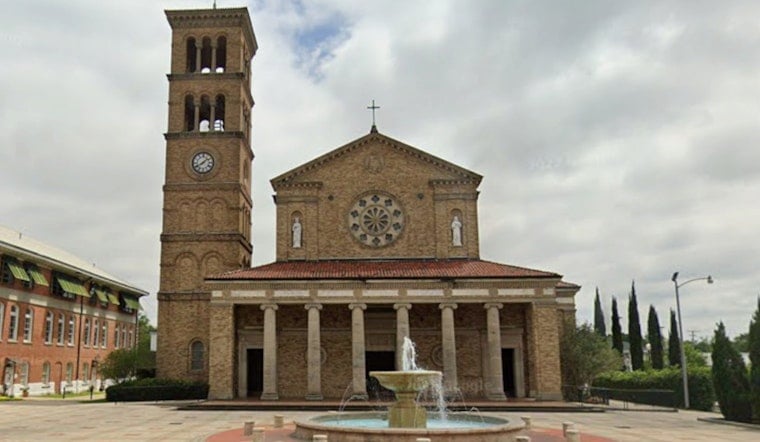
The doors of St. John the Evangelist Catholic Church in Plaquemine swung back open on August 15, when parishioners gathered for a ribbon-cutting before the 4 p.m. Mass, marking the end of an eight-week closure that brought a new roof, waterproofing, asbestos abatement and refurbished pews to the 1927 landmark. Known locally as the Cathedral on the Bayou, the church had shut down in phases since November 2023 to tackle repairs that organizers say will help carry the building into its second century.
A Campaign Nearly Two Years in the Making
The renovation effort, part of a broader 100 Years capital campaign led by Rudy Comeeaux, has raised $2,108,773 toward a $2.6 million goal, according to New Orleans CityBusiness. More than 760 parishioners, friends and anonymous donors contributed to the fund, which the outlet reports covers 81 percent of the campaign's total target. Comeeaux, who chairs the capital campaign committee alongside vice chairman Ruel Seneca, has called serving in that role both an honor and a responsibility.
Work on the building itself included a new roof, waterproofing, a soft wash of the plaza, and a new chiller and boiler installed in the central plant, per the same account. New flooring was installed beneath the pews, and craftsmen with Mike Hawkins and Mid-South Church Construction refurbished the pews themselves. Crews also completed asbestos abatement and a deep cleaning of the church's interior spaces, while the parish's fountain was restored as part of the broader push.
Keeping Mass Going During the Shutdown
During the eight-week closure, the parish kept services running elsewhere rather than pause entirely. Weekday Masses moved into the parish hall, while weekend Masses were held at the St. Clement of Rome Chapel, according to St. John the Evangelist Catholic Church. About a week before reopening, parishioners themselves pitched in to help finish remaining touches on the renovation projects, the church notes.
Comeeaux framed the project as reaching beyond bricks and mortar. He said the renovations will preserve a place for faith, families and future generations, and added that the effort is about people as well as buildings, according to CityBusiness. The campaign also arrives roughly a year after Father Greg Daigle, a figure tied to the parish, died in June 2025.
A Building With Nearly Two Centuries of History
The current brick-and-stone church is actually the third structure built on the same Main Street site along Bayou Plaquemine. The original 1840s wooden church burned down in a fire in February 1858, and a second church built that same year was demolished in 1926 to clear space for the Romanesque Revival building that stands today, according to the Roman Catholic Diocese of Baton Rouge. The second church had also suffered structural damage earlier in the 20th century from severe storms and ground vibration tied to construction of the nearby Plaquemine Lock, which was completed in 1909 directly across from the church property, per the church's own history page.
Completed in October 1927, the building was designed by New Orleans architects Albert Bendernagel and Emile Weil, who modeled it on Italian Romanesque Revival basilicas, including Rome's Basilica of San Lorenzo fuori le Mura, for its six-columned portico, according to 64 Parishes. The nave is lined with 24 Ionic columns leading to a marble ciborium, and the six-story campanile belfry anchors the structure's silhouette over downtown Plaquemine. The church's front façade also features a monumental rose window with ten inner and ten outer petals, designed to symbolize the Holy Spirit and the nine choirs of angels, flanked by statues of St. John the Evangelist and St. Louis, King of France, added in 1954.
What's Next for the Bell Tower
Church leaders have already identified priorities for the next phase of work, including refurbishment of the historic bells named Johanna Maria and Anna, which are housed inside the six-story campanile alongside an oculus clock installed in 1994. Upcoming project priorities also include interior and exterior lighting upgrades and improvements to the St. John Parish Hall building, according to CityBusiness.
The timing carries added weight for the roughly 1,800 families who make up the parish: St. John the Evangelist is approaching its 100th anniversary, with a centennial celebration planned for fall 2027. The church remains a contributing property to the Plaquemine Historic District, a 55-acre area encompassing more than 130 properties that was added to the National Register of Historic Places on October 30, 1989, according to the National Park Service.
Plaquemine itself, the parish seat of Iberville Parish, had a population of 6,269 in the 2020 U.S. Census, with 2026 municipal estimates putting the figure closer to 5,800 residents, per the U.S. Census Bureau. Iberville Parish as a whole recorded a total population of 30,241 in the 2020 Census, with a median household income of $57,459 reported in 2019–2023 American Community Survey data, giving the capital campaign's more than 760 donors added significance in a community of modest means along the Mississippi River.





