

























































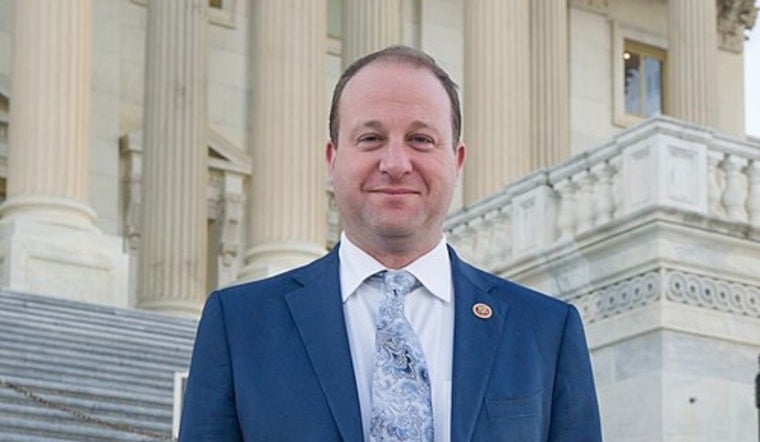
Governor Jared Polis signed Executive Order D 2026-013 on Thursday, directing state agencies to build a pilot online permitting portal aimed at speeding up approvals for what the order designates as Colorado's strategic industries, including clean energy, semiconductors, quantum computing, aerospace, bioscience and advanced manufacturing. The order, signed in Denver, is designed to consolidate what has been a fragmented, multi-agency permitting process into a single digital front door for at least one industry, with that industry to be chosen by the Office of the Governor by August 15.
In a statement posted to Facebook, Governor Jared Polis said slow, burdensome permitting hurts the state's economy and reduces opportunity for Coloradans. “Colorado is the best state for innovative industries like clean energy, semiconductors, and other advanced manufacturing, and we can create good jobs and attract more businesses in these growing industries to Colorado by making permitting easier, faster, and more convenient,” Polis said. He added that the new order builds on an April directive in which he told state agencies to speed up permitting so that companies interested in Colorado are not deterred by a confusing and slow process.
What the Pilot Portal Would Actually Do
According to the text of the executive order, the pilot portal could include a single project intake interface for viewing permit applications across agencies, a shared business profile usable across those agencies, centralized status tracking, and guidance documents tailored to whichever industry is ultimately selected. The order names four state divisions expected to collaborate on the effort: the Air Pollution Control Division, the Energy and Carbon Management Commission, the Hazardous Materials and Waste Management Division, and the Water Quality Control Division. Those agencies are also directed to work with the Governor's Office of Information Technology and should coordinate as needed with the Office of Economic Development and International Trade and the Colorado Energy Office.
The order sets a series of deadlines for those agencies. By December 15, they must develop permitting performance metrics that could track average processing time, applicant satisfaction, and staff productivity, and must establish a regular leadership review process for those metrics. They are also required to ensure every permitting program has a staff role with visibility into its entire workflow, to set productivity benchmarks for permitting teams, and to provide biannual staff training. Separately, the Air Pollution Control Division and Water Quality Control Division are directed to digitize at least 50% of permit volume still handled on paper by April 2027, while the Energy and Carbon Management Commission and Hazardous Materials and Waste Management Division are instructed to make best efforts to further digitize with existing resources.
A Backlog Years in the Making
The push to modernize permitting comes against a backdrop of persistent delays at Colorado's environmental agencies. Public records reviewed in February showed the backlog of overdue major-source air pollution permits at the Air Pollution Control Division had climbed to 128, up from 111 in 2022, despite more than $40 million in state investment since 2022 to expand staff and digitize workflows, according to The Colorado Sun. Environmental watchdogs have noted that permit delays can prolong local exposure to industrial emissions, while state officials have pointed to a surge in applications following EPA ozone nonattainment rulings.
Water permitting has faced a similar strain. As of February 2025, state health data showed 1,384 water discharge permits remained expired across Colorado, representing roughly half of active permits, though that was down from a 75% backlog rate in prior years, per Water Online. Those permits, required under the Clean Water Act for municipal wastewater plants and industrial facilities, fall under the Water Quality Control Division, one of the four agencies named in Thursday's order.
The Colorado Department of Public Health and Environment has already begun moving in the direction the order calls for. Effective June 30, all Air Pollutant Emission Notices and construction permit applications must be submitted through an online portal, eliminating paper and PDF email submissions, according to the agency. CDPHE has been rolling out mandatory digital tools for environmental justice assessments and dispersion modeling since 2024, ahead of the broader digitization goals the new order sets for 2027.
Why Speed Matters for Colorado's Tech Ambitions
The stakes extend beyond bureaucratic efficiency. In July 2024, the U.S. Economic Development Administration awarded $40.5 million in federal CHIPS Act funding to Elevate Quantum, a consortium of more than 120 public and private organizations spanning Colorado, New Mexico and Wyoming, activating $74 million in state-funded tax credits and loan reserves that Colorado lawmakers had approved to build the region into a quantum technology hub, per the Office of Governor Jared Polis. Colorado also created a CHIPS Refundable Tax Credit Program under House Bill 23-1260, offering up to $15 million annually in refundable state income tax credits through fiscal year 2028-29 for semiconductor and advanced manufacturing projects, according to the Colorado Office of Economic Development and International Trade. Microchip Technology became the first semiconductor manufacturer approved under that program in January 2024 to support an expansion of its Colorado Springs fabrication facility.
Those investments depend on projects actually getting sited and permitted quickly, a point regulators have tried to address before. In May 2024, the Colorado Air Quality Control Commission set a strict 14-day timeline for reviewing environmental justice summaries submitted by industrial permit applicants, requiring permits to advance if regulators fail to issue incomplete notices within that window, per The Sum and Substance. The tech sector's overall footprint in Colorado is substantial: a 2024 study by the Colorado Technology Association found the industry accounts for 10% of the state's total employment and 20% of its gross domestic product, ranking Colorado third nationally for tech industry concentration.
Tribal Sovereignty and Open Questions
The order also addresses jurisdictional overlap, stating that any permit-streamlining policies developed under it must acknowledge tribal sovereignty for projects crossing state-tribal jurisdictions, including notification to or approval from applicable tribal governments as required by law before a project can begin. Which industry will actually receive the pilot portal remains undecided; the Office of the Governor has until August 15 to choose it in consultation with the state IT office, the named agencies and other stakeholders.
Thursday's order arrives amid a broader legislative fight over how Colorado balances environmental oversight against faster clean-energy development. During the 2026 session, lawmakers introduced 18 energy and permitting-related bills, including HB 26-1226 to limit power plant emissions and SB 26-102 requiring large data centers to procure 100% renewable energy by 2031, as Hoodline previously reported. State law already mandates a 50% cut in greenhouse gas emissions by 2030 and net-zero emissions by 2050, a backdrop that keeps pressure on regulators to move faster without loosening the standards meant to protect public health.





