

























































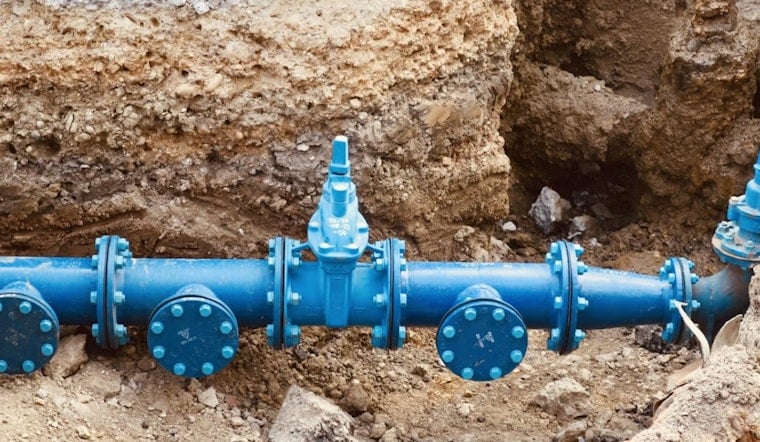
A water transmission main dating to the 1960s ruptured early Sunday near 500 South and Emery Street in Salt Lake City, sending water into homes on both sides of the block and washing out enough soil to leave a large crater in the road. Salt Lake City Public Utilities reported that 15 homes were affected and residents of four homes were displaced, with some families now sleeping in tents, campers, and on relatives' couches while they wait for answers about what happened and who will pay for the damage.
Willa Mae Graham said six feet of water filled her basement, and her son lost nearly all of his belongings, including his pet bearded dragon, in the flooding. Graham and Tom Newman are now staying in a camper parked in their driveway, as reported by FOX 13 News Utah. Newman told the station he has lived in the home since 1966, when his parents owned the house before he took it over, and said he had never experienced flooding there before Sunday. His insurance company sent a disaster cleanup crew to pump and dry the house, but he said his policy would not cover the remaining damage.
Down the street, Shirley Reyes is couch surfing while her family and pets stay with her sister after the flooding destroyed her basement flooring and recent renovations. Misael Flores, who has lived in the neighborhood all his life, is staying temporarily with his sister and showed the outlet the waterline and basement damage in his own home, saying everything in the affected areas was ruined. Some of the families affected include children who are still attending school without a home to return to, and some flooded homes remain without gas.
A New Waterline Tied to Bridge Construction
Jesse Stewart, Salt Lake City Public Utilities deputy director, said the failed water main connects to a new waterline being installed beneath the Jordan River as part of a Utah Department of Transportation bridge replacement project. The 500 South bridge replacement over the Jordan River was designated as a $7.4 million project funded through the federal Bridge Formula Program under the Wasatch Front Regional Council's Transportation Improvement Program. Stewart said officials are examining the connection between the bridge construction and the waterline failure, though the city has not said the two are definitively linked.
UDOT said the break occurred outside its work zone, and both UDOT and Salt Lake City have not determined whether the nearby construction contributed to the failure. Salt Lake City's 2026 MyStreet construction plan scheduled multiple major infrastructure projects in Poplar Grove this year, including work on the 400 South and 500 South bridges over the Jordan River and a separate Public Utilities sewer pipeline replacement along Emery Street, according to the city's SLC.gov MyStreet page, which helps explain why residents are asking whether heavy equipment near their homes played a role. The city said the water main was believed to be in good condition and said it was not aware of problems with the line before it broke. The cause of the failure remains under investigation, and UDOT is assisting the city with its response.
Aging Pipes Across a Sprawling System
The 1960s main that failed is far from the oldest pipe in the ground. Salt Lake City Public Utilities manages a distribution network spanning more than 1,300 miles of pipe, with some sections dating back more than a century and a historical replacement pace of roughly 5 miles per year over ten-year spans, per KSL TV's reporting. Poplar Grove has felt this strain before: in June 2025, Public Utilities crews responded to multiple water main breaks on nearby Cheyenne Street, and westside residents voiced growing frustration over recurring service disruptions at the time. Nationally, the U.S. Environmental Protection Agency estimates roughly 240,000 water main breaks occur annually across the country as municipal pipe infrastructure ages, according to research compiled by Circle of Blue.
Salt Lake City capital improvement planning documents also note that Jordan River bridge structures, including the nearby 400 South vehicle bridge, suffered structural degradation accelerated by a 5.7-magnitude earthquake that struck Salt Lake County in 2020. That history illustrates how seismic damage and aging design have compounded the need for bridge and utility work along the corridor, work that now involves complex earthwork and utility relocations near existing water mains.
A Slow, Uncertain Path to Compensation
Salt Lake City has directed residents to contact their insurance companies and has said they may also file claims with the city, which evaluates each claim separately. But Utah's Governmental Immunity Act requires residents to file a formal written notice of claim before pursuing any lawsuit against a municipality, and proving city negligence or advance notice of a defect in a water main case is notoriously difficult under state law. Standard homeowners insurance policies frequently exclude ground-level or foundation water damage caused by municipal water main breaks in the first place, according to prior KSL TV reporting on the legal hurdles Utah homeowners face after similar failures.
Salt Lake City has not offered temporary housing or immediate living expenses to the displaced families, and it has not provided a timeline for repairing the damaged main or completing its investigation. Shirley Reyes told FOX 13 News Utah that the investigation will take time, but residents have little time to spare. Water service has since been restored in the area, and the city is working with a mitigation contractor that is removing water from affected homes, cutting away damaged drywall, and addressing possible mold.





