

























































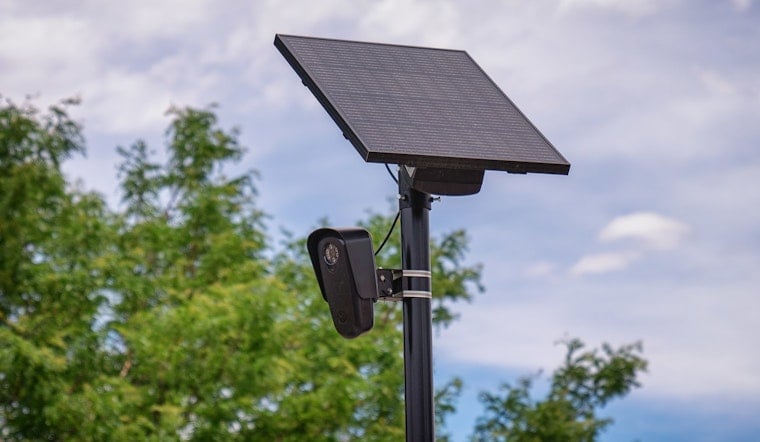
Putnam County Sheriff H.D. “Gator” DeLoach has ordered the immediate disconnection of all 18 automated license plate reader cameras positioned on major roadways throughout the county, with the entire network set for removal within 30 days. The move shuts down a program that began in 2022 and pauses it indefinitely until Florida lawmakers set clearer rules for how police can use the technology.
DeLoach announced the discontinuation of the program and cancellation of the contract as part of a wave of scrutiny facing automated plate readers nationwide, according to WJXT News4JAX. The sheriff said the decision was not a criticism of how his deputies used the technology, but rather a response to concerns over privacy, data sharing, and what he described as regulation struggling to keep pace with the tools themselves. Per the same report, DeLoach said the ALPR program will remain shut down until the state legislature establishes clear parameters and guidance for law enforcement use, and that public safety and individual liberty both deserve consideration as the debate plays out.
The sheriff's office had required a case number for every instance of ALPR access and conducted quarterly audits of accessed data, according to the outlet's report. Even so, DeLoach acknowledged that other law enforcement agencies and private residents have misused ALPR cameras across the country — a concern that carries extra weight in Putnam County, where a sheriff's deputy resigned in July after an internal affairs investigation found he had improperly accessed the department's Flock Safety database to track his ex-girlfriend. Sheriff DeLoach had already recommended the deputy for termination over domestic violence and misconduct allegations, as reported by WJXT News4JAX, before the deputy stepped down.
A Tool With Real Results, and Real Risks
The sheriff's office has pointed to concrete benefits from the cameras during their four years of operation. ALPR technology aided in locating people with Alzheimer's disease and early-stage dementia who became disoriented while driving, helped track and arrest murder suspects, and earlier this year assisted the sheriff's office and the FBI in locating a teenage human trafficking victim from another state, per the department's account relayed to News4JAX. DeLoach has said the technology carries genuine value as a law-enforcement tool even as he pulls the plug on it.
That tension — between demonstrated investigative value and mounting misuse scandals — has played out nationally in 2026. An August investigation by The Washington Post found that at least 50 law enforcement officers across the country have been charged or investigated for misusing ALPR databases for personal reasons, with 46 of those cases involving Flock Safety systems specifically and more than half involving officers tracking ex-partners. The findings triggered heightened scrutiny from governors and municipal councils in multiple states.
DeSantis Calls Cameras “Out of Control”
Florida Governor Ron DeSantis added political weight to the debate on August 26, publicly calling automated license plate readers “out of control” during a news conference and warning against the state becoming a “surveillance state,” as reported by Central Florida Public Media. DeSantis argued the systems had expanded from simple toll collection into routine criminal surveillance without adequate public guardrails, and urged state lawmakers to enact strict statutory protections.
An “AI Bill of Rights” backed by DeSantis that included statutory privacy protections against automated surveillance passed the Florida Senate this legislative session but failed to advance through the Florida House, the outlet notes. That legislative dead end left Putnam County and other local agencies operating without updated state boundaries governing how ALPR technology can be used, which DeLoach cited directly in pausing the program until lawmakers act.
Florida Statute § 316.0777 allows law enforcement to install plate readers within state highway rights-of-way only for active criminal intelligence or investigations, according to the Florida Senate, and it explicitly bars agencies from using the cameras to issue automated traffic citations. That same statute requires agencies to remove cameras within 30 days if ordered by the state or upon contract termination — the exact timeline the Putnam County Sheriff's Office is now following. Separately, the statute exempts camera data from public records disclosure, but state administrative guidelines still permit non-investigative scan data to be retained for up to three years unless an agency adopts a stricter purge schedule, a retention window Reason Magazine reports civil liberties groups have criticized as overly broad for people never suspected of a crime.
Vendor Safeguards, Nationwide Cancellations
Flock Safety itself rolled out platform-wide changes on August 13, including mandatory search reason codes, automated audit alerts, and user lockouts for suspicious search behavior, following nationwide reports of officer misuse, according to WTSP. Despite those updates, DeLoach determined that state-level statutory regulation was still necessary before Putnam County could keep running the program.
Putnam County joins a growing list of local governments cutting ties with Flock Safety this summer, including East Bridgewater cancels its Flock contract and Hopkinton and Salem, Massachusetts, as well as Sheboygan, Wisconsin. Those communities cited a range of reasons, from legal procurement defects to contract breaches and privacy concerns, underscoring that Putnam County's move is part of a broader national reckoning rather than an isolated local decision.
Notably, the sheriff's shutdown does not necessarily mean plate readers vanish entirely from Putnam County. The Palatka Police Department operated its own independent network of 12 Flock Safety cameras as of late last year, separate from the 18 maintained by the sheriff's office, meaning municipal police retain their own procurement authority and could keep their cameras running even as the county's system goes dark. Whether Palatka or other municipal agencies in the county will follow the sheriff's lead remains an open question, as does how the sheriff's office will fill any investigative gap in missing-person and human-trafficking cases without the tool, and whether the Florida Legislature will finally take up ALPR regulation when it reconvenes.
Any law enforcement use of ALPR data in Florida also requires a Memorandum of Understanding with the state Department of Highway Safety and Motor Vehicles to cross-reference plate scans with the Driver and Vehicle Information Database under federal Driver's Privacy Protection Act rules, according to a 2023 Florida House of Representatives Staff Analysis. That framework is why unauthorized lookups, like the one that led to the Putnam County deputy's resignation, can trigger both state and federal privacy violations, since access to that database demands official law-enforcement justification and strict auditing.





.jpg)