

























































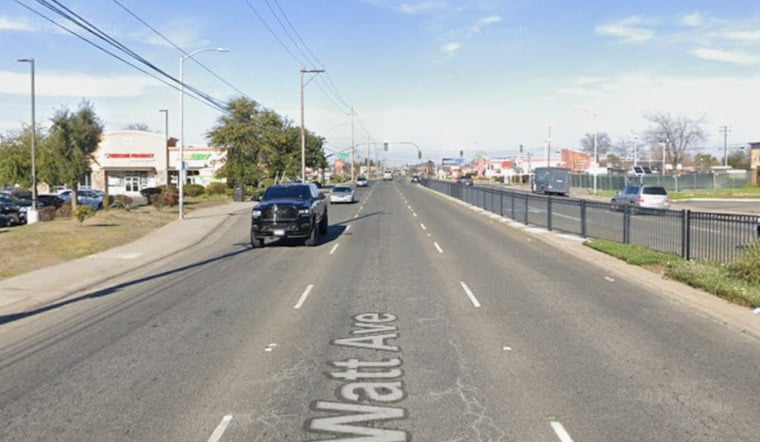
Twelve-year-old Austin crosses Watt Avenue every school day on his bicycle, and he says drivers sometimes drift into the bike lane while he's riding through it. His routine trip has become a small window into a much bigger problem: Sacramento-area roadways have recorded 10 bicyclist deaths so far in 2026, a toll that pushed the county's bicycle advisory committee to appear before the Board of Supervisors this week with a blunt message about what needs to change.
The committee presented its report to the Board of Supervisors on Tuesday, calling for infrastructure that physically separates bicyclists from vehicle traffic rather than relying on paint alone, according to CBS Sacramento. The report includes a map of bicycle crashes across the county and identifies areas considered among the most dangerous for people who bike and walk. Watt Avenue is singled out as one of the county's more dangerous corridors, and it's also the road Austin has to navigate to get to class.
Evan Dudley, who spoke about the region's cycling conditions, said Sacramento is a flat city and a great place to bike, but he added that better bike lanes matter more as the region's population grows. He also pointed to a structural problem beyond individual streets: the American River Parkway trail system is difficult to reach because there are few good connectors linking neighborhoods to it. According to Dudley, more bicycling could help reduce traffic overall, but only if people feel safe enough to get on a bike in the first place.
Why Painted Lines Aren't Enough
“People who do not feel safe have no reason to ride bicycles,” Dudley said, according to the same report. He argued that barriers are the best answer, and that something as simple as plastic bollards can delineate bike lanes and keep vehicles from drifting across them — a fix he says would have addressed the exact hazard Austin described near Watt Avenue.
The scale of the problem is documented well beyond this year's crash count. Sacramento County has recorded 158 people killed while walking or bicycling over the past five years, per the bicycle advisory committee's report cited by CBS Sacramento. Statewide numbers back up why advocates are pressing so hard: state crash data analyzed by UC Berkeley SafeTREC found that Sacramento County recorded 16 bicyclist fatalities in 2023, ranking third among all California counties behind only Los Angeles County and San Bernardino County.
What's Driving the Crashes
UC Berkeley SafeTREC's research points to specific driver behaviors behind the state's worst bicycle crashes: speeding accounted for 16.5% of fatal and severe collisions in 2023, failure to yield right-of-way for 16.3%, and improper turns such as right-hook collisions for 15.0%. Those figures line up directly with the kind of physical separation the county's bicycle advisory committee is now demanding — barriers that would prevent a driver's momentary lapse from becoming fatal. Statewide, 145 bicyclists were killed in California in 2023, a 20.8% drop from 183 deaths the year before, though the toll remains 56% above 2014 levels.
Sacramento's roadways also show up poorly in national comparisons. Smart Growth America's 2026 Dangerous by Design report tied the Sacramento–Roseville–Folsom metro area for 19th deadliest in the country for vulnerable road users between 2020 and 2024, a ranking Hoodline detailed in its earlier report on the region's traffic toll.
Money Is Moving, But Slowly
County officials aren't ignoring the corridor. Sacramento County added more than 14 miles of improved bike lanes over the past year and is working on safer routes to connect bicyclists to the American River Parkway trail system, per the committee's report. The county also completed a $20 million Watt Avenue Complete Streets Project in February, repaving 1.7 miles between Roseville Road and Interstate 80 in North Highlands while widening the roadway to add bike lanes and upgrading pedestrian crossings, according to the Sacramento Area Council of Governments.
Further south, the Sacramento Transportation Authority approved $23.8 million in Measure A funding in July for the South Watt Avenue Improvement Project between Florin Road and Jackson Road, which will add six miles of new sidewalks and bike lanes while expanding that stretch from two lanes to four. It's part of a much larger vision: unincorporated Sacramento County's 2022 Active Transportation Plan set long-term goals to build or upgrade 1,203 miles of bike lanes, 192 miles of sidewalks, and safety improvements at 192 major intersections. That plan, tracked through CEQAnet, replaced the county's 2011 Bikeway Master Plan — but advocates note that goals on paper haven't yet closed the gaps that leave kids like Austin exposed on the pavement today.
E-Bikes Add a New Wrinkle
Sacramento County is also looking at ways to regulate e-bikes, which can travel much faster than traditional bicycles and may cause more serious injuries when crashes happen. Under California Vehicle Code §24016, e-bikes are split into three classes capped at 750 watts, with Class 3 riders — capable of assisted speeds up to 28 mph — required to be at least 16 and wear a helmet, per CalBike. State lawmakers are moving to tighten those rules further: Assembly Bill 1557, introduced by Assemblymember Diane Papan in January, would strictly enforce the 750-watt power cap and strip legal e-bike status from modified or overpowered devices, a push Hoodline covered in its report on state efforts to rein in overpowered e-bikes.
The debate isn't abstract for Sacramento County, where enforcement of e-bike speeding has already made local news. Meanwhile, the region has been experimenting with other enforcement tools, including AI-assisted parking cameras that began issuing $150 citations in July to drivers illegally stopped in bike lanes and school zones. For now, the bicycle advisory committee's core ask remains the same one Dudley voiced to supervisors: fewer painted lines, more concrete and bollards, before the county adds another name to this year's count of 10.




