

























































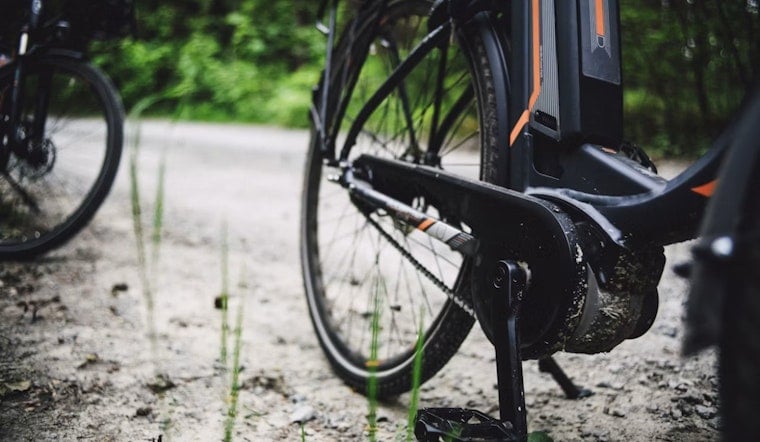
Salt Lake County is moving to keep throttle-powered e-bikes off its natural dirt trails, including popular routes through Butterfield and Yellow Fork Canyons, while slapping a $150 fine on any e-bike rider caught going faster than 20 mph on multi-use trails and in parks. The county council voted to advance the proposed ordinance, setting up a public hearing and further discussion at next week's council meeting.
The plan would ban Class 2 and Class 3 e-bikes, both of which are equipped with throttles, from natural dirt trails and parks in unincorporated parts of the county, according to KSL News. Class 1 e-bikes, which are pedal-assisted rather than throttle-driven, would still be allowed but would be capped at 20 mph, with violators facing the $150 fine. Council member Suzanne Harrison said throttle-equipped e-bikes could pose dangers to other trail users and to the trails themselves.
Butterfield and Yellow Fork Canyons Named Directly
Butterfield Canyon and Yellow Fork Canyon are both specifically named as areas covered by the proposed ordinance, per the same KSL report. Butterfield Trailhead Regional Park in Herriman, which opened in August 2023 on 17 acres of reclaimed Rio Tinto Kennecott mining land, offers more than 13 miles of multi-use dirt trails that connect directly into Yellow Fork Canyon as part of the Southwest Canyon Trails Network, according to the Herriman Journal. That kind of soft-surface terrain is exactly what county officials say is most at risk from higher-speed, throttle-driven e-bikes.
Harrison framed the ordinance as an effort to add clarity and safety rather than to crack down on riders, saying the goal is definitions and safety, with education taking priority over enforcement. She added that the county wants its trails to last, and wants everyone to be able to have fun and stay safe while using them. Lisa Hartman said e-bikes have brought new people, returning users, and young riders out to parks and trails, but that influx of new trail traffic has also created new conflicts among different types of users.
County Wants to Encourage Riding, Not Discourage It
Hartman emphasized that the county does not want to discourage people from riding bikes altogether, even as it tries to manage the fallout from a surge in e-bike popularity. Salt Lake County has also asked other municipalities to consider updating their own park rules to match, and the county mayor may separately consider changes to park regulations. The proposed ordinance itself would apply specifically to unincorporated areas of the county, leaving cities to decide whether to follow suit on their own trails.
The push comes as county park managers have already been wrestling with how to handle e-bikes on a case-by-case basis. During 2025 discussions about maintenance at Bingham Creek Regional Park, officials noted that e-bike riders had become primary users of the park's track, which led administrators to consider loosening restrictions on select tracks rather than pursuing outright bans, according to a filing reviewed by Salt Lake County. Bingham Creek, built through an $18 million partnership between the county and South Jordan City, is designed to eventually cover 160 acres, making it the largest regional park in the county once complete, per the South Jordan Journal.
State Law Gives Counties the Authority to Act
The county's move is possible because Utah Code Section 41-6a-1115.5 explicitly grants local authorities and state agencies the power to regulate or prohibit specific e-bike classes on soft-surface dirt trails under their jurisdiction, even though e-bikes are generally allowed on public paths designated for bicycles. That statutory authority sits alongside a broader wave of state action on e-bikes. Effective May 6, 2026, Utah's House Bill 381 revised statewide e-bike rules, requiring CPSC-approved helmets for riders under 21 on public roads, subjecting e-bike riders to DUI and open container laws, and reclassifying electric cycles that exceed 20 mph on motor power alone or 750 watts as motorcycles requiring a license, according to the Utah Highway Safety Office.
A second phase of that law, taking effect May 5, 2027, will require riders aged 8 to 15 to either be directly supervised by an adult within sight or complete a state online safety course to earn a Personal Electric Vehicle Safety Certificate before riding unsupervised. That state law tightened rules for roads and devices but left trail access decisions largely up to local jurisdictions like Salt Lake County. Meanwhile, federal land managers have taken a far stricter line: U.S. Forest Service regulations prohibit all e-bikes on non-motorized federal trails in the Uinta-Wasatch-Cache National Forest, including mountain trails in Little Cottonwood Canyon, unless a trail is specifically designated for motorized use, according to Alta Ski Area.
A Policy Caught Between Subsidies and Safety
The county's cautious, education-first approach also stands in some tension with state efforts to push more people onto e-bikes in the first place. In June 2026, the Utah Division of Air Quality launched a federally funded voucher program offering Wasatch Front residents in Salt Lake County up to $800 to buy new e-bikes as a way to cut summer vehicular smog, as Hoodline previously reported. That program aims to substitute car trips with e-bike rides along the Wasatch Front, even as county park managers now have to handle the resulting trail conflicts, speed enforcement, and wear on dirt singletrack.
Other public land managers in Utah have already drawn similar lines between e-bike types on dirt terrain. In March 2026, the Bureau of Land Management opened 211 miles of singletrack trails to Class 1 pedal-assist e-bikes near Moab, a distinction between pedal-assist and throttle-equipped models that Salt Lake County's proposal mirrors. Public safety concerns around e-bike speed have also been building locally: in August 2025, a 21-year-old e-bike rider died in Riverton following a high-speed intersection collision with a utility vehicle, a case Hoodline has previously covered in its report on a fatal cyclist crash near Magna.
Members of the public will be able to weigh in on the proposed ordinance at next week's Salt Lake County Council meeting, where the panel is expected to continue discussing the plan before any final vote.





