

























































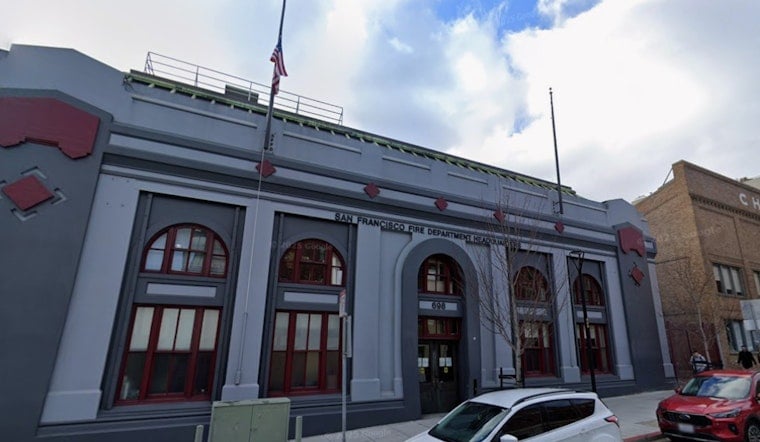
San Francisco firefighters are getting a long-overdue upgrade: the San Francisco Fire Department is set to receive $80 million over the next 10 years, paid out at $8 million annually, to replace fire engines, trucks, and other apparatus that have been running years past their intended lifespan. The department says it will prioritize new engines with the funding.
The allocation, first reported by KTVU, arrives after years of warnings about the state of SFFD's fleet. As of May 2025, more than 63% of the department's fire engines, 87% of its ladder trucks, and 70% of its reserve vehicles were over a decade old, while nearly 90% of its ambulances had already blown past their five-year expected service life, according to the City and County of San Francisco.
Those numbers matter because national safety guidelines set clear limits on how long fire apparatus should stay on the front lines. Under National Fire Protection Association standards, engines and trucks are supposed to shift to reserve status after 15 years and be fully retired at 25 years — thresholds SFFD had been blowing past with multiple rigs dating back to the 1970s and 1990s, per Fenton Fire.
What Keeping Old Rigs Running Has Cost the City
Running a fleet that old isn't cheap. Maintaining San Francisco's aging vehicles has cost the department more than $500,000 a month — over $6 million a year — largely because decades-old models are prone to frequent mechanical breakdowns and their replacement parts are increasingly hard to find.
New apparatus isn't cheap either. SFFD leadership estimated in mid-2025 that a new fire engine runs about $1.5 million, while a new ladder truck can cost $2.5 million or more, per Fire Apparatus & Emergency Equipment. At $8 million a year, the new funding lines up closely with what the department itself calculated it needs to stay current: an SFFD fleet analysis earlier this year concluded that a sustainable long-term replacement schedule requires buying roughly five fire engines annually and two ladder trucks every three years.
From Private Fundraising to a Public Commitment
Before this funding came through, the city had leaned on philanthropy to plug the gap. In May 2025, Mayor Daniel Lurie signed legislation waiving the city's behested payment rules so that the mayor and fire chief could solicit private charitable donations for fire engines and ambulances. That move led the San Francisco Foundation to establish the SFFD Emergency Preparedness Fund, aiming to raise $20 million privately, and in July 2026, PG&E donated funds toward a new fire engine intended for local and statewide mutual aid response.
The $80 million allocation also fits within a broader municipal budget picture. In June 2026, Lurie presented a $16.9 billion proposed two-year budget that set aside $20 million specifically for police and fire public safety equipment, while shielding emergency departments from the roughly 15% deficit cuts affecting other areas of city spending, according to the City and County of San Francisco.
A Legal Mandate Behind the Urgency
The push to modernize the fleet isn't purely operational — it's also tied to a legal obligation. Under Proposition F, the Neighborhood Firehouse Protection Act passed by San Francisco voters in November 2005, the city is required to maintain and operate neighborhood firehouses and emergency apparatus at or above the levels that existed on January 1, 2004. SFFD currently runs 44 neighborhood fire stations across 10 battalion districts on an annual operating budget of roughly $526.5 million for fiscal year 2025–2026, as Hoodline has previously reported.
The department's fleet troubles have shown up in real time on city streets. Hoodline has also covered an incident in which an SFFD engine collided with a vintage Muni streetcar on the Embarcadero while responding on duty, underscoring the wear and tear that comes with keeping older apparatus in daily rotation. With the new $80 million commitment now formalized, the department is shifting from stopgap fundraising toward a predictable, decade-long public investment in the vehicles its firefighters and paramedics rely on every day.





