

























































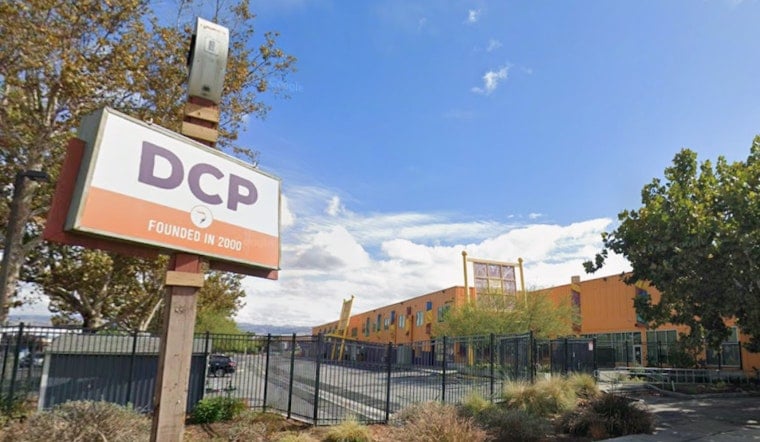
A nonprofit tied to San Jose developer Peter Pau has paid $12 million for the 3.4-acre campus that once housed Downtown College Prep's high school on Monterey Road, just south of downtown San Jose, with plans to turn the shuttered school into a community services hub. The charter network abruptly ceased operations in June 2025 after years of financial struggles and slumping enrollment, leaving the 35-classroom facility empty near the intersection of Monterey Road and Alma Avenue.
The deal, first reported by The Mercury News, involved a Pau-led entity buying a ground lease controlling the property from the San Jose Unified School District, which still owns the land beneath the school's structures and parking lot. The lease runs through 2067. Pau, an entrepreneur and co-founder and principal executive of Sand Hill Property Co., said his foundation acquires real properties to give to groups for various purposes, and told the outlet that the school building will be turned into a community center.
According to the same report, the Pau Foundation has a track record of supporting churches, theaters, transitional housing, and low-income housing projects. That pattern lines up with the foundation's history in San Jose, where it previously helped fund 108 emergency housing beds in 2020 and backed affordable housing built on church-owned land in 2022, according to San José Spotlight.
A Lumberyard's Long Road to Charter School, Then Closure
The site's history stretches back over a century. Southern Lumber launched operations at the Monterey Road location in 1910 and ran the yard until it shut down in 2015. Real estate firm Imwalle Properties then acquired the former lumberyard and partnered with San Jose Unified and Downtown College Prep to redevelop the industrial site into an educational campus, according to Imwalle Properties. Downtown College Prep opened its high school there in 2017, occupying a 76,800-square-foot main education building along with a 9,900-square-foot gymnasium and multi-purpose building.
Downtown College Prep was no small player in Silicon Valley's education landscape. Founded in late 1999 by educators Greg Lippman and Jennifer Andaluz, the school opened in fall 2000 as Santa Clara County's first public charter school, built specifically to prepare first-generation, low-income students for college, according to the Santa Clara County Office of Education. But the network's enrollment across all its campuses fell from a peak of 1,600 students to roughly 950 in grades 5 through 12 before its collapse, per KQED, with more than 90% of remaining students identifying as Hispanic or Latino and over 80% qualifying as low-income.
Bond Default Triggered Lawsuit and Court-Ordered Sale
Downtown College Prep defaulted on $34 million in municipal bonds in 2025, according to the Mercury News report. Those bonds trace back to April 2016, when the California School Finance Authority issued $36.4 million in tax-exempt charter school revenue bonds for the Downtown College Prep Obligated Group, structured as 35-year terms maturing through 2051, per an HJ Sims Capital Market Update. The bond default triggered a lawsuit filed on behalf of holders of the charter school revenue bonds, and that litigation led to the appointment of a receiver tasked with finding a buyer for the property.
A Santa Clara County judge authorized the receiver to extend roughly $405,300 in property remediation credits to the Pau-led nonprofit as part of the sale, according to the Mercury News. Those credits covered a range of repairs, including $195,500 to fix the gym roof, $71,800 to repair exterior walls, $50,000 for an environmental reserve, $40,100 to mend the parking lot, $32,300 for contingencies, and $15,600 to replace a rooftop unit.
City Rezoning Cleared the Path for Reuse
Before the sale could move forward, San Jose's City Council voted on June 23, 2026, to rezone the site from educational to community service uses, according to a Silicon Valley Business Journal report, establishing the legal framework for the campus's conversion into a multi-use community center. San Jose-based land-use consultant Erik Schoennauer represented Pau in the rezoning effort, per the Mercury News. CBRE arranged the property deal.
Bob Staedler, principal executive of land-use consultancy Silicon Valley Synergy, said putting the property back into productive use matters for the surrounding area's vitality, and that the community service reuse could bring renewed activity and investment to the site, according to the Mercury News. It remains unclear which specific nonprofit service providers will ultimately operate inside the 35-classroom facility, and how the $12 million in sale proceeds will be distributed among the defaulted bondholders.
Part of a Wider Pattern for Former Charter Campuses
The Monterey Road sale is not the only former Downtown College Prep property finding new life. In September 2025, the neighboring Alum Rock Union School District approved spending $5 million from voter-approved Measure S bond funds to purchase another former DCP facility — the Alum Rock middle school campus at 2888 Ocala Ave. — to absorb student overflow, according to San José Spotlight. That district made the purchase even as it shuttered six of its own traditional campuses due to budget deficits.
Analysts have connected Downtown College Prep's collapse to broader pressures facing charter schools statewide. A market report from Varnavides Law ties the network's $34 million bond default to a wider trend across the $40 billion national charter school municipal bond market, where high housing costs in places like Silicon Valley have pushed low-income families with children out of the region, undermining enrollment and, in turn, bond repayment capacity. For a school built to serve exactly those families, the irony has not gone unnoticed by education watchers tracking the charter network's final chapter.




