

























































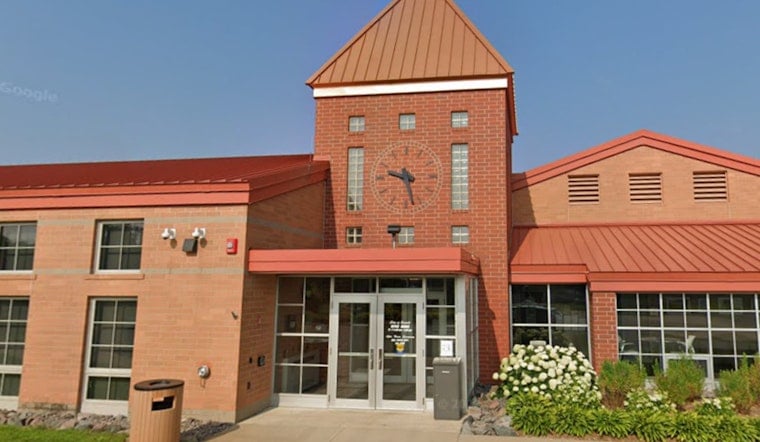
Sartell city officials are proposing an $11.5 million property tax levy for 2027, a 6.9% increase over this year, but they say that number alone won't tell homeowners how their individual tax bills will change. Finance Director Rob Voshell presented the proposal at a Monday evening budget workshop, framing the increase as a way to capture growth in the city's tax base rather than raise the tax rate itself.
“A 6.9% levy increase does not necessarily mean every property owner will see a 6.9% property-tax increase,” Voshell said, according to KNSI. The distinction matters because Sartell is once again leaning on new construction, not rising values on existing homes, to grow the pot of money it can tax without touching the rate. If the plan holds, it would mark the sixth straight year the city has kept its tax rate flat even as the levy itself climbs.
Where the Growth Is Coming From
New commercial buildings, houses and apartments added roughly $43.8 million in taxable value to Sartell's rolls, per the same report, while growth on already-existing properties came in slower than usual. Over the past nine years, the city has averaged $26.2 million annually in new taxable value from construction, a pace this year's growth appears to exceed. Voshell said the increase is designed to capture that expanding base rather than squeeze more out of properties that were already on the books.
Much of that construction activity traces back to one project: Niron Magnetics' $170 million, 190,000-square-foot manufacturing facility rising on 79 acres of the former Verso Paper Mill site. The site served as Sartell's primary industrial tax base until a fatal 2012 explosion forced its closure, and the plant is slated to open in early 2027. Niron received a $10 million state grant in October 2025 to advance construction, according to Niron Magnetics, and the city separately received a $2 million Greater Minnesota Business Development Public Infrastructure grant in June 2025 to fund street and utility work supporting the expansion.
What It Means for Individual Tax Bills
Under Minnesota property tax law, a homeowner whose market value stays unchanged between 2026 and 2027 will see no increase in the city's share of their tax bill, even with the levy rising. Whether an individual bill actually goes up depends on how much that specific property's market value moves, since residential homesteads are taxed under a statutory formula that applies a 1.0% class rate to the first $500,000 of value, according to the Property Tax Desk.
The proposed levy would add about $740,000 over 2026 and includes roughly $310,000 more for the General Fund, the largest single component of the levy at more than $8 million. Debt payments are actually set to decrease by about $134,000, and the plan includes about $564,000 more for equipment and infrastructure. Sartell's General Fund allocates roughly three out of every four dollars to employee wages and benefits, a pattern reflected in the city's 2025 annual audit, which showed the fund growing from $4.54 million to $5.98 million over five years, with public safety spending accounting for the largest single-year jump at $745,791 as the city added police officers.
A Familiar Pattern, and a Legal Deadline
This isn't the first time Sartell has used tax-base growth to avoid a rate hike. Back in August 2022, the city council proposed a 17% levy increase to set a preliminary levy of $9.2 million for 2023, similarly absorbing a 17% jump in tax capacity to hold the rate flat. Voshell has said the current proposal follows the city's long-term financial strategy laid out in its financial management plan.
The city council has not yet certified a preliminary levy, but state law requires that certification by the end of September under Minnesota Statutes section 275.065. Once certified, the levy functions as a ceiling: it can be lowered before final adoption in December but cannot be raised. Sartell must submit that preliminary number to county auditors in both Stearns and Benton counties, since the city's jurisdiction spans both, per Wikipedia.
More Bills Are Stacking Up
City officials also aren't the only taxing authority residents need to watch. The Sartell-St. Stephen School District, which serves most Sartell residents, approved its 2026-27 preliminary budget in June and has begun reviewing timelines for a potential November 2027 referendum levy, according to Citizen Portal. That means a resident's total property tax bill next year will ultimately reflect combined levies from the city, the relevant county and the school district, not just Sartell's own number.
Sartell, home to an estimated 19,758 residents and 7,726 housing units with a median household income of $84,131 according to the U.S. Census Bureau, has also built financial guardrails around how it manages growth like this. City council policy requires an unassigned General Fund reserve balance of between 40% and 60% of annual operating expenditures, a cushion meant to maintain cash flow and avoid the city taking on short-term debt. For now, homeowners will have to wait for their individual county assessments to know exactly what the $11.5 million levy means for their own bill.




