

























































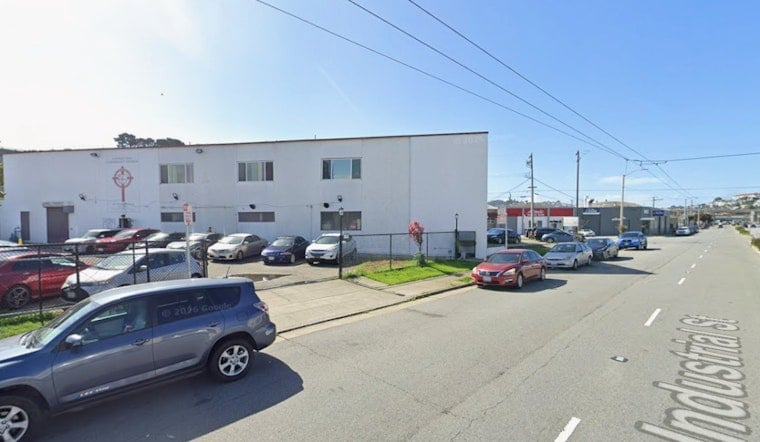
San Francisco's beloved creative reuse depot SCRAP throws open the doors to its permanent new home this weekend, moving into a Bayview building five times the size of the warehouse it just left behind. The nonprofit, short for Scrounger's Center for Reusable Art Parts, will hold its grand reopening tomorrow at 141 Industrial St., closing out a months-long scramble that began when the school district decided to reclaim the land under its old depot.
The move was set in motion after San Francisco voters passed Proposition A in November 2024, a $790 million facilities bond that funneled money into a $200 million district central kitchen planned for SCRAP's former warehouse site, according to KQED. The San Francisco Unified School District decided to demolish SCRAP's former building at 2150 Newcomb Ave. to make way for the facility, according to The San Francisco Standard. SFUSD's Student Nutrition Services Department serves roughly 40,000 meals a day across the district, with nearly two-thirds of students relying on school meals as their primary daily nutrition, per the district's own bond materials cited by the Standard's reporting.
From $1,000 Rent to a $5.3 Million Purchase
For 25 years, SCRAP had leased its Bayview warehouse from SFUSD starting in 1999, paying between $1,000 and $1,240 a month for 7,000 square feet — the kind of deeply subsidized rent that let the nonprofit build decades of operations on the cheap, KQED's reporting notes. The Standard reports SCRAP paid $1,000 a month for 5,000 square feet at that former location, according to Mission Local. That gap between the two rent figures reflects differing accounts of the space SCRAP occupied there, but both underscore how far below market rate the nonprofit was operating.
Losing that lease meant SCRAP had to buy its way into permanence instead. The nonprofit purchased its new building — sold for about $5.3 million, according to property records cited by the Standard — from a bank after the site's prior owner, Calvary Hill Community Church, fell into foreclosure, per the same KQED account. The Baptist congregation still occupies the building's second floor as SCRAP's tenant, while SCRAP runs its store and warehouse operations on the ground floor.
A $7.5 Million Campaign, Still Climbing
To pull off the purchase and finish renovations, SCRAP launched a $7.5 million capital campaign in partnership with local developer Oliver & Company, a firm that specializes in helping San Francisco nonprofits transition into property ownership. As of this week, the campaign has raised $2.8 million toward that goal, according to the Standard — up from the more than $1.8 million reported by KQED in June.
“We are here, we're bigger, we're thriving,” SCRAP executive director Terry Kochanski said, per the Standard's report. Kochanski also described the organization's role in the city's creative ecosystem, saying, “SCRAP is an ecosystem for the arts in San Francisco,” and noting that “even well-known artists in this city come to SCRAP to be inspired.” Managing director Danielle Grant and depot manager William Barros round out the organization's leadership, the Standard reports.
Five Times the Space, Donations Pouring In
The new building dedicates 10,000 square feet to SCRAP's retail store, with another 16,000 square feet set aside for workshops, offices, and other arts organizations, according to the Standard's reporting. Altogether, the new location is five times the size of SCRAP's former depot — room the nonprofit needed after volunteers helped pack up and haul goods across town for the move.
Community donations have flowed in ahead of the reopening. General Bead donated its entire inventory to SCRAP, handing over millions of beads, while the de Young Museum contributed donated mannequins, per the Standard. SCRAP is now seeking additional donations of shelves, bookcases, stools, and other furnishings to help fill out the expanded space.
Founded to Fix a Gap in Arts Education
SCRAP was founded in 1976 by sculptor Ruth Asawa and arts administrator Anne Marie Theilen to solve a funding gap in San Francisco's Neighborhood Arts Program, which placed professional artists in public school classrooms but gave them no budget for supplies, according to SCRAP's own history. The co-founders solved that shortage by soliciting commercial offcuts, fabric swatches, and product overruns from local businesses — the same model that still supplies the depot's shelves today. The organization is recognized as the nation's oldest creative reuse center and was officially added to San Francisco's Legacy Business Registry in December 2023.
That mission has scaled considerably since 1976. SCRAP processes roughly 1,000 pounds of donated goods daily and diverts between 200 and 250 tons of reusable material from Bay Area landfills every year, drawing from more than 5,000 individual donations annually. Its depot and educational programs serve about 45,000 people a year across Bayview and the broader city, backed by 20 employees and more than 150 regular volunteers, in a neighborhood where over 90% of residents identify as people of color.
What Comes Next for Donors and Students
SCRAP paused material donation drop-offs during its final move and restocking push, but intake resumes Monday at the new Industrial Street address. Art classes at the new workshop space are set to start back up on September 15. Hoodline previously featured SCRAP's craft workshops at its old Toland Street depot back in 2016, long before the Bayview warehouse fight that ultimately pushed the nonprofit into buying its first permanent home.





