

























































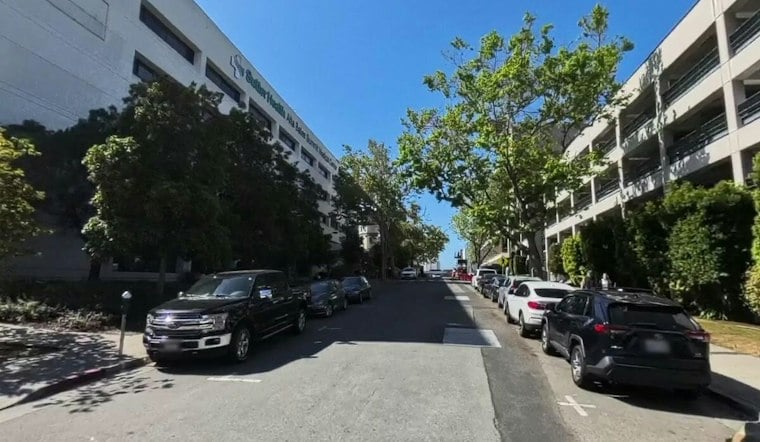
Stanford Medicine and Sutter Health cut the ribbon Sunday on a five-story, 167,000-square-foot cancer center in Oakland, a facility the two health systems say will finally give East Bay patients a single local destination for cancer clinics, infusion, imaging, radiation oncology, surgery and clinical research. The building sits at 3023 Summit St. on Sutter's Alta Bates Summit Medical Center campus, and it's expected to begin seeing patients on Dec. 1, with services expanding toward full operations in February 2027.
The announcement, detailed in a joint release from the two organizations, frames the center as the culmination of a partnership first announced in February 2021. Sutter Health chief executive Warner Thomas said at the event that patients should not have to leave their community to benefit from advances in cancer care, a sentiment that cuts to the center's core purpose: consolidating services that have long been split between Berkeley and Emeryville. As the San Francisco Chronicle reports, Sutter's outpatient cancer care has been based in Berkeley while Stanford's has operated out of Emeryville, and both will now shift most of their oncology operations to the new Oakland building.
What Patients Will Find Inside
Per the release, the center will offer outpatient cancer clinics, infusion, imaging, radiation oncology, ambulatory surgery, breast health and pharmacy services. Beyond treatment itself, patients will have access to clinical research, nurse navigation, genetic counseling, nutrition counseling, survivorship programs, and complementary therapies including acupuncture and massage therapy.
The Chronicle also reports that the facility will house a complex care unit designed to provide urgent care specifically for oncology patients. Laura Van Pelt, nursing director of Sutter Health outpatient oncology services, told the paper the unit helps keep patients with compromised immune systems out of emergency department waiting rooms — a detail that speaks to how differently cancer patients often need to be triaged compared with general ER visitors.
A Joint Venture Years in the Making
At launch, the center is anticipated to include more than 70 physicians and advanced practice providers and more than 300 team members, according to the joint release, with both Stanford and Sutter physicians practicing under the same roof. Stanford Health Care president and chief executive David Entwistle told the Chronicle the center will expand access to cancer care and support closer to where patients actually live.
The site itself was previously a parking lot with medical offices and labs, per the Chronicle's reporting. Once Sutter's cancer services move out of its Alta Bates Herrick campus in Berkeley, that location will close for cancer care and become a behavioral health unit, though it will continue offering general infusion for non-cancer conditions such as hyperemesis and infections. Sutter and Stanford also maintain a separate joint venture for specialized radiation oncology at Sutter Eden Medical Center in Castro Valley, the Chronicle notes.
Why the East Bay Needed This
The push for a consolidated East Bay cancer hub comes against a backdrop of regional health data that shows both progress and persistent gaps. Overall invasive cancer rates across the Greater Bay Area have decreased over the 35-year period from 1988 through 2022, according to the UCSF Greater Bay Area Cancer Registry, which also found cancer mortality has declined annually since 1988 by 2.0% among men and 1.7% among women. The region recorded 37,139 invasive cancer diagnoses in 2022, and Alameda County actually had the lowest overall cancer incidence rate among Bay Area counties from 2018 through 2022, at 380.2 per 100,000, per the same registry.
Yet a 2025 community health needs assessment cited in the joint release found cancer was the leading cause of death in both Alameda and Contra Costa counties in 2023, and identified higher cancer mortality among Black residents compared with other groups in those counties. Rondeep Brar of the Stanford Cancer Institute has said roughly half of East Bay patients currently leave their local market altogether to receive cancer care — the exact gap the new center is designed to close.
A Larger Building on Paper, Once
Oakland's planning records tell a slightly different story about the project's scale than what opened Sunday. A city planning staff report from June 2023 described the proposed facility as a seven-level, 170,049-square-foot building, whereas this week's announcement describes the completed center as five stories and 167,000 square feet. The dossier does not explain what drove that design change, and the discrepancy appears to reflect an earlier proposal rather than a dispute over the final building now open on Summit Street.
That same 2023 staff report recommended approval of the project's Final Development Permit, design review permit and tree removal permit, and found that no additional environmental review was required because the proposed permit was less intensive than what had already been studied in the certified environmental impact report for the site.





