

























































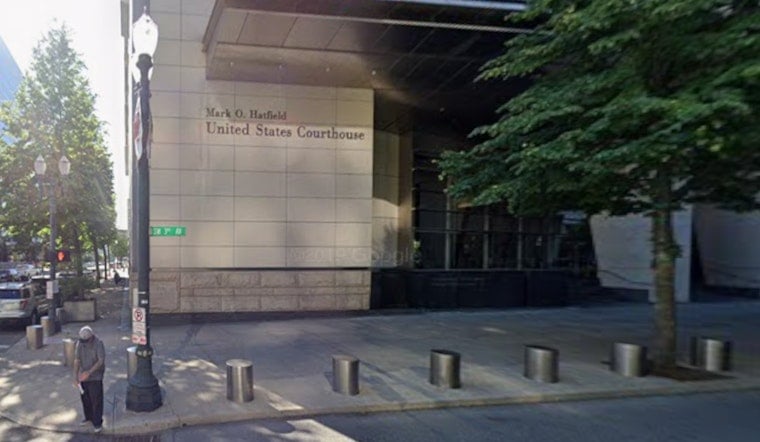
The postmaster of Seaside, Oregon has been arrested and charged with using artificial intelligence to manufacture and distribute child sexual abuse images, according to federal prosecutors. Ryan Sherman, identified in court documents as either 36 or 45 years old depending on the source, was taken into custody by the FBI and appeared in federal court in Portland this week facing charges of possession, distribution, and production of obscene visual representations of child sexual abuse.
According to The Oregonian/OregonLive, investigators say Sherman possessed and distributed child sexual abuse images between September 2025 and May 2026, and that he is accused of possessing thousands of images and videos depicting child sexual abuse. Assistant U.S. Attorney Natasha M. Geiling wrote that Sherman allegedly used AI to transform seemingly innocuous photographs of children into obscene images, a characterization at the center of the criminal complaint against him.
The case traces back to a tip from the National Center for Missing and Exploited Children, which referred a report involving an IP address used to upload and share child sexual abuse images. That IP address was linked to Sherman, according to the outlet's reporting on court records. Seaside police opened an initial inquiry into Sherman in late 2025, and the FBI later obtained search warrants earlier this month for three of his cell phones and a storage drive.
Prosecutors Cite Encrypted App and AI Bragging
A press release from the U.S. Attorney's Office for the District of Oregon states that Sherman allegedly exchanged child sexual abuse images on SimpleX, an encrypted messaging platform, and that he bragged “none” when asked if he had limits on the images he would create using artificial intelligence. The federal investigation was conducted jointly by the FBI and the Clatsop County Sheriff's Office, with investigative support from the Seaside Police Department, per the same release.
Geiling told the court that Sherman occupied a position that directly interfaces with the broader Seaside community while engaging in the charged conduct, and she asked the judge to keep him in custody pending trial, citing danger to the public and risk of flight. Prosecutors have said Sherman did not use his postmaster position or postal infrastructure to carry out the alleged crimes, even as they emphasized the disruptive nature of the allegations given his public role in the small coastal community.
Magistrate Judge John Jelderks ordered Sherman held and set September 25, 2026 as his next federal court date. Sherman's attorney, Clais Daniels-Edwards, did not seek his release during the hearing but has scheduled him for a substance abuse assessment and plans to return to court within a week to request his release pending trial, according to the report.
Separate DUI Case Still Pending
Sherman also has a pending allegation of driving under the influence of intoxicants in Clatsop County, to which he pleaded not guilty in November 2024. That case remains separate from the federal child sexual abuse material charges now facing him.
The prosecution falls under Project Safe Childhood, a nationwide Department of Justice initiative created in 2006 to coordinate federal, state, and local resources against child exploitation, according to the U.S. Attorney's Office. The program links U.S. Attorneys' offices with the DOJ's Child Exploitation and Obscenity Section, and it has become the backbone for a wave of similar cases nationwide as generative AI tools make it easier to manufacture synthetic abuse imagery from ordinary photos.
A Surging National and Regional Problem
The Sherman case lands amid what watchdogs describe as an explosion in AI-generated child abuse material. The Internet Watch Foundation reported that its analysts assessed 8,029 photorealistic AI-generated child sexual abuse images and videos online during 2025, and separate IWF data cited by The Independent found that public reports of realistic AI-generated abuse imagery jumped 154% in 2025 compared to the year before. The foundation also documented a shift toward video: analysts assessed 3,443 photorealistic AI-generated abuse videos in 2025, up from just 13 the year prior.
Oregon's own law enforcement agencies have struggled to keep pace. Hoodline previously reported that Portland police are swamped with cyber tips, after detectives said in May that Oregon law enforcement investigates only about 20% of incoming cyber tips due to severe staffing shortages and a surge in AI-generated abuse material.
Federal prosecutors elsewhere have pursued similar cases built around AI-manipulated imagery. The U.S. Attorney's Office for the Northern District of Oklahoma announced this month that a jury convicted a defendant for using AI tools to morph photos of a real toddler into sexually explicit material, while CBS Minnesota reported in 2025 that a former school employee was federally indicted after using AI software to turn non-explicit photos of children in his care into abuse images. Lawmakers have responded with proposals including the STOP CSAM Act and the Project Safe Childhood Modernization and Reauthorization Act, aimed at explicitly updating federal statutes to cover AI-generated deepfakes, though prosecutors currently rely on existing obscenity and child sexual abuse material laws to bring such charges.
It remains unclear whether any local children in Seaside were photographed to generate the synthetic images described in the complaint against Sherman. The outcome of his pending DUI case and whether his defense will succeed in securing pretrial release at next week's hearing are also unresolved as the federal case moves forward.





