

























































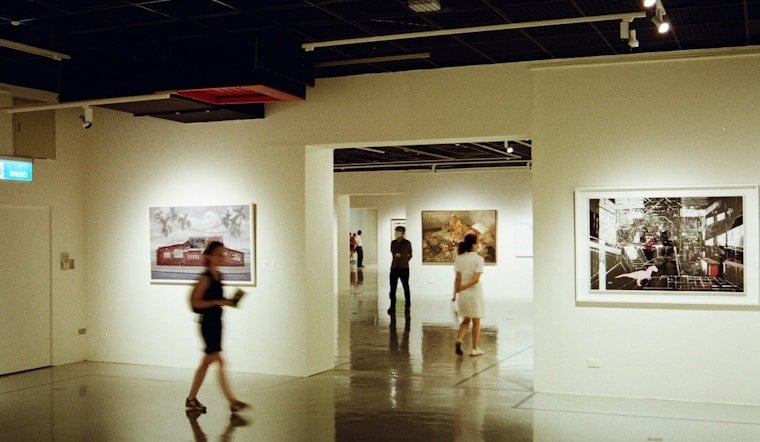
A touring exhibition billed as the world's largest private collection of serial killer artifacts is set to open in Chicago on Saturday, Sept. 5, bringing more than 2,100 authentic pieces of evidence, artwork and personal belongings to a West Side film studio. Organizers say the Chicago stop of Serial Killer: The Exhibition will include a dedicated local feature on two of the city's most notorious criminal figures, H.H. Holmes and John Wayne Gacy, whose crimes still shape how Chicagoans think about their own history.
According to WGN-TV, the exhibition combines historical interpretation, criminology, psychology and forensic science across more than 40 galleries, mixing original letters, psychiatric reports, legal records and crime-scene reconstructions with immersive multimedia installations and multi-section virtual-reality experiences. The Chicago edition adds original paintings, documents and evidence tied to Gacy along with historical materials on Holmes' so-called Murder Castle from the 1893 World's Fair, according to PRIMETIMER. Per that same outlet, the Chicago installation spans up to 27,000 square feet across those 40-plus galleries at Cinespace Chicago Film Studios, covering roughly 150 serial killers from 25 countries.
What's Actually on Display
Beyond the local additions, the traveling collection includes some of true crime's most recognizable objects: Jeffrey Dahmer's original glasses, Ted Bundy's dental mold, Gacy's typewriter and prison artwork, Richard Ramirez's tie and wristwatch, and a freezer that belonged to German killer Armin Meiwes, according to the Atlanta Journal-Constitution. Organizers have said they spent more than 15 years assembling the collection with help from over 100 private collectors, criminologists and forensic specialists worldwide, per the same report. The exhibition has already traveled through London, Paris and Berlin before crossing the Atlantic.
The show's scientific committee includes clinical psychologist Dr. Bill Kimberlin, who has donated thousands of personal letters and artwork from death row inmates, and Chicago filmmaker John Borowski, who has directed documentaries on both Holmes and Gacy, according to CBS News. Visitors can get more information or plan a visit through the exhibition's website.
Atlanta's Record Crowds — and Some Fainting Spells
Serial Killer: The Exhibition made its U.S. debut in Atlanta earlier this year before heading to Chicago. During that run, from February to July, the show drew record crowds who spent an average of more than three hours inside — double what organizers had projected — with about 70% of attendees identified as women ages 18 to 35, CBS News reported. More than 20 visitors, primarily younger men, fainted inside the Atlanta exhibition because of the graphic nature of the displays, prompting organizers to add staff monitoring throughout the galleries; none of the incidents required emergency medical transport, per the same report.
Curators also made a deliberate choice in Atlanta to leave out materials related to Wayne Williams and the Atlanta Child Murders, citing ongoing local debate and sensitivities surrounding victim families, CBS News noted. It's a decision that underscores how the show's organizers adjust content city by city rather than presenting an identical exhibit everywhere it lands.
Tickets, Hours and How to Get There
Tickets for the Chicago run went on sale July 28 through the ticketing platform Fever, with baseline admission starting between $22.40 and $28, per PRIMETIMER. Cinespace Chicago Film Studios, the venue hosting the exhibition, sits on the 2400 block of West 15th Street in North Lawndale and is reachable by CTA Pink Line service at the Damen and California stations, according to the exhibition's own website.
Hours vary by day: the exhibition will run from 11 a.m. to 7 p.m. Wednesday and Thursday, 11 a.m. to 8 p.m. on Friday, and 10 a.m. to 8 p.m. on Saturday and Sunday, per WGN-TV's report.
Education or Dark Tourism?
The Chicago opening arrives as cultural critics and true-crime commentators have pointed to the exhibition's growth as an example of expanding dark tourism, questioning where documentary education ends and the commercialization of murder memorabilia begins, according to Flaming Hydra. Organizers maintain the show takes a strictly documentary and museum-focused approach, including dedicated memorial spaces meant to honor victims rather than sensationalize the killers whose belongings fill the galleries.





