

























































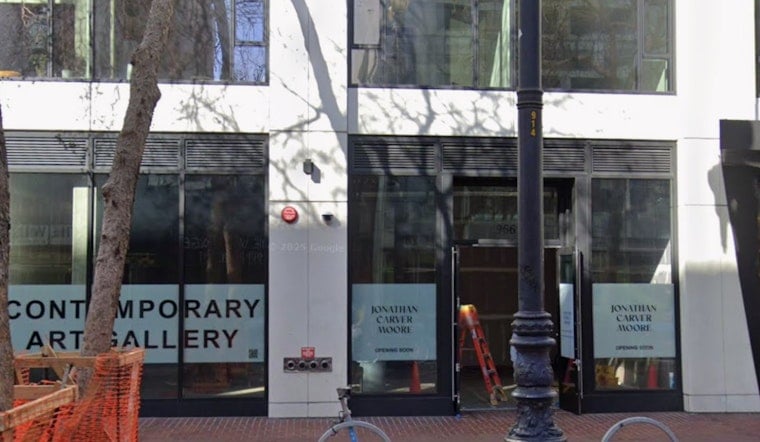
Jonathan Carver Moore built his Market Street gallery into one of San Francisco's most talked-about art spaces, championing Black and queer artists from a storefront in the Tenderloin. Now more than a dozen artists say he owes them thousands of dollars in unpaid sales, and some say their artwork has simply vanished.
The allegations, first detailed by The San Francisco Standard, describe a recurring pattern: Moore reaches out to artists with enthusiasm, takes their work on consignment or sells it, then goes silent for months while payments and unsold pieces never materialize. The outlet spoke with nine artists and gallery representatives who did business with Moore over the previous two years, and found that of 20 artists who responded to inquiries, 11 described communication breakdowns with him.
New Orleans artist Demond Melancon, a 2023 Joan Mitchell Fellow whose beaded works were selected for the 2026 Venice Biennale, says Moore has not paid him five months after selling all 10 of Melancon's ritual masks for $70,500 at Moore's booth during EXPO Chicago. Moore reportedly owes Melancon his 50% share of those sales. One collector, Kevin Poorman, paid Moore $8,800 for one of Melancon's masks at the Chicago fair and says he received nothing in return; Moore had asked Poorman to wait for delivery until after a museum show in Princeton, New Jersey, but that show was canceled months before Poorman made the purchase.
A Pattern Artists Say Repeats Itself
Chantal Hildebrand, who exhibited during the Bay Area's inaugural Black Art Week and met Moore at a 2025 group show at San Francisco's Museum of the African Diaspora, entrusted him with six artworks over the following year. She says Moore agreed to price her large hand-carved wood piece, “Justice Entwined,” at $9,000, sold it, and has not paid her the proceeds. Hildebrand says Moore owes her thousands of dollars from sales overall.
According to the same Standard report, Hildebrand's own outreach to fellow artists found six who experienced payment delays, nine who struggled to get their artwork back, and only four who described their dealings with Moore as amicable. Two artists said their own galleries were stiffed or forced to cover costs on Moore's behalf, and seven personally knew other artists who faced similar treatment.
Artist April Bey said two artworks still in Moore's possession represent $68,000 worth of her work. Moore did return one of Bey's pieces, valued at $40,000, and later paid her for her remaining work, according to the report. Artist Adana Tillman announced on Instagram that Moore had not paid her for the sale of nine artworks, one of which was listed at $9,500 on Artsy. Another artist described in the report was eventually paid $2,750 owed after months of outreach.
A Gallery That Sold Out Booths and Board Seats
Moore opened his eponymous gallery at 966 Market Street in March 2023, positioning it within the Tenderloin's Transgender District. The rapid rise that followed included a sold-out FOG Art + Design booth of Anoushka Mirchandani's work in 2025, sold out before the end of the first night, along with institutional ties to the Institute of Contemporary Art San Francisco and a seat on the board of Root Division, the nonprofit that has offered studio space and juried exhibitions to Bay Area artists without gallery representation since 2002. Moore has since resigned from that board, according to Root Division Executive Director Demetri Broxton.
The allegations extend beyond individual artists to at least one gallery relationship. The Bahamas-based Tern Gallery sold one of artist Cydne Jasmin Coleby's paintings to Moore through a post-sale payment plan; Moore reportedly still owes Coleby roughly $7,000, and the painting's whereabouts are now unknown. A Tern Gallery representative reported the missing painting as stolen to the FBI, and the gallery is pursuing legal action against Moore. Coleby said Moore is seen publicly as an artist advocate while allegedly exploiting them behind the scenes. An art handling company that installed work at Moore's EXPO Chicago booth also says it received nothing in return for its services.
Artists Demand Answers, Moore Points to Financial Struggle
Frustration boiled over when seven artists sent Moore a letter demanding payment and the return of unsold work, giving him one week to comply. Bey also posted an AI-generated Instagram graphic on August 4 demanding that Moore pay artists or return their work. Moore's gallery website has been down for several weeks.
Moore has acknowledged some of the claims while disputing others, saying that some allegations are inaccurate and that he intends to make things right with the artists. He has described running a gallery as a financial struggle, and told the Standard that he believes art is going to save San Francisco.
Under California law, the stakes go beyond a typical business dispute. California Civil Code § 1738.6, part of the state's Art Consignment Act, treats consigned art and its sale proceeds as trust funds that belong to the artist, barring galleries from using that money to cover general operating debts before the artist is paid in full, according to Justia. Standard contemporary gallery consignment agreements typically split sales 50/50 between gallerist and artist, with payment due within 30 days of a sale, meaning Moore's alleged multi-month delays and silence fall well outside industry norms.
The FBI's Art Crime Team, created in 2004, investigates gallery fraud and missing artwork and maintains the National Stolen Art File to prevent unauthorized resales, according to the Federal Bureau of Investigation. Whether the FBI report tied to Coleby's missing painting or the artists' collective demands will lead to formal legal action against Moore remains unresolved. What is clear, according to the artists themselves, is a shared account of enthusiastic outreach followed by consigned or sold work, prolonged silence, unpaid sales, and pieces that were never returned.
Editor's Note: This article has been updated to correct Demetri Broxton's title at Root Division.




