

























































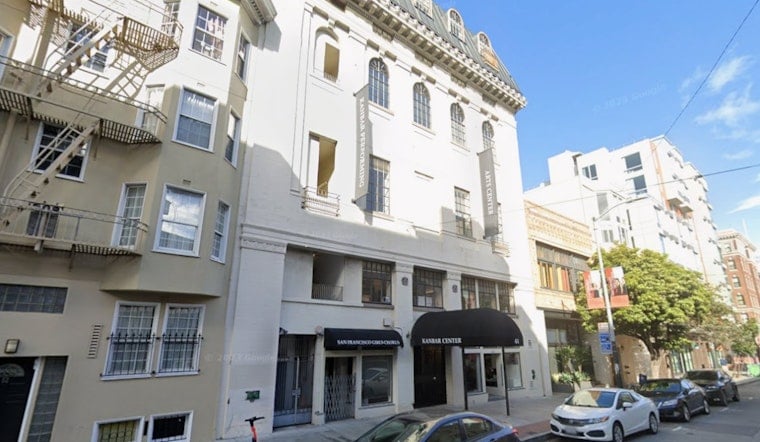
Meredith Dodson, the parent organizer who turned a pandemic-era Facebook group into one of San Francisco's most influential political operations, is stepping down as executive director of SF Parents. She posted her final statement in the role last Friday, closing out a run that helped oust a superintendent, reshape the school board, and steer district curriculum decisions. Her successor, a former SFUSD teacher and current public school parent named Rebecca Kee, now inherits a district still working through the aftermath.
Dodson's organization began as Decreasing the Distance, formed to push San Francisco schools to reopen safely during the pandemic, according to The San Francisco Standard. San Francisco schools remained closed after March 2020 and did not fully reopen until the 2021-22 school year, one of the slower reopening timelines among major districts, per the same account. The group rebranded as SF Parents during that same school year and, per the Standard's reporting, Dodson built it into a major political force that eventually won access to two mayors, a superintendent, and much of San Francisco's political class.
Dodson, who came to the Bay Area in 2007 and studied education policy at UC Berkeley, brought a background in public policy and nonprofit consulting focused on early education for low-income families, the Standard reports. SF Parents Board Commissioner Supryia Ray called Dodson indispensable, according to the outlet's account.
From Facebook Group to Recall Machine
SF Parents seeded the Facebook group where organizers of the 2022 SFUSD board recall first gathered, according the Standard's reporting. That recall effort was actually launched by parent organizers Autumn Looijen and Siva Raj of a separate group, SF Guardians, which began collecting signatures in April 2021 and gathered more than 50,000 signatures per commissioner ahead of the February 2022 special election, according to the SF Standard's earlier reporting. The February 2022 recall targeted three school commissioners and received support from more than 70% of voters to oust all three, per the Standard's account. SF Guardians shut down in 2024.
The group's dual structure has allowed it to operate on two tracks simultaneously. SF Parents includes a charitable arm — the tax-exempt SF Parent Coalition, a 501(c)(3) public charity focused on policy advocacy — and a political arm, SF Parent Action, a 501(c)(4) social welfare organization that can lobby and endorse candidates, according to SF Parent Action. Federal law bars 501(c)(3) organizations from endorsing candidates, which is why the group maintains the separate 501(c)(4) arm for campaign activity. The San Francisco Parent Coalition received the National Parents Union's 2022 President's Award for its pandemic-era organizing around safe reopenings, per the coalition's own account.
Reshaping the School Board
SF Parents helped shape the 2024 SFUSD district elections, according to the Standard's reporting. Four seats were up for grabs that November, and the group endorsed three candidates — Parag Gupta, Jaime Huling, and Supryia Ray — all of whom won, according to a statement from the United Educators of San Francisco. Incumbent Matt Alexander defeated unendorsed candidate John Jersin by less than 300 votes for the fourth seat, per the union's tally of 122,588 to 122,301 votes.
SF Parents is funded by donations, Crankstart Foundation grants, and the city's Department of Children, Youth and Their Families, the Standard reports. Crankstart, the foundation of billionaire Michael Moritz, has been a primary financial supporter of the group; the foundation disbursed $361 million to San Francisco causes between 2020 and 2024, including $51 million for student summer camps and grants for city literacy initiatives, Hoodline previously reported.
The Wayne Resignation and Su's Rise
Dodson's influence extended into the superintendent's office. Mayor London Breed announced in October 2024 that she had lost confidence in then-Superintendent Matt Wayne and demanded the SFUSD board remove him, according to the Standard's account. Dodson, per that reporting, had actually advised Breed to wait for the situation to cool off before acting. Wayne resigned that same month, and the board turned to Maria Su, who had led the city's Department of Children, Youth and Their Families since 2009, hiring her on a city contract to stabilize the district, per KALW's reporting at the time. Breed had deployed a municipal school stabilization team co-headed by Su the month before, as district leaders delayed planned school consolidation announcements.
Dodson supported Su's continued leadership of the district, the Standard notes. Su has since hired John Davis as deputy superintendent and, according to the Standard's reporting, plans to overhaul SFUSD's enrollment system by the 2028-29 school year and close schools by 2029-30. SFUSD now has a new leadership team and a balanced budget after the pandemic-era deficit, though the district projects further enrollment declines, per the same reporting.
Budget Pressure and a Shrinking District
The financial mechanics behind those closure plans trace back to enrollment. California school funding is calculated based on Average Daily Attendance, meaning SFUSD's post-pandemic loss of more than 4,000 students has directly triggered recurring cuts to its state revenue, according to KQED. The district offered early retirement buyouts last year that saved more than $7.5 million alongside $28 million in central administrative cuts, but state hiring restrictions left roughly 150 classroom teacher vacancies to fill ahead of the fall term, KQED reported. SFUSD has not closed under-enrolled schools or replaced its school-choice lottery with a zone-based system, the Standard notes.
SF Parents opposed a teachers strike in February, according to the Standard's reporting, even as it supported higher pay for teachers. The group also pushed SFUSD to adopt new literacy and math curricula. Third-grade reading proficiency in the district was stagnant from 2018 through 2022, sitting at 52% in 2022, before slipping to 47% and then rising to 49% in 2026, per the outlet's figures. Those citywide numbers mask sharp disparities: roughly 72% of white third-graders read at grade level compared with about 62% of Asian third-graders, 24% of Hispanic third-graders, and about 19% of Black third-graders, according to the Standard's reporting.
The Research Behind the Reopening Push
The push to reopen classrooms that defined Dodson's early organizing has since drawn academic support. A Harvard and Stanford project found that high-poverty schools which stayed remote for most of the 2020-21 school year lost about half a year of learning, the Standard reports. A 2026 epidemiology study that analyzed insurance claims for more than 185,000 California children found that returning to classrooms was associated with lower rates of depression and anxiety among kids, according to the same reporting.
Dodson told the Standard that organizational votes are not always the same as her personal vote, a distinction she offered as she prepares to hand off her City Hall relationships. She said she plans to help elect SF Parents' slate in November and will steer the organization's transition. Dodson added that she might consider running for school board herself in 2028 if she feels people are still harming children.
A Successor With Classroom Roots
SF Parents announced Kee as its new executive director in a newsletter sent Sunday night, according to the Standard's reporting. Kee was chosen in part because she is a longtime member of the San Francisco public school community, the outlet notes. She takes over an organization that plans to shape the November 2026 SFUSD board election, when voters will fill three seats on the seven-member board, according to Ballotpedia. That vote will test whether SF Parents' influence over district politics survives the departure of the woman who built it.



