

























































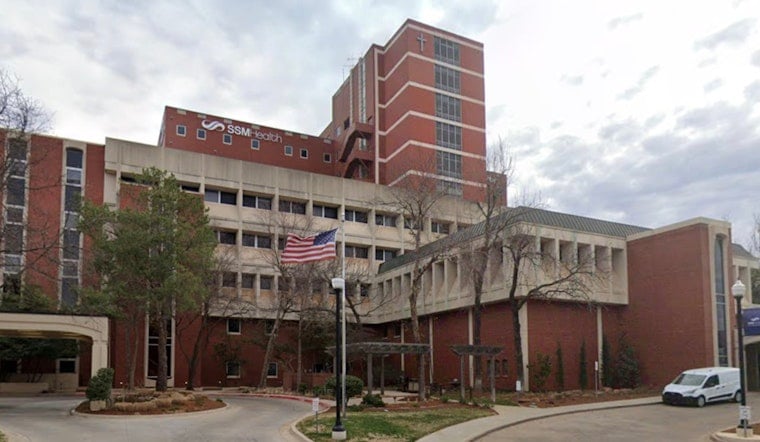
Inside a 20,000-square-foot wing of SSM Health St. Anthony Hospital, nurses, cardiologists and architects have spent recent weeks pushing a stretcher through hallways made entirely of cardboard, testing whether a heart attack patient could move fast enough through a floor plan that does not yet exist in brick and steel. The full-scale mockup, built at the Oklahoma City hospital, is standing in for a redesigned cardiology floor that will eventually move the catheterization lab and interventional radiology suite out of separate floors and into adjoining rooms.
The exercise, first reported by The Journal Record, included a simulated heart attack response run through the cardboard corridors on August 10, with staff physically moving a stretcher through the mocked-up space to see where the new layout might slow them down. Architect Miller is handling the cardiology floor architecture project, according to the same report, while Scott Parker said the cardboard approach lets the team catch problems that blueprints and renderings tend to miss. Parker said the goal is to minimize the minutes it takes to get patients into procedures.
Why the Layout Change Matters for Heart Attack Patients
The reasoning behind moving the cath lab and interventional radiology into adjoining rooms traces back to a clinical benchmark that has guided emergency cardiac care for two decades. Under guidelines established by the American Heart Association, emergency teams aim for a door-to-balloon time of 90 minutes or less to clear arterial blockages during acute heart attacks, and cutting the physical distance a patient travels inside the hospital is one of the more direct ways to protect that window. Interventional cardiologist Vinodh Jeevanantham, who is involved in the project, said the layout change should make staff coordination easier during the complex emergencies that require several departments to respond at once, though he noted those particular cases only happen a few times a year given the nature of the disease.
Jeevanantham also framed the redesign as part of a bigger shift in how heart disease will be treated going forward, saying the future of medicine will look like a continuous spectrum rather than separate cardiology and vascular fields. Per the Journal Record's reporting, the future cardiology floor is expected to feature fewer open-heart surgeries and more minimally invasive procedures, with closer integration across specialties. That vision lines up with a broader national pattern: as reported by Diagnostic and Interventional Cardiology, hospitals nationwide are increasingly building hybrid procedural spaces that unite catheterization, interventional radiology and vascular surgery into adjacent rooms rather than scattering them across floors.
A Cheap Way to Avoid Expensive Mistakes
Building a hospital floor out of cardboard before pouring a single foundation might look unusual, but it reflects an evidence-based method gaining traction across the industry. A study published in PubMed Central in November 2024 found that full-scale cardboard mockups and clinical simulations helped participating health systems avoid up to $90 million in post-construction renovation and operational changes. The logic is straightforward: letting doctors and nurses physically walk through a space before it is built lets them catch dimension and workflow problems while the walls still cost nothing to move.
That is exactly what happened at St. Anthony. After running through the mockup, nurses requested larger pre- and post-op rooms, a change that the article notes came directly out of the simulation process rather than an architect's initial drawing. The redesign also carves out dedicated space for additional physicians, and the hospital system plans to hire more staff to fill that space, according to the Journal Record's report. Hospital leaders say the investment is expected to increase both patient capacity and revenue once complete.
Timeline and a Historic Campus in Flux
Design work is scheduled to be finalized by spring 2027, with construction expected to take another 16 to 18 months once that plan is locked in. The redesign is unfolding at a hospital with deep roots in the city: SSM Health St. Anthony is the oldest operating medical center in Oklahoma, having operated in Oklahoma City for 128 years since its founding in 1898 in two rented houses with 12 beds, according to Cause IQ. The Midtown campus has since grown into a 773-bed tertiary care center that introduced the state's first intensive care unit and kidney transplant program.
The cardiology floor project is one of several major changes reshaping the campus at once. St. Anthony broke ground last year on a 22-month reconstruction of its west entrance, dubbed the Love Family Entrance after a $5 million donation from Judy Love as part of the hospital's SaintsForward capital campaign, according to SSM Health. That project required temporary closures along Lee Avenue between 9th and 10th Streets to build a new patient drop-off concourse. In July, SSM Health announced St. Anthony became the first medical center in Oklahoma to perform robotic cardiac surgery using the da Vinci 5 surgical system, a milestone Hoodline covered when it reported on the hospital's new aneurysm repair technology weeks earlier.
Oklahoma's Heart Disease Burden
The stakes behind the redesign are rooted in state-level health statistics. Oklahoma recorded the highest age-adjusted heart disease death rate in the country in 2024, at 254.3 deaths per 100,000 people, according to CDC data reported by Becker's Hospital Review. Cardiovascular disease remains the leading cause of death in the state, claiming nearly 10,000 lives annually. Compounding the pressure, cardiovascular disease has become the third leading cause of death for Oklahomans aged 25 to 44, with heart disease hospitalizations among adults under 45 climbing 30% over the past decade, per data from the Oklahoma State Department of Health reported by OU Health.
SSM Health's presence in the Oklahoma City area has also expanded in other ways this year. In May, SSM Health Oklahoma entered a four-year medical partnership with RIVERSPORT OKC to support elite athletes training for the 2028 Olympic Canoe Slalom events, part of a broader push into community and athletic healthcare through 2030. Across its full network, SSM Health operates 23 hospitals and more than 300 physician offices in four states, employing over 40,000 healthcare workers, a scale of resources that helps explain how a single Oklahoma City hospital can fund both a cardboard floor mockup and a slate of concurrent capital projects.





