

























































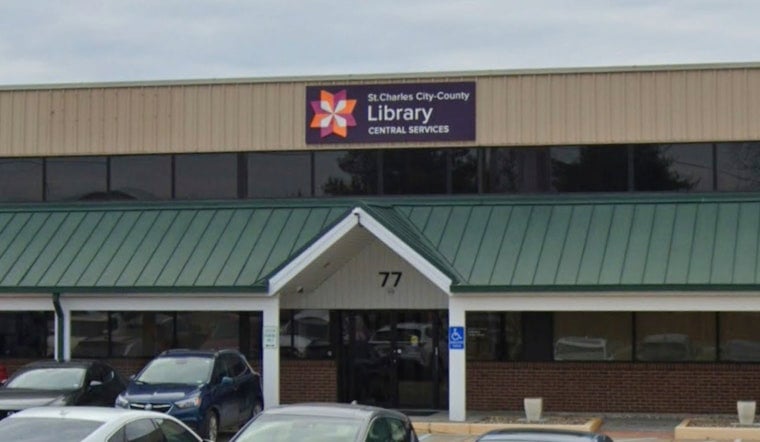
A St. Charles County library patron who says the King James Bible is too violent for the shelves is taking his case to the district's board of trustees Tuesday night, after a staff committee already voted to keep the book right where it is. Brian Roorda filed his challenge on June 20, pointing to what he calls repeated depictions of violence throughout the text, and he's now appealing the committee's decision directly to the people who oversee the entire library system.
The St. Charles City-County Library's content reconsideration committee ruled on June 30 to retain the Bible in the district's adult nonfiction collection, rejecting Roorda's request, according to the St. Charles City-County Library. Roorda appealed that ruling, and as reported by STLtoday.com, the district's trustees now have a few options: they could uphold the committee's original decision, refer the matter to trustee John Frej for further review, schedule a formal hearing on the challenge at a future meeting, or ultimately vote to remove the Bible from circulation altogether.
Roorda, a regular attendee at library district meetings, cited a specific verse from the Book of Matthew in his challenge, which describes anyone who causes a believer to stumble as deserving to have a large millstone hung around their neck and be drowned in the depths of the sea. He has argued that the King James Version repeatedly describes acts of violence, the same station's report notes, raising the question of whether the text should be judged by the same standards the district applies to other challenged materials.
A Year of Fights Over What Belongs on the Shelf
This isn't an isolated dispute. The library board has spent more than a year debating books depicting sex, childbirth, witchcraft, drug use and graphic violence, per the same account, and the district has already taken action in some of those cases. In December 2025, the library district pulled books from public shelves because they contained explicit photographs of sexual intercourse or sexual acts, and it removed one other challenged book from its collection back in 2024.
The scale of the pushback has been significant: the St. Charles County library district has now received 84 separate book challenges. Under district procedure, challenged books remain in circulation while staff conduct their review, and the district requires patrons to fill out a standardized form naming one specific book or item for reconsideration — the same process Roorda used to target the Bible.
Tension Between State Rules and Local Control
The fight over the Bible sits inside a much bigger regulatory shift in Missouri. In 2022, the state legislature passed Senate Bill 775, making it a Class A misdemeanor to provide what the law calls explicit sexual material to students in school settings, and public and school libraries statewide responded by pulling hundreds of titles from circulation, according to The Beacon. Missouri Secretary of State Jay Ashcroft followed in May 2023 with an administrative rule requiring public libraries that receive state funds to adopt written age-appropriateness guidelines and publicly accessible challenge procedures, or risk losing state grant money.
The St. Charles City-County Library Board isn't a stranger to pushing back against Jefferson City. Back in November 2022, the board formally submitted a statement opposing Ashcroft's proposed rule, arguing that state-level collection mandates erode local board authority and burden day-to-day library operations. That tension between state compliance and local control now runs directly through the Bible dispute, since the same challenge form and review process the state effectively mandated is the one Roorda used to target a religious text rather than the sexually explicit material the rules were largely written to address.
Board Meetings Have Already Turned Heated
Tuesday's meeting arrives against a backdrop of recent unrest at St. Charles library board sessions. In March, trustees ended the public comments portion of a meeting at the Central Services Building with people still waiting to speak, after the district had ordered staff to clear Pride flags from desks, sparking demonstrations from attendees including Roorda. That earlier flashpoint set the stage for a board already navigating friction between community expectations and its own content-neutrality policies.
St. Charles County isn't alone in facing this kind of challenge. In April, trustees in California's Redlands Unified School District held a public hearing on a formal challenge to ban the King James Bible after a committee evaluated its violent and sexual passages using a 1-to-25 rating rubric, as Hoodline reported at the time. And in May 2023, a parent challenge in Utah's Davis School District led a review committee to pull the Bible from elementary and junior high libraries over what it called vulgarity or violence, only for the local school board to reinstate the book on appeal, according to KSL.
Part of a Larger, Mostly Invisible Pattern
Challenges to the Bible are not new nationally. The American Library Association's Office for Intellectual Freedom placed the Holy Bible on its list of the ten most frequently challenged books in the country back in 2015, citing objections over religious viewpoints, violent content and church-state separation concerns, as Religion News Service reported. The ALA also estimates that between 82% and 97% of all book challenges in American public and school libraries go entirely unreported to news media or national tracking databases, meaning St. Charles County's tally of 84 challenges likely represents only a fraction of the actual disputes playing out over library shelves nationwide.
The St. Charles City-County Library system is a sizable operation to be navigating these fights: it serves nearly 400,000 residents across 11 branches and a mobile bookmobile, drawing roughly two million visitors and circulating more than five million items each year, according to background compiled by NIH Circulating Now. Whatever the trustees decide Tuesday night, the outcome will land in front of a library system already stretched thin by both the volume of challenges it's fielding and the state-level pressure shaping how it handles them.





